

At some point in the later part of the 20th century, I had a colossal crush on the writer Will Self. I wasn’t the only one; on one memorable day, three friends phoned me to tell me that he was The One. I soon put them right, because I’m an empath; “Well, dear, he may be The One, but you’re One of The Three – and that’s just today. Toodles!”
He didn’t fancy me back but this only made me more keen; it got to the point where I’d call his answerphone from my bedroom when he was sitting in my front room holding court, just to have his voice to myself. I’m revealing this rather cringey episode as I find it’s always best to employ complete candour in confessional writing; we’ve all had a gutful of those clowns who pretend to be telling all, but conveniently twist or omit facts so that they emerge from every situation looking like the poor helpless victim of monstrous regiments of unworthy friends, lovers and employers.
When I left London for Brighton in 1995 our friendship ceased, but I was nevertheless surprised to find him making an ineffable knob of himself in a ranting 2014 review of my book Unchosen. He wrote: “About 12 years ago I profiled Burchill […] I wrote then that she presented the bizarre spectacle of an intelligent woman who had spent her entire adult life making herself more stupid; this process has now reached its inevitable conclusion, and she has become to all intents and purposes moronic.”
I must say I had a good chuckle over that one, having seen Self capering moronically on TV panel shows quite a few times, a temptation which I have always mysteriously resisted. You could safely say that we regard each other with the kind of baffled revulsion one only feels for ex-friends and-lovers.
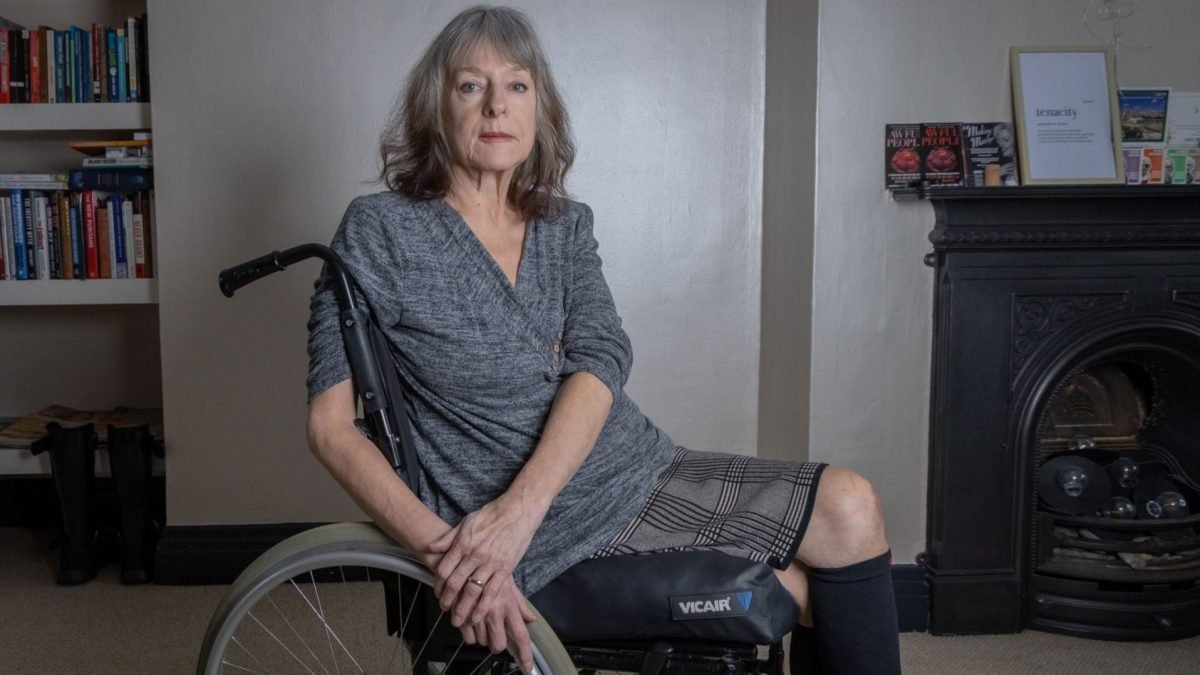
Anyway, I thought he’d gone a bit quiet and it turns out that, like me, he’s had what one of my doctors called A Bit Of Bad Luck: bone marrow cancer and blood cancer. I’m in a wheelchair; he finds it hard to walk, and he used to love walking long distances whereas I can’t say I ever did.
But while I have adapted quite cheerfully to my new situation – after the initial suicide attempt – he’s more ill-tempered than ever. I guess it’s that “Happiness Baseline” at work again; he was always a miserable bugger, whereas I’ve been a chirpy little sod ever since I got past the teenage angst thing.
In interviews with Substack and the Observer, Self bemoans the falling away of his friends. Some of this he attributes to his toxic divorce from the late journalist Deborah Orr – during which most people took her side – but some to illness. He seems to have changed his mind since a January interview with Publishers Weekly in which he boasted: “I don’t socialise with anyone anymore and haven’t for some time, but it’s fine, because the communication through the text is so pure, so brilliant. Who would want to do anything else but that?”
But by March he was complaining that when one becomes seriously ill, people are “f**king horrible. You would not believe how bad people are around serious illness.” A character in his new book says: “Once you’re in genuine need, you won’t see [your friends] for carpet fluff. Weakness attracts not Christians – but jackals.”
“I want people to behave properly – and I do behave properly,” he says now. “I believe people should help the other, not turn aside. I believe that people should not be greedy, and I’m not greedy.”
I don’t think it’s true that people turn away from seriously ill people. Look at the playwright Hanif Kureishi; tetraplegic and in a wheelchair since 2022, whose previously flinty heart has been touched by the array of people who have visited and supported him – not just his famous literary mates and associates, but an old schoolfriend who flew all the way from Canada to his hospital bedside.
I turn away more friends than I choose to see, for reasons that aren’t quite clear to me. Some of it has to do with not wanting to be an object of pity, and feeling that I’m dull. Just a few years ago, even though already in my sixties, I was yomping about like a good ‘un, rolling out of bed at 6am and pushing through another hangover to meet a deadline before going out to volunteer for three hours followed by yet another liquid lunch; now a big chunk of my time is spent fussing over my feet, cursing my catheter and waiting for healthcare professionals to come by and commiserate with me. It’s a full-time job being an invalid, which is a bitter irony when you consider that it’s approximately half a life.
Occasionally people I used to know a little will walk past me in the street, saying hello to my husband but not acknowledging me. It’s a bit of a shock, but with my new-found wisdom I understand that to see someone go from human to Halfling overnight can stir up scary feelings in some people about their own mortality.
I think that what Will Self hasn’t grasped (maybe his overweening vanity won’t let him; he said of his new novel: “I’m some kind of a crazy genius – I wrote it with cancer in 12 weeks”) is that when you’re young and sexy, you get away with a lot of bad behaviour because people want what you’ve got, be it commercially or carnally. When you’re old and sick, you need to get used to stepping down in the desirability hierarchy or you’re going to live your life as a crosspatch – and then people really will avoid you, so it becomes a self-fulfilling prophecy.
I made my peace with death when I came out of surgery unable to walk, but at 64, Self is still raving on about it as though it’s a new drug which he and he alone has got a handle on. You’d think knowledge of his own mortality would have brought him wisdom, but he’s acting like he’s the only person in the world who has ever had a brush with death, whereas by our age you expect your parents to have joined the majority, and even for a few of your friends to have kicked the bucket.
There’s a thought: what if one of these adorable friends I’ve been swerving dropped dead, and I’d never told them how much I still loved their company, and that my avoidance was totally about me, not them? That’s a mistake I don’t want to make – and I’ve made so many, on my way to becoming a Halfling.
So that’s my summer project: say “You bet!” rather than “Can I get back to you?” to those of my amigos offering to come all the way from That London to see me. I’m going to grab them and make much of them while I still have the strength – because who knows how many summers I have left?
For confidential support, Samaritans are available 24 hours a day, seven days a week. Call for free on 116 123 or visit samaritans.org