
If Anna Wintour’s reign was limited to the world of fashion, she would not be half as powerful. If her domain was clothes, accessories and outfits, she would never have endured. No, the former Vogue editor’s real gift – that allows her to identify, approve or condemn a trend or a muse or a lifestyle – is her shrewd understanding of the attention economy, and her willingness to adapt her own tastes to court it.
It is why she heralded a new era of celebrity when she put Kim Kardashian and Kanye West on the cover of her magazine in 2012, why she marked another when she finally embraced The Devil Wears Prada by appearing on it with Meryl Streep to mark its sequel last month, and it is why, under her stewardship, the Met Gala has transformed into the ultimate obscene parade of celebrity, absurdity and excess.
The Met Gala had been running for nearly 50 years before Wintour took it on in 1995, a staid society fundraiser for the Metropolitan Museum of Art’s Costume Institute – the one curated collection in the museum that must pay for itself, so reluctant was the establishment to recognise fashion as art. Socialites and designers and models would attend, but it was of little interest to anybody else.
Then, a year after Wintour took over, Princess Diana showed up in a navy Dior slip dress and changed everything. Suddenly this was a pop culture sensation: it girls, rock stars, film stars, politicians, anyone with the right adjacency to glamour who wanted to assert their relevance and was important enough for a designer to dress them.
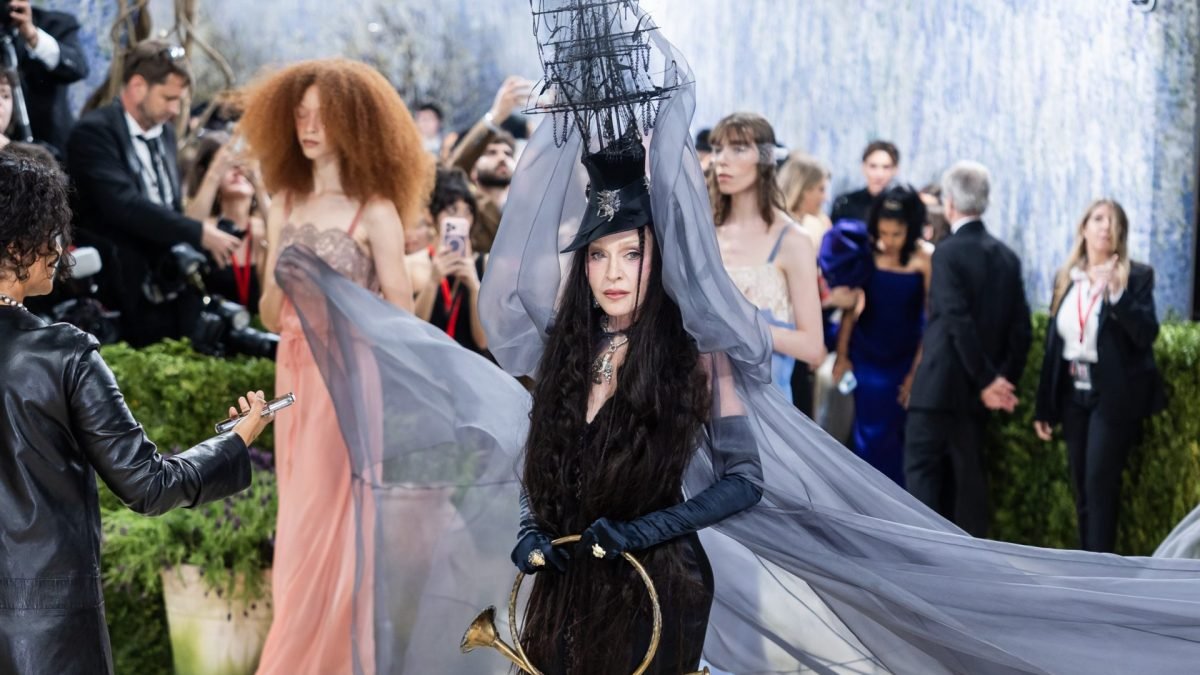
From then, the Met Gala grew to become the most important and exclusive invitation in the celebrity calendar. Its red carpet became a deliberate collision of the worlds of fashion and celebrity, confected to encourage “moments” and attention and in which all willing participants proved themselves desperate to outdo each other, competing for eyeballs like a sport.

And like a sport, the public are invited to watch on. We are voyeurs, desperate for gossip about fights in elevators (Solange Knowles and Jay-Z), damaged dresses (Kim Kardashian in a vintage Bob Mackie number worn by Marilyn Monroe) and sneering at fancy dress cats (there were several terrifying tributes to Karl Lagerfeld’s Choupette in 2023). It is streamed on Vogue’s website by around a billion people every year. As Wintour said herself in the 2016 documentary The First Monday in May, “If it takes a little bit of Rihanna dancing on a tabletop to get attention, then so be it.”
It is this quote that has stuck in my mind the past few weeks, as controversy has grown around this year’s event. With Jeff Bezos and Lauren Sanchez as co-patrons, there have been mounting calls for stars and designers to boycott the “Bezos Ball”. Activist groups have been campaigning across New York, filling the Met with 300 bottles of fake urine in a nod to employees in Amazon fulfilment centres denied toilet breaks. Interviews with workers were projected onto the Empire State Building, the Chrysler Building and the Bezoses’ penthouse.
Critics have called the appointment of the couple “reputation laundering”, called the event an “oligarch-orchestrated clown show”. The socialist mayor of New York City, Zohran Mamdani, did not attend, as part of his focus on “affordability”. In a city where one in four people are thought to live below the poverty line, and a country divided in recent years over issues like ICE, Covid, police brutality,the climate crisis and the war in Gaza, an event charging $100,000 a ticket is a disgusting celebration of evil super-elites.
Well yes, obviously. But that is precisely the point. We might all like to believe we look at the Met Gala red carpet to appreciate fashion’s artistry, legacy, and cultural importance but really it’s excess and access: a glimpse at an isolated, shrinking world of riches and beauty and fantasy that we will never be a part of. This is exactly as Anna Wintour planned it.
Exclusivity is the point of the Met Gala. It’s not just about the ticket – which money can’t buy, even if you have it. Wintour must deem you are important and interesting enough – and approve your outfit; a fashion house must want to dress you and believe you beautiful and worthy of their clothes. Edward Enninful once said that a viral moment on the Met red carpet is as valuable to a designer as 10 runway shows.

We know little of what goes on inside, other than that phones and smoking are banned (both rules frequently broken), that if you miss your timed slot on the red carpet you’re not coming in, and that couples are separated in order to encourage mingling and interesting conversations. The mystery is the point: everything is by design untouchable, unrelatable, over the top. The attendees, by their presence and their chosen looks, turn themselves into artefacts as sacred, delicate and out of reach as those on display in the museum itself.
This year’s theme was Fashion Is Art – promoting the Met’s exhibition “Costume Art”, looking at fashion through different bodies: pregnant, disabled, naked. Cue a split on the red carpet between those channelling artists from Goya to Van Gogh to Singer Sargent with their black lace and irises and bulging silhouettes, to those interpreting the “body” – Kylie and Kendall Jenner both in constructed nipples, Bad Bunny ageing himself a few decades with prosthetics, and Cardi B in a bulging fleshy gown reminiscent of an unfortunate growth. There wasn’t much madness, besides Heidi Klum turning herself into a statue, and little protest beyond Sarah Paulson’s bloodless outcry at the One Per Cent by covering her eyes with dollar bills (maybe just don’t show up?).
The Met Gala has always been about money, though. It is as much about commerce as high art – though its participants hate to admit it – and has now made so much that the museum no longer needs its funding. The Costume Institute has moved to a bigger and more prominent space in the museum and is the first thing visitors will see when they enter its Great Hall: Anna Wintour has proven to the establishment that fashion is indeed art. It took the gross, out of touch and hypocritical Met Ball to do it. But she has never been above that, if it guarantees attention.