
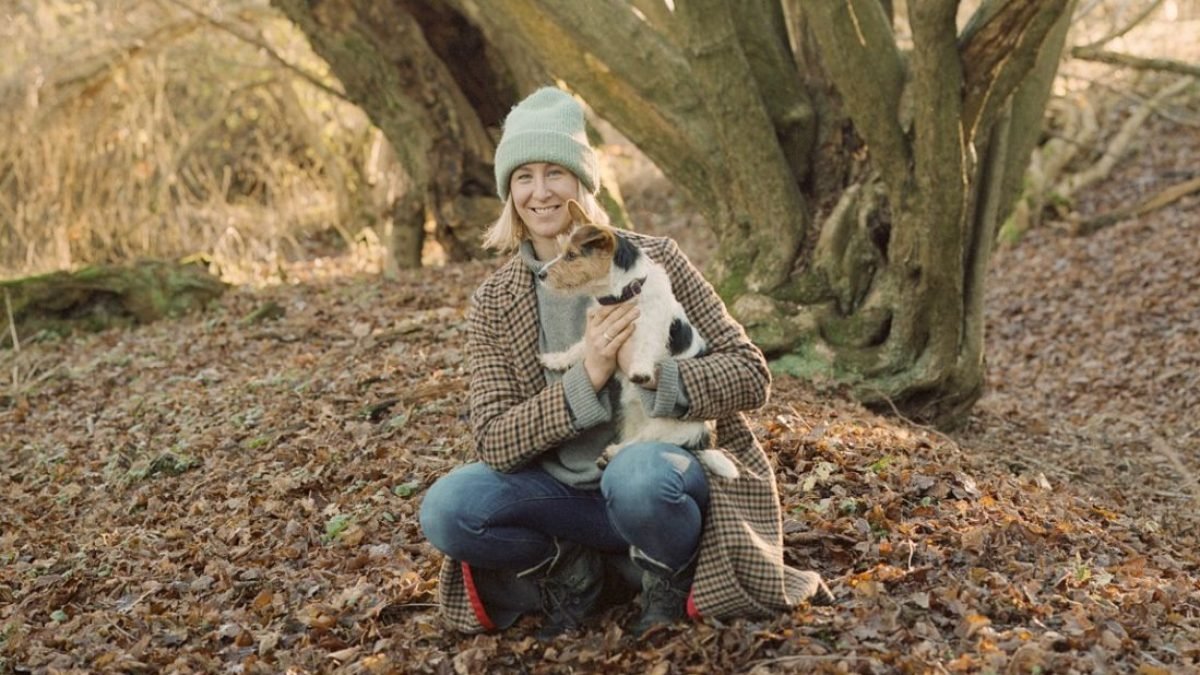
Returning to moments when I was completely upended by anxiety and insomnia now – some seven years later – feels like looking at a different person.
There’s nothing more frightening and alienating than a malfunctioning mind. Nothing that makes you feel more at sea, more hopeless or useless. Some days I’d fantasise about breaking both arms and legs in exchange for halting what was happening in my brain. At least that, I thought, would be easy to understand, and I’d know how to fix it: surgery, rest, pain relief. With anxiety, it seemed, nothing I tried helped: not ignoring it, not trying to out-think it, not internal self-dialogue that I was fine and I had nothing to worry about, not hypnosis, exercising, giving up caffeine, eating better or even changing jobs.
It made no sense outwardly. I was married to a wonderful man, we had a young daughter, and I had a job I loved in journalism. I was close to family, who have always been supportive, and there were no devastating diagnoses or unmanageable conditions putting us simultaneously together and apart. I should have been fine.
Still, over the years of increments and nudges, patches of insomnia had grown into my life with the persistence of bindweed. Some nights I lay awake until the early hours, my mind an infernal circus, then go to work on two hours’ sleep. I started feeling anxious about feeling anxious, pre-empting not sleeping and what the next-day ramifications would be.
By my late twenties, stabs of adrenaline were materialising more and more at weird things during the day: a door closing, my young daughter crying, the sun setting (believing I had another night of insomnia lying ahead), forgetting things (a jumper! my purse! my phone!), the microwave going off, busy places, empty places. I began to feel sudden bursts of heart-racing fear for no apparent reason: something I now know is called “free-floating anxiety”, a particularly bohemian-sounding style of angst associated with generalised anxiety disorder (GAD).
Then there were the panic attacks that started at night, after hours awake. I’d scream into a pillow so I wouldn’t wake up my husband or our ten-month-old daughter. And something else strange started: an intense, almost phobic fear of night-time. During the day I’d feel nervous just being in my bedroom or walking past it – it held such negative connotations – so I’d rush in and out, grabbing what I needed, not looking directly at the bed. When adverts for comfy mattresses came on, I’d sob – everyone looked so happy getting into their beds.
All this may have been clawing at my edges for a while but they were not linked, to my mind, to becoming a parent, although, for many others, it can be. My daughter, in so many ways, provided a welcome distraction, a way of staying in the present and wrapped up in the daily minutiae of bottle washing and nappy changing and on some days, paradoxically, she even helped me sleep by introducing me to a different type of exhaustion – one that felt entirely justified and right.
But in 2019, the wheels really came off. Returning to work after maternity leave brought back the insomnia ten-fold and my thoughts took on new shapes. I was sure my husband would leave me (I was impossible to live with), our young daughter would be taken away from me (I was mental), I wouldn’t be able to work (and would bankrupt our family) and I even feared I had cancer. Catastrophic, yes; realistic, no, but I believed each statement more with each passing week. The intrusive thoughts about suicide and self-harm came suddenly one day, and without warning. Jumped into existence like an awful, repetitive dream.

Finally, the day before my 32nd birthday, after another night without sleep and losing my grip on reality, I was admitted to The Priory, a psychiatric hospital in London, where I spent a month as an in-patient and a further two as an outpatient. I was diagnosed with GAD, chronic insomnia and post-traumatic stress disorder (PTSD) with a side order of depression. All were a surprise (apart from the insomnia). I’ve been in a handful of car accidents, a couple serious and one that badly injured my now-husband, but never believed they left a lasting impression. I’ve also one or two other brushes with difficult things – but, doesn’t everyone?
One in three of us will be affected by an anxiety condition in their lifetime. According to the Adult Psychiatric Morbidity Survey 2023-24, GAD affects 7.5 per cent of adults aged 16 and over and is the most common form of anxiety. The prevalence of depression, in comparison, is 3.8 per cent. If you include other anxiety conditions in the tally – panic disorder, obsessive compulsive disorder (OCD) and post-traumatic stress disorder (PTSD) – the figure rises to over 13 per cent of adults currently in the grips of anxiety (which is likely an underestimate, as many never seek help or diagnosis), making anxiety more prevalent than diabetes.
Despite this, we have such a poor understanding of how to help ourselves or others with it, which is a shame because anxiety is highly treatable. There are many things you can do. It can be made manageable, and the earlier you get to it the better. There were three things in hospital that occurred to me early on that I would need: time, patience and energy. Mental health is not something that can be rushed, knocked or forced into submission. It might be less apparent and slower. I needed medication, therapy and time out. I needed professionals and cognitive behavioural therapy, work through some stuff and to install healthier mental habits. I needed coping mechanisms – a toolkit – gleaned through trial and error, that might change over time or in different situations (or might not). I tried sleep gadgets (Alpha-Stim) which helped me come off my sleep medication when the time came, yoga, walking, running, neurofeedback, slowing down, confiding in people and saying no more often. I moved house and got a dog.
While I’d been to the doctor a few times over the years, it was never directly for anxiety. I didn’t think I had it. Not really. It was insomnia that was my problem, and I didn’t want to see a doctor for that in case they gave me sleeping pills that would get in the way of looking after my daughter. Instead, I went to the GP for omeprazole to relieve my irritable stomach. Or for antibiotics for the tonsillitis or flu I had, again, after my immune system was faltering. I thought I could get on top of the sleeplessness with time.
It has taken me a long time to get my mind and body back on course. Learning how anxiety impacts us and our physical bodies also helped because it reduced anxiety about anxiety. The unwelcome effects of surging adrenaline – sweaty hands, a racing heart, hyperventilating, muscle tension, shaking, bowel movements, and on – no longer sparked panic that I was out of control and losing my mind. This was an illness, like so many others.
Another key moment came from an African proverb: “How do you eat an elephant? One bite at a time.” In other words, the best approach to overwhelming and seemingly insurmountable problems is to take them slowly, bit by bit. It gave me the confidence to keep trying – and became the title of the book I’ve written about anxiety, based on interviews with leading experts and others who have had pronounced experiences of anxiety, to learn what most helped them – and could help you, or someone you love. So often what helps most is a combination of little things spread wide and far. A unhurried sea of change.
How To Eat An Elephant: The life-changing power of managing anxiety, one bite at a time, by India Sturgis, is published on 7 May (Thorsons, £16.99)