
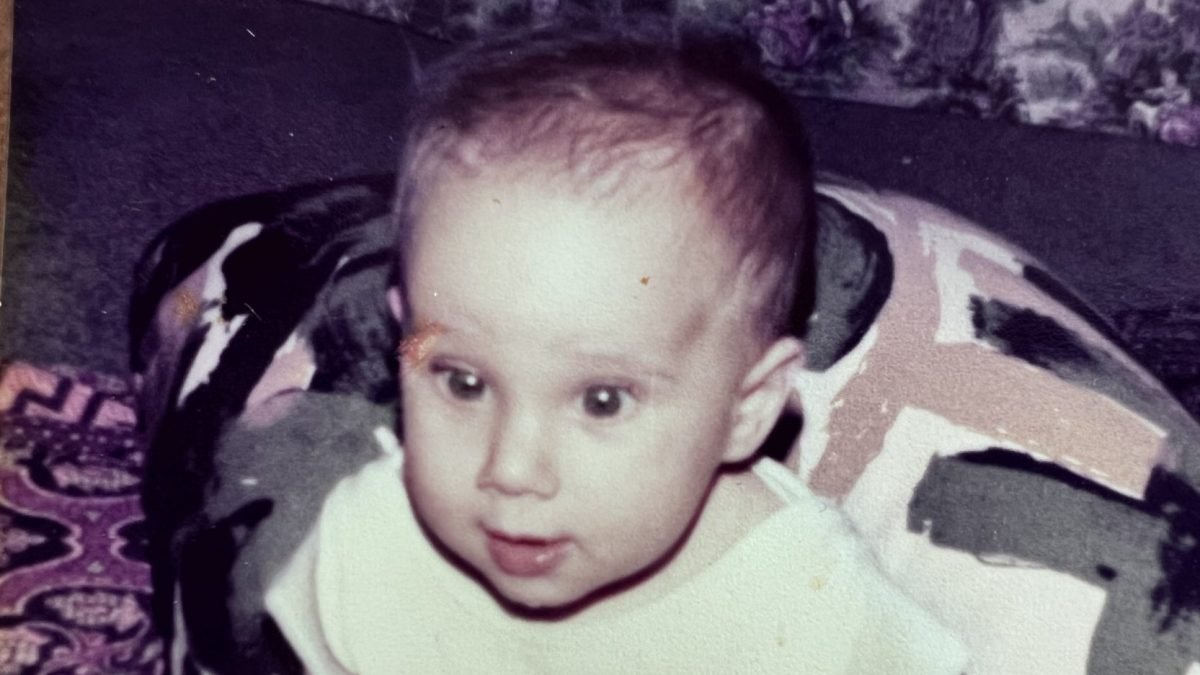
I’m told I was an ugly baby. My mum cried in hospital because my head was so misshapen with my eyes off at a strange angle; the midwife who comforted her by saying I didn’t look “that bad” didn’t reassure her at all. I don’t think any photos were taken of newborn-me so I can’t vouch for my lack of looks but I do know the reason for my asymmetric face: forceps.
During my birth, my heartbeat dropped dangerously low and my dad had to be ushered away as a medic yanked my head with what is essentially a giant, terrifying-looking pair of scissors, first introduced to help with childbirth in the 16th century. I’m hugely grateful to those metal forceps: they doubtless saved my life, and the tale of my heart stopping before I’d seen the world has always added to my sense that life is an incredible gift to be appreciated.
But there’s no doubt that in enduring that procedure to get me safely into the world, my mum experienced significant trauma. She told me that within about six months my features had settled, though to this day I still have a very slight indentation on my skull.

My mum’s birth experience sounded so scary that it informed my own. When I was pregnant with my eldest, Astrid, now nine, I planned a hippy water birth. My due date came and went and despite my encouragement – the standard walking up stairs sideways, existing on a diet of pineapple, curry and raspberry leaf tea and going for reflexology sessions to bring on contractions – Astrid remained comfortably inside.
Eventually, a week overdue, I agreed to the hospital attempting to induce my daughter by putting prostaglandins – hormone-like lipids that soften the cervix and encourage contractions – in my vagina. But I only agreed on the condition that it was written on my notes that before I was moved onto an oxytocin drip, which brings on strong contractions, I’d be offered a C-section.

Obstetricians and midwives agree that induction involving an oxytocin drip induction is far more likely to end up in an assisted birth, in the form of forceps or a ventouse, a vacuum-suction cup which looks similar to those used by plumbers to unblock drains, than spontaneous births. I didn’t want my daughter’s arrival in this world to be as traumatic as my own.
When I learnt this week that eight NHS trusts are now offering a new way to help women with assisted delivery, I was delighted. The OdonAssist, invented by an Argentinian mechanic who had a dream about it after seeing a cork being removed from inside a bottle by blowing up a plastic bag and using reverse pressure to encourage it out, was given funding by the Gates Foundation. It’s a soft air cuff that surrounds a baby’s head and helps doctors assist birth during contractions. It has now been used in more than 300 births and was officially launched in the UK this week. In time, it might replace rigid birth instruments.

Gary Cohen, co-founder of Maternal Newborn Health Inventions (MNHI), which brought the product to market, says that the OdonAssist contrasts from forceps and ventouse deliveries, which are currently used in one in eight births in the UK. “It is gentle,” he explains. “Newborn pain scores [measured by a baby’s facial expression] indicate no pain or very low pain and we see [baby] behaviour very similar to a spontaneous vaginal birth. Pain scores with other devices are considerably higher and can affect newborn behaviour. When I hear how the joy of childbirth is enhanced by having a baby with no or low pain, without marks or bruises, that’s a big reward. We’re all working to try to enhance the joy and reduce the trauma.”
At £250 in the UK, it is also not an expensive device. For comparison, the average caesarean section birth costs the NHS between £1,700 and £3,000. “We don’t want price to be a factor that inhibits use,” Cohen says.
Immaculate Figueiredo, a 38-year-old head of human resources for an IT consulting firm, gave birth seven months ago in east London at the Royal London Hospital to her son Kai Figueiredo-Shaikh, with the help of the new device. “On the morning of delivery, my son’s heart rate was fast and I had a temperature. My husband Kashif and I were told clearly that we would have to rush the delivery. Our doctor explained this new device and its benefits compared with forceps, with less birth trauma to both me and the baby. We were very reassured.

“My son arrived quickly and was put on my chest. I could feel tension in the room and felt very nervous as it took two or three seconds before he started breathing. There was absolutely no bruising on him, no one would have known he was born with assisted delivery. And there was no physical trauma or tearing to me, so my recovery was good. I wish this device was available to mothers at all hospitals.”
Georgina Kelly, midwife and MNHI employee, says that on the postnatal ward, midwives hear babies in pain from the way they cry. “Some of those babies [born with forceps or ventouse] do require pain relief in the postnatal period,” she says. “The OdonAssist reduces tissue trauma and bruising to babies.” A forceps or ventouse birth also changes the midwife’s role. “You change the tone of your voice because you know a doctor is about to produce some forceps, and move them down the edge of the bed, and it’s a very scary time for a woman,” she explains.
Emily Hotton, obstetrician and investigator of the clinical trial at Southmead Hospital, at the University of Bristol, agrees the experience is “completely different” to forceps or ventouse deliveries. “It offers a gentler, more controlled approach, rather than applying traction with rigid instruments,” she explains. “In trials, there were no device-related bruises or marks on the baby’s face or head; a key difference compared with traditional instruments.”
Hotton doesn’t believe that the OdonAssist will immediately make other instruments obsolete, but that it will have an effect over time. “As clinicians gain more experience, its use will increase and it is likely then that the number of births assisted with ventouse and forceps will decrease,” she says. She believes this is such an exciting innovation because “women’s health research has historically been underfunded and underrepresented.”
The history of inventions in assisting with childbirth
1500 – First successful c-section performed by Swiss pig gelder Jacob Nufer on his wife
1590s – Forceps invented by Peter Chamberlen the Elder, a member of a French Huguenot family that migrated to England
1840s – Ventouse invented
1920s – Spinal epidurals first administered
2026 – OdonAssist now being used by eight UK healthcare trusts following successful trials
Cohen believes that it has huge life-saving potential in developing countries, particularly in rural settings, where childbirth risks are high. He hopes that in time profits from the OdonAssist will subsidise the device in countries where affordability is a huge issue.
Kelly also believes it will play a part in reducing the rising maternal mortality rate in the UK, which is currently at its highest in two decades. In the two years until 2023, 257 women died in pregnancy, birth or the first six weeks post-partum. “The thing we can look at reducing is women’s need to ask for a maternal choice-caesarean section. Cesarean sections have higher risks [than vaginal births]. If there’s an option for women who come into labour thinking, ‘I don’t want forceps’ and they can have a more gentle assisted vaginal birth and that reduces the need for maternal request-caesarean sections, then we are playing our part to try to reduce that mortality rate,” she says.
Dr Jenny Barber, vice president of the Royal College of Obstetricians and Gynaecologists, said: “Most babies born through an assisted delivery are well at birth and do not experience any long-term problems, but forceps and ventouse do increase the chance of bruising to the baby and vaginal tearing. We welcome innovations in maternity care where these have robust data on safety, effectiveness and appropriate training for NHS maternity teams.”
My daughter Astrid ended up arriving by a very calm c-section, after the prostaglandin pessaries didn’t push me into active labour. I was overwhelmed with relief, joy and love when she was placed in my arms. The midwife later told me that at over four kilograms, she wouldn’t have arrived naturally. In the absence, almost a decade ago, of a gentle way to assist births, I am very glad that I pushed to be offered a c-section before forceps or emergency surgery was involved.