
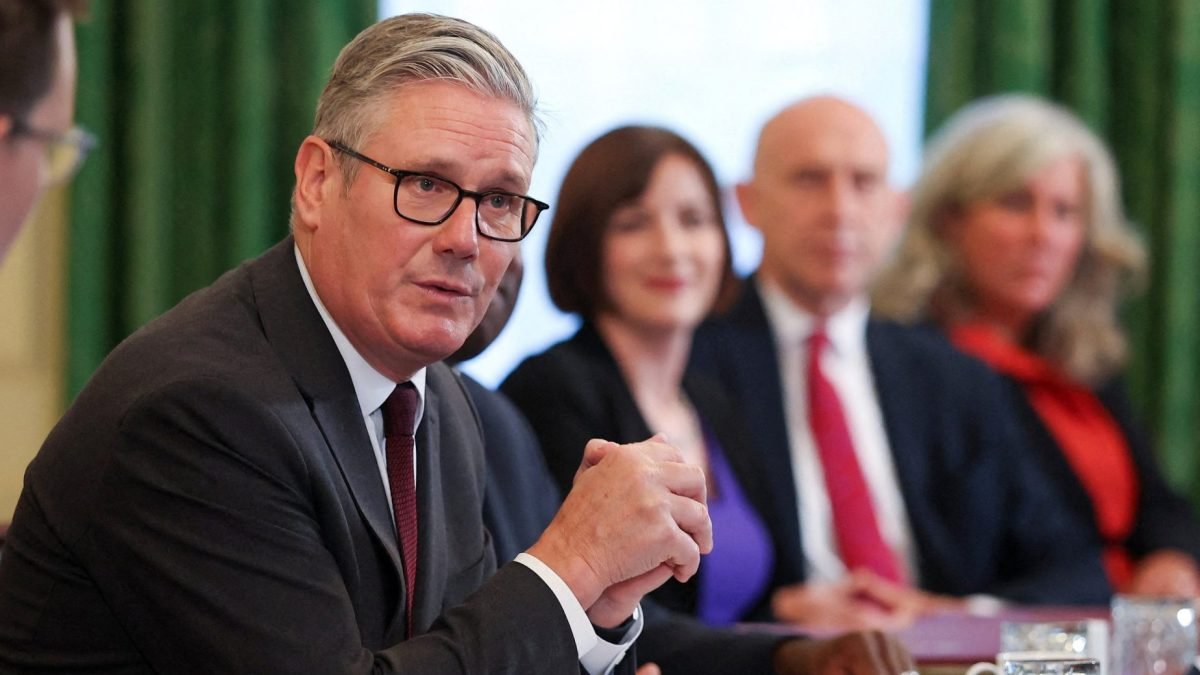

When historians look back at this era, they may portray Keir Starmer as the undertaker of British liberal democracy. They may regard the elections of 7 May as the final throes of centrist politics, with the hard right sharing the spoils with the radical left and independence movements in Scotland, Wales and Northern Ireland.
For Starmer, a human rights lawyer and a decent man, it was not supposed to be this way. When he wrested power after 14 years of Conservative rule, of austerity followed by Brexit and the clowns, many dared to hope that the UK was digging itself out of the mire. The optimism of 1997 may have felt far away in 2024. Nevertheless, such was Starmer’s parliamentary majority, a decade of decent progress lay ahead.
This has been blown asunder not just by the vagaries of Donald Trump, but also by the home-grown politics of caution and incrementalism.
The only hope now is that wise counsel prevails, Starmer sets a timetable for his departure and a vigorous contest for the succession begins. The victor will need to govern completely differently. What is required is a reinvention of power, the ability to go head first into meeting the challenges of climate, demography, AI, housing and health. To be willing to be candid with the public and to square up to your opponents.
The UK is not unique in democratic backsliding, but with its majoritarian electoral system, the failure is greater than in countries where constitutions require coalitions and compromise. Like Tony Blair, Starmer enjoyed a dominance of parliament that allowed him to be radical. Like Blair, from the get-go, he looked over his shoulder instead of looking ahead. Blair later conceded he had missed a golden opportunity to change Britain for ever.
Why does this happen, particularly on the centre left? Because leaders such as these are paralysed with fear. They worry about financial markets (with reason); they fret about conventional media and social media (with less reason). They wait for bad things to happen, trying to anticipate what their critics might say of them in case they put a foot out of line. We’ve built a political class allergic to spontaneity, terrified of taking risks. The key ingredient that eludes them is courage.
This is not a peculiarly British phenomenon. No matter our culture, history or geography, we share similar problems. Where am I going to live? Who will look after me when I get old or sick? Am I learning the right skills? Do I have information I can trust? What kind of community do I want to live in? How can my environment be protected without it costing me my livelihood?
As I found out during a three-year trek around the world, someone has a lesson for us, if only we had the humility to learn. That’s the difference between societies that are open to new influences and those that fly the flag and think they know best.
The courage I am advocating doesn’t come from bombast or threats. But nor is it the opposite: triangulation, working out the position of the two extremes and plonking yourself in the middle, for fear of alienating anyone.
It is about boldness, long-termism, the willingness to take risks and to dismantle shibboleths on left and right. In Taiwan, for example, I saw a health service that not only produces fast results and high satisfaction ratings, but because of digitisation and strong medical literacy costs far less than our creaking NHS. I saw in Finland an education system that gives teachers autonomy their British peers could only dream of, and the results to match. In Morocco and Costa Rica, I marvelled at the determination to increase renewable energy and sustainability. In Vienna, 60 per cent of inhabitants live in public housing of such quality that renowned architects queue up for contracts.
Such successes come from hard choices. Whereas Japan has been preparing for the challenges of ageing, with a transparent funding system and multigenerational communities, in Britain successive reforms of social care have been kicked down the road. A serious public discussion is not taking place about how public services can be maintained in the future, or about the skills required to equip the next cohort of workers.
The advocates of caution counter by saying that’s all very well, but forcing tough short-term decisions on people is electoral suicide. It depends how hard you try. The evidence shows that societies where citizens are informed and involved are more likely to cohere. In policy-speak, that’s called input legitimacy. Or, simply, being straight with people.
In any case, what do they have to lose? If mainstream politicians don’t think more boldly about the future, they won’t have a future.
John Kampfner is the author of Braver New World and Why the Germans Do It Better