
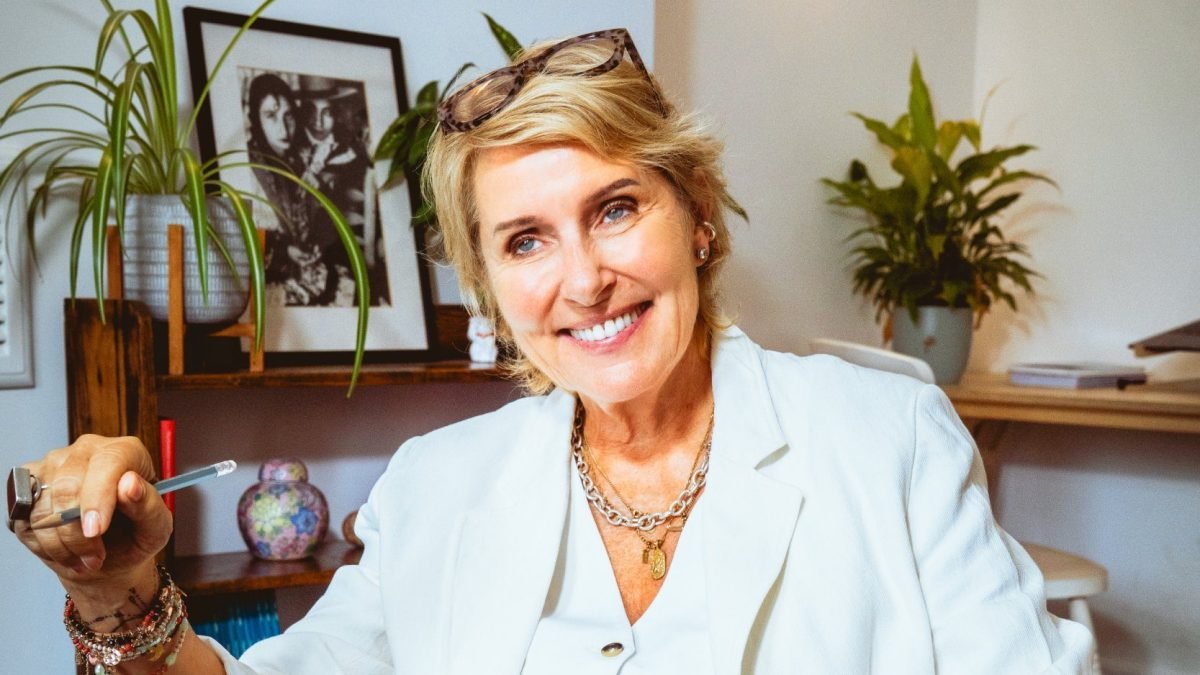
Give any happy couple enough time together and issues will arise. No-one understands this
better than Karen Doherty, a couples’ counsellor of 23 years and star of Netflix’s Blue Therapy, a reality series in which six couples take their problems to her sofa.
“Relationships deteriorate slowly,” she says. “Most couples find themselves repeating the same unresolved patterns and gradually losing connection without fully understanding how or why.
“In a world shaped by shifting social norms, evolving roles and increasing individualism, sustaining a partnership requires more awareness than ever before.”
That awareness is what can turn a stagnating relationship into one that goes the distance. Here, Doherty shares her 10 golden rules for divorce-proofing a marriage.
Treat the relationship like a project
“Couples rarely separate because of a single issue – it is the slow creep of misunderstood differences, repeated negative patterns left unexamined and the breakdown of communication that slows and painfully leaves space between the partners. This is the danger zone, as space creates opportunity for something else to infiltrate the dynamic and sadly, occasionally, destroy the relations. As such, couples need to revisit, renegotiate and update how they relate to each other regularly. What worked at
the start will not sustain you through the decades – so think of the relationship like an ever-developing project.”
Recognise the patterns
“Don’t fixate on the ‘what’ you are arguing about. Look at the ‘how’ you are arguing. Reoccurring patterns of escalation, defence, blame and withdrawal will repeat regardless of the topics. It is important to identify that pattern. Next time you can feel an argument starting, try and step back from it. Can you see, for example, that there is a trigger, then a defence, then an explanation, then a blame… this could be a series that you and your partner keep repeating. The more a couple thinks about this, the less fighting – and hopefully better communication – there will be.”

Stop assuming your partner thinks like you
“When couples first meet, part of the attraction is often a sense of finding your ‘twin flame’ or soulmate. This creates the spark, interest and curiosity that the relationship needs to gather momentum. But the belief that you are the same is incorrect, and differences in emotional processing and communication style fundamentally shape how each partner experiences the relationship. Stop with the assuming and start checking in.”
Be more explicit
“Likewise, remember that your partner is not psychic. Unspoken expectations are one of the biggest causes of resentment, so clear communication is imperative. You must make what you think is implicit explicit. One of the biggest issues that comes into my office is disappointment in many forms –
the kind that wears away at the fabric of the relationship – and it happens because the couple have not been clear with each other around their needs.”
Create a shared ‘couple deal’
“Strong relationships are built on not feeling alone. They thrive on a shared understanding of how you are going to organise your joint lives. I have been working couples through what I call my ‘Couple Deal’ for years. It is a document containing the needs of each individual, the needs of the couple and the needs of extended family if appropriate. After they have individually thought about them, the couple set aside several sessions together in which they discuss those three aspects. This forms the basis of their couple deal, which is signed by both of them. Crucially, it is something that they review regularly – such as every three months – to check progress, encouraging both transparency and accountability to each other.”
Invest in daily connection
“All couples are busy. Careers, children, school runs, school holidays, ailing parents, dog walking, cat care… the list goes on, and it rarely ever includes couple time. This is a pattern that most couples who end up in my therapy room follow, and you have to ask, is it any surprise that distance grows between each other? It isn’t enough just to have occasional intensity – a date night once in a blue moon. Instead, you need to make a conscious effort for small connections every single day. From a meme sent over text, to a lingering hug in the morning, or a cup of tea together at the end of the garden, these micro moments keep the connection flowing rather than letting it stagnate.”
Stop living parallel lives
“As life becomes more demanding and autonomy increasingly valued, couples are left without clear models for how to build a shared life. In the past, roles were more defined, offering structure, even if it was imperfect. Today, we expect more, emotionally, practically and personally, from both ourselves and each other. A strong couple is one who can support personal growth and autonomy, but who balances that with the sense of a shared life too. Even something as simple as having a podcast you always listen to together, or a joke that only you share, will remind you that you are in a relationship, not just living alongside each other with parallel lives.”

Learn how you both respond to stress
“Under pressure, partners can move in different directions. It might be that one seeks closeness, for instance, while the other needs space. Without the understanding of this, both can feel misunderstood and or rejected. Getting to know how each other processes stress physically, emotionally and psychologically needs a level of openness between the partners. It exposes vulnerabilities that neither may feel completely comfortable with, but a relationship is only meaningful if both can provide
the right kind of support for each other in moments of high stress – and not misinterpret needs with a sense of rejection or hurt, particularly when kindness and calm is required.”
Become comfortable with difference
“One of you may be social butterfly and the other an introvert, one of you a keen tennis fanatic, the other couldn’t care less about sports. All relationships require an ongoing negotiation of the differences between the two partners, both in terms of the way they operate and the interests and passions they have. This can come up as an increasing point of contention the longer a couple is together because, again, the early days of the relationship somehow convinces the partners that they are the same in many ways. The reality is that we are all unique and need to accept the uniqueness of the other.”
Take ownership of your part in the dynamic
“How many times have I worked with couples who think, ‘If only he/she changes’? The truth is that even if one partner is for instance more reactive than the other, the dynamic in a relationship is co-created. Both need to take responsibility for their parts in things. Imagine the relationship like a simmering cauldron: each of you bring your own ingredients which relate in different ways to each other. You are not outside the cauldron; you are in it. Thriving couples take ownership of that and don’t set the other up as the perpetrator of all the problems.”