
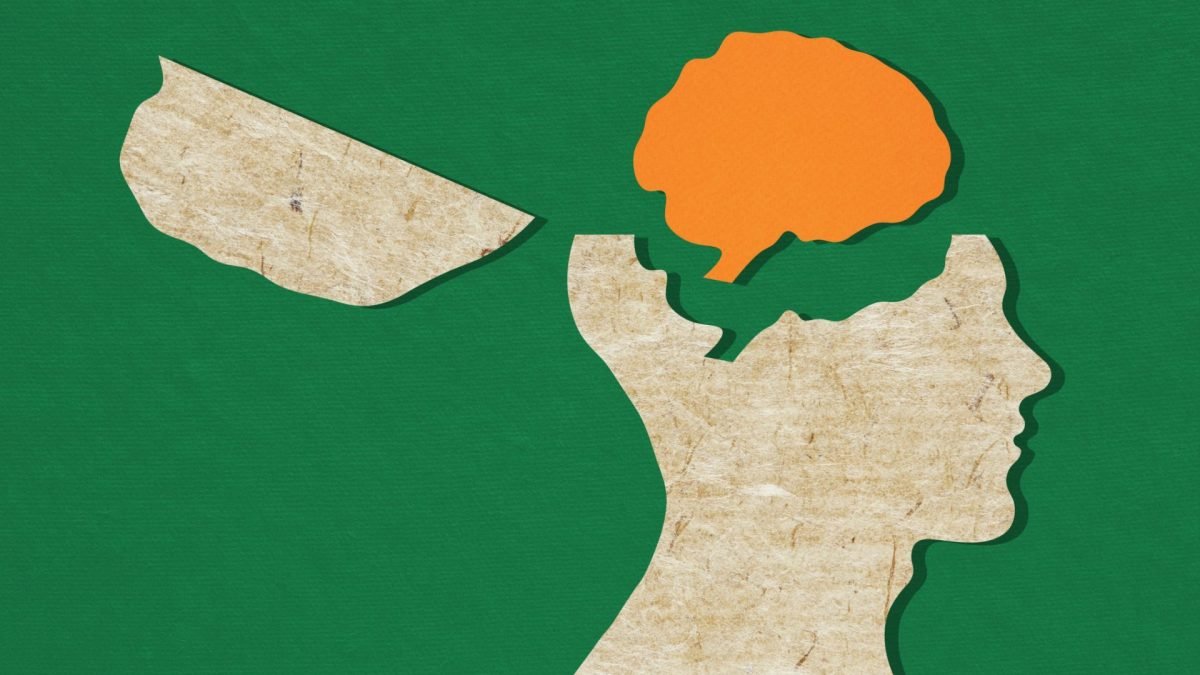

With almost a million people in the UK currently living with dementia, figures which are only anticipated to rise over the next decade, it’s easy to feel a little anxious at the first hints of forgetfulness.
But memory issues are also a very normal part of ageing. “As we get older, we lose brain cells and some mild symptoms like forgetting why you went upstairs or misplacing your phone or your glasses every now and again is considered normal,” says Dr Jay Amin, an associate professor at the University of Southampton, who also leads an NHS memory clinic.
According to Simon Cox, professor of brain and cognitive ageing at the University of Edinburgh, this is because brain function begins to decline in various subtle ways from our twenties onwards. “Processing speed, reasoning, memory, they rely on lots of different parts of our brain working together, and when one of those key systems gets disrupted, it’s inevitable that other bits are going to fall over a little bit too,” says Cox.
Yet at the same time, the brain can still compensate to a remarkable degree. As a result, people in their seventies and eighties sometimes have a far wider vocabulary than those decades younger, due to their many years of acquired wisdom and learning.
Instead, when it comes to “red flag” memory symptoms, there are many more subtleties to be aware of than mere forgetfulness on its own. Here’s what to look out for.
Getting lost in familiar environments
According to Cox, a particularly concerning sign is getting lost in familiar environments. “So driving down neighbourhood roads and forgetting where you turn off to go home when you’ve lived in that house for 20 years,” he says.
This not only reflects memory deterioration, but damage to certain brain hubs which serve as an inner GPS system, enabling your brain to create and store maps of different routes. These regions are some of the earliest brain areas affected in the progression of diseases like Alzheimer’s, meaning that getting unexpectedly lost can be a key early warning sign.
Repeating yourself in a short space of time
As we get older, it becomes common for people to repeat the same stories, often to the exasperation of younger family members. However, this behaviour becomes more concerning when the repetition happens in a relatively short space of time.
Dr Semiya Aziz, an NHS GP and founder of the private service Say GP, recalls a patient in her early sixties who had previously been treated for an array of symptoms including anxiety and brain fog which had all been attributed to the menopause. However, Aziz became worried when the patient repeated the exact same life story to her at both their first and second consultation.
“That just rang alarm bells for me,” says Aziz. “I was thinking, ‘That’s not quite right.’ So we referred her to the neurologist, and she was diagnosed with early-onset Alzheimer’s disease.”
Forgetting important birthdays, events or PINs
Forgetting words is also completely normal, but Amin says that this is a red flag if it’s happening in every conversation. It’s also problematic if you’re forgetting simple words, how to use everyday household objects, or the names and birthdays of close friends and relatives.
“It’s a sign that memory symptoms are starting to interfere with someone’s life,” says Amin. “They might also be finding that they’re forgetting their PIN or forgetting how to use the microwave.”
One of the reasons this can start to happen is that the processes underpinning cognitive decline are affecting mesh-like structures in the brain known as perineuronal nets. These nets surround neurons and provide a critical barrier which enables them to communicate. A recent study from scientists at the University of Arizona found that the deterioration of perineuronal nets could be one of the reasons why people with dementia forget things of emotional significance.
Forgetting to be discreet
Another key red flag is if someone is starting to forget that they shouldn’t say certain things to certain people, for example revealing long-held family secrets. This can reflect an underlying loss of inhibition, pointing to damage to the frontal regions of the brain which play a critical role in reasoning and self-control.
“If you’ve been told something about a family member, asked not to share it, and then blurt it out in a family setting, that can be a worrying symptom regarding memory,” says Amin.
Losing track of a book or TV series
Patterns of cognitive decline can vary from one form of dementia to another. Amin notes that while Alzheimer’s disease tends to result in a steady, progressive decline in memory, other conditions such as dementia with Lewy bodies can see significant fluctuations from one part of a day to another.
“For some hours of the day their memory can be completely fine,” says Amin. “But other times of the day it’ll be really poor. So that’s a concerning symptom.”
Such fluctuations can often be seen when reading a book or watching a TV series. If a person is experiencing spells where they’re suddenly struggling to recall a previous chapter or episode, that can be a red flag.
Big changes in your baseline memory
Finally, another key shift to watch out for is when there’s a sudden change in a person’s baseline memory. Researchers point out that some people always struggle to remember names, even as a teenager or young adult, simply because of how their brain is wired. But if they’ve always had an excellent short-term memory or a good ability for remembering numbers, and that’s now gone away, it’s a sign to be concerned.
“Partners or spouses are often a good barometer for picking this up and noticing these kinds of subtle changes in behaviour,” says Cox.
Why it’s important to spot red flags early
Traditionally, many people have preferred to try and ignore signs of cognitive decline as best as possible because of the lack of treatments, and the sense that nothing can really be done.
However, this is starting to change, in part due to our growing understanding of the various causes of cognitive decline. Amin says that in some cases, memory issues do not actually reflect dementia at all, and are being driven by other causes such as depression, the side effects of certain medications such as benzodiazepines, some beta blockers and painkillers, or poor sleeping habits.
Memory can also be affected by other chronic conditions relating to vitamin or mineral deficiencies, such as anaemia, folate deficiency, and B12 deficiencies. “We know that the gut completely changes with age which affects the absorption of different nutrients,” says Aziz. “In an older patient, memory problems can be a result of an underlying B12 or folate deficiency.”
However, even if the underlying cause is dementia, there are now a growing number of clinical trials exploring all kinds of novel drugs for slowing down the disease process, ranging from medications which aim to lower the amount of inflammation in the brain to improved ways of clearing amyloid plaques.
Amin says that it’s important to detect warning signs and receive a diagnosis as soon as possible, because many trials are primarily interested in recruiting patients with relatively mild cognitive impairment.
“Having an accurate early diagnosis can help with future care planning,” he says. “But there are lots of research trials that people can get involved in. And the earlier you are in the disease process, the better.”