
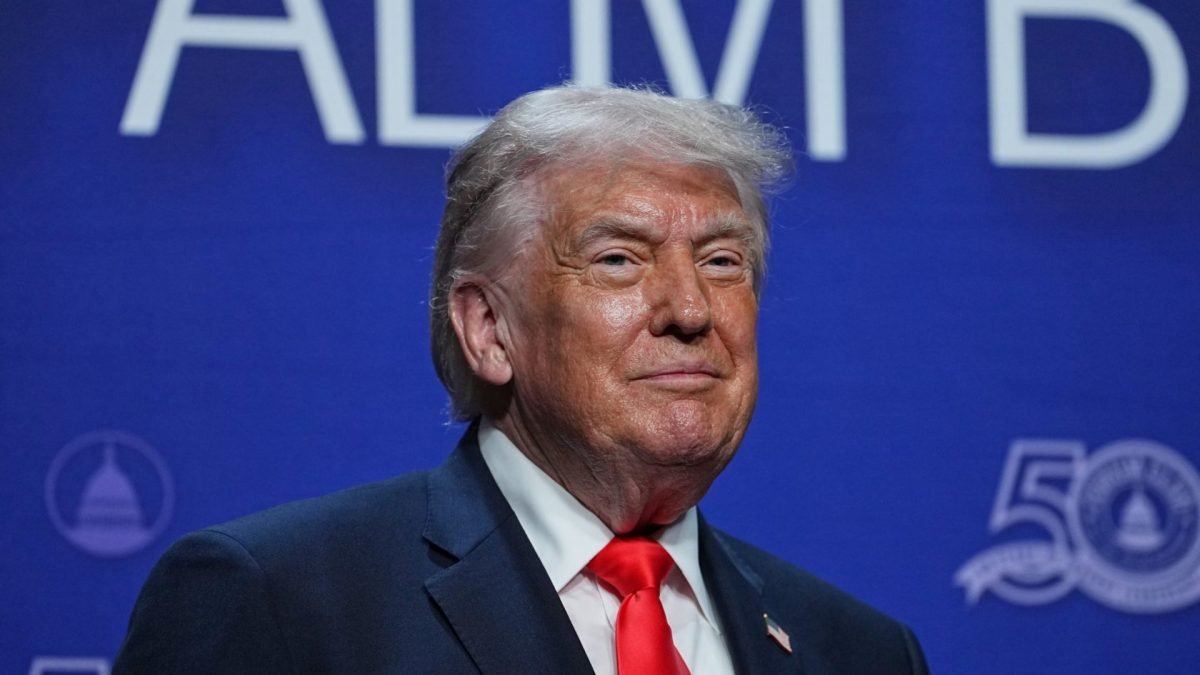
Donald Trump has threatened a return to military action with Iran as negotiations appear to reach a sticking point.
Venting his frustration on Friday, he said he was “not satisfied” with Iran’s latest peace proposal, without spelling out in detail which elements he opposes. Trump has repeatedly called for Iran’s nuclear programme to end while Teran has demanded a release of frozen assets, estimated to be between $100-120bn (£73-88bn).
“They’re asking for things that I can’t agree to,” he told reporters at the White House.
A precarious ceasefire is currently in place but the US Navy continues to blockade the Strait of Hormuz, in a bid to restrict Tehran’s ability to profit from oil exports. This, coupled with Iran’s own blockade in a waterway which sees approximately 20 per cent of the world’s oil and liquefied natural gas (LNG) pass through, has caused flows to grind to a halt.
Trump said “disjointed leadership” in Iran was hampering any constructive moves towards a deal.
And he outlined two options for the US going forward: “I mean, do we want to go and just blast the hell out of them and finish them forever?
“Or do we want to try and make a deal? I mean, those are the options.”

CENTCOM / SWNS)
‘Short and powerful strikes’
The US President’s comments were made after he informed US Congress he did not need to seek its approval of the conflict, because the clock had been paused by the ceasefire.
US law requires a president to “terminate any use of United States Armed Forces” within 60 days of notification of strikes unless Congress grants permission. The date to request approval passed in the week.
An extended ceasefire with Iran was announced by Trump on 21 April, with him suggesting it was open-ended and dependent on the outcome of talks “until such time as their proposal is submitted, and discussions are concluded, one way or the other”.
Against this backdrop, the president is understood to have received briefings from military chiefs on Thursday about a wave of “short and powerful” strikes on Iran.
US publication Axios reported that Trump met with Commander Adm. Brad Cooper, from US central Command, and General Dan Caine, the chairman of the Joint Chiefs of Staff, to discuss resuming combat operations against Iran.
Sources said that the President believes the blockade of the Strait of Hormuz remains his primary source of leverage but would consider military action if Iran doesn’t agree to his terms of a deal.
Options said to have been on the table for discussion were: a rapid wave of strikes on infrastructure, the involvement of ground forces to take over part of the Strait and a special forces operation to secure Iran’s stockpile of highly enriched uranium.
Military planners are also understood to be considering the possibility Iran will strike US forces in the region in retaliation for the blockade.
The White House has not commented on the meeting.
Long-range missile movement to Middle East
US Central Command (Centcom) made a request to the Department of War this week to deploy the Dark Eagle hypersonic missile to the Gulf region.
Centcom said it was necessary as intelligence sources had revealed Iran has moved its ballistic missile launchers out of range of the US’s Precision Strike Missile (PrSM), according to a report by Bloomberg.
If the request is approved, it would mark the first time a land-based hypersonic missile has been used by the US military in combat.
While the PrSM can hit targets up to 300 miles away, the Dark Eagle has a range of 2,000 miles allowing the US to hit Iranian assets which have moved beyond the range of the PrSM.
James Pattison, professor of politics at the University of Manchester, told The i Paper this week such a deployment “is likely to be seen as maintaining US ability to continue to strike within Iran if negotiations falter”.

Israel braced for further conflict
Israel is also reported to be on heightened alert, ramping up preparations for a possible return to fighting with Iran, according to Israeli television Channel 12 reports.
Officials were understood to be preparing for the possibility negotiations between the US and Iran could collapse as early as the start of next week.
The report cited cabinet ministers who had been briefed that the US may need to “give a push” to its pressure campaign in the Strait of Hormuz through military strikes on Iranian gas and energy facilities, as well as government infrastructure.
That “push” was reported to include a possible build-up of naval forces by the US and Israel in the strait to threaten Iran.
Iran warns resumption of war ‘likely’
Iran also appears to have little confidence in reaching a peaceful settlement with the US.
Its military headquarters released a statement on Saturday, saying the resumption of war between the US and Iran is “likely” as the US is not “committed” to any agreement or treaty.
Mohammad Jafar Asadi, from the Iranian military’s central command centre said: “A renewed conflict between Iran and the United States is likely, and evidence has shown that the United States is not committed to any promises or agreements.”
It follows a statement from Iran’s judiciary chief Gholamhossein Mohseni Ejei on Friday in which he said his country had “never shied away from negotiations,” but would not accept the “imposition” of peace terms.
Washington has repeatedly said it will not end the war without a deal that prevents Iran from ever obtaining a nuclear weapon, the primary aim Trump cited when he launched the strikes
in February in the midst of nuclear talks.
A senior Iranian official told Reuters Tehran believed its latest proposal to shelve nuclear talks for a later stage was a significant shift towards reaching agreement.
Under the plan, the war would end with a guarantee Israel and the United States would not attack again. Iran would open the strait and the United States would lift its blockade.