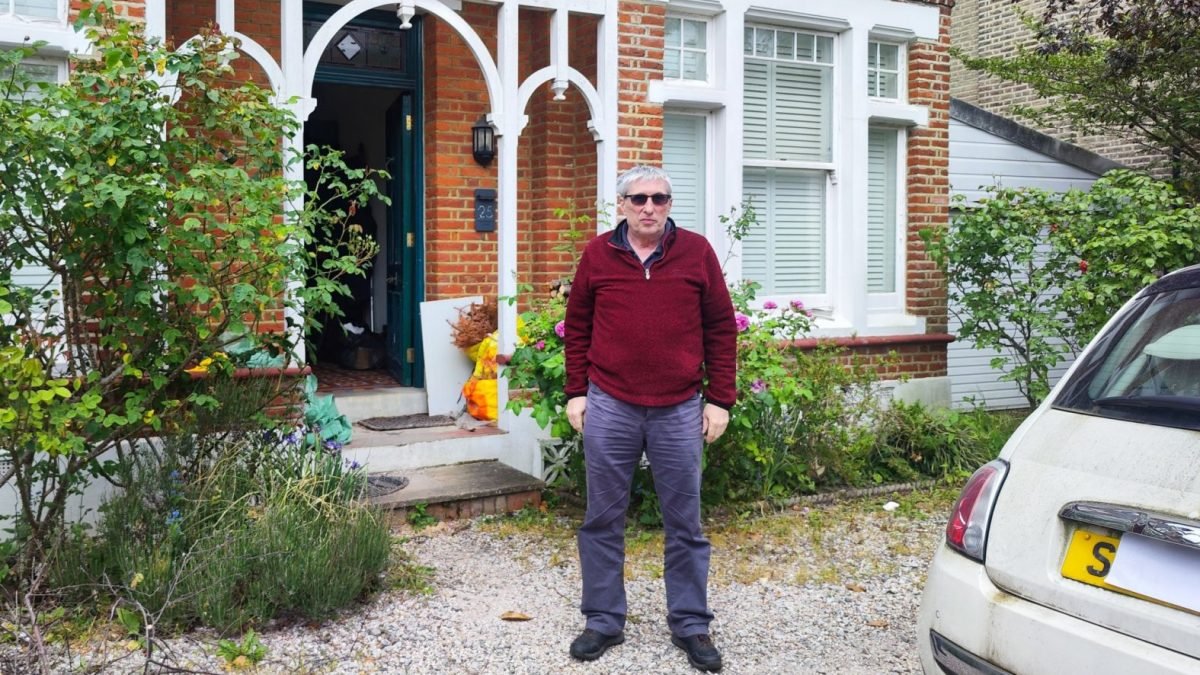
I look at insane local Facebook groups – it reveals the truth about British people

One of my guilty pleasures is a Facebook community group. I love them so much – and derive so much pleasure at the sheer insanity contained within – that I have long broken out of my own community group and started illicitly joining others just to get my fix. I live in Leeds, where I am in multiple groups, but I’ve also joined community groups in Birmingham, Dorset and Aberdeen. I even joined one in Texas after seeing the town on a true crime documentary.

For the uninitiated, a Facebook community group is a closed group on the social media platform that has been set up by the members of a town, city, county – or even a single street. Members post about events and local history, as well as asking questions, providing dubious opinions and shouting at each other about parking. While also furiously typing: “Who is mowing their grass as 9.03am on a Sunday?” Some people watch Game of Thrones; I watch people in Wakefield rowing about bins.

I admit it: I have a problem, but I can’t seem to stop myself. I never say anything, I just silently lurk and bask in the banal madness of suburban living. “Who is letting their dog shit outside my house?”, “Is anyone available to take some stiches out of my neck?”, “Did anyone else hear that bang?”

I know. It’s horribly intrusive of me, but I’m not hurting anyone – and I promise to change all names and identifiable information here. They just make me howl with laughter. “There is a man on Howard Street throwing tins of tomatoes and blocking traffic.” It’s like scrolling through a Victoria Wood sitcom or an Alan Bennett play. If you want to get really meta (pun intended), there are also Facebook groups about Facebook groups, which are full of nosy buggers like me who think the whole thing is hilarious and share the funniest posts – anonymously, of course.

My all-time favourite exchange actually occurred in the group I am supposed to be in a couple of years ago. A very confused gentleman posted the following: “Strange occurrence about an hour ago. I went outside to bring in my laundry from the washing line. Thankfully, it was all still there, but had been comprehensively rearranged and most of my nice old wooden clothes pegs had been swiped and replaced with cheap blue plastic things. If the person responsible reads this, give me back my pegs and leave my laundry alone. Fruit loop!”

To the best of my knowledge, this bizarre crime was never solved; but reading the comments on a post like that can give me the energy I need to make it through the day. Responses ranged from folk quipping that the thief needed to be “taken down a peg or two”, to genuine consideration for the motive – “maybe they needed them for a craft project?” – and, of course, to the more serious members telling everyone off for making light of larceny. “I don’t think this is funny. Do better.”

It’s very easy to find yourself existing within a social media echo chamber once the algorithm clocks what you like, but the Facebook community group forces you out of that. People of all different backgrounds and opinions converge online to share their thoughts on bus timetables, parking problems and youths in hoodies. The content is rarely political – the stakes are considerably smaller than that – but it is the minutiae of day-to-day neighbourhood living, writ large.

Much of the fun of these groups is in the conflict they bring up. “I found four bananas in my garden this morning. Can anyone explain??!” And much of the content is frankly stupid. “Dog thieves are painting symbols on people’s front doors. Stay safe.” But, my time lurking has also taught me that we are united on many points, and that is worth remembering – especially right now, when things feel so politically and socially divided. So, here is what I have learnt.

Everyone wants to be able to park outside their own house and gets grumpy if they can’t. “There has been a van parked outside my house for a week now! Does anyone know who owns it?” This one always causes an argument, because no one owns the road or has a right to park outside their house, and people love pointing that out – but even so, we all like to be able to park outside our homes, anyway. That is universal.

Everyone loves it when the bluebells and daffodils come back into season and start popping up. Facebook groups up and the down the country are swamped with daffodil appreciation posts every spring. This also goes for the first falling leaves in autumn, the first frost and the first robins of winter. We all like to note the changing of the seasons in our community groups and are prepared to share photos in case anyone missed it.

We really are a nation of animal lovers and people love their pets more than they do one another. The panic a missing pet post can elicit often borders on hysteria – with hundreds of comments from people offering to “pray for Mittens”. They emerge in a matter of minutes, along with countless “shared” and “shared from Canada”. The cat is missing in Wigan, but Shelia has shared the post in a community group in Nova Scotia, just in case.

And here is the really big one – amongst all the chaos and rambling conversations that are posted, most people are genuinely good and do care about their communities. They care a lot. People take in lost pets, try to unite strangers with missing wallets, worry about neighbours they haven’t seen in a while and are furious about litter and vandalism. They share historical titbits about who used to live in what house and photos of local landmarks. As well as finding a great deal of lunacy and things to laugh at, there is a lot of love there, too.

I suppose I should remove myself from the groups that I shouldn’t really be in. I can try to wean myself off by replacing them with various interest groups and fan pages, but it won’t be the same. No one will be asking for a local plumber or offering cut-price spray tans out of their garage, there.

Perhaps I love them so much because I’m a historian and you so rarely get to hear the voices of regular people, just living their lives, in the past. Facebook community groups get a lot of stick – but give it 200 years and their contents will be a goldmine for archivists trying to understand how we lived, what was important to us and how we interacted.

Or maybe I’m just a cyber curtain twitcher – and I’m ok with that.

My England XI to play New Zealand

England’s squad for the first Test against New Zealand at Lord’s has opened up some intriguing questions.

Here, The i Paper runs you through the most pertinent ahead of the start of the series on 4 June.

Who opens the batting?

After finally dropping Zak Crawley, it has been confirmed Emilio Gay will debut partnering Ben Duckett at the top of the order.

The Durham left-hander averages 92 in the County Championship this summer and has been backed by Rob Key, England’s managing director of men’s cricket.

“It isn’t going to be easy against this New Zealand attack,” he said. “But Emilio is someone we know well. He played well out in Australia [for the Lions last winter] and really well last year against India A. He shaped up really well against a good attack and he’s evolved and got better since then.”

Will England pick a spinner?

There are no guarantees but the selection of Rehan Ahmed suggests England are looking to blood the leg-spinner ahead of next year’s home Ashes.

Having played all five of his Tests so far away from home, this summer presents an opportunity for the 21-year-old to kick on. Of course, Shoaib Bashir, who didn’t play in the Ashes despite being in the squad, is also in but if they do play a spinner – and that’s not guaranteed at Lord’s – Ahmed’s batting gives him the edge.

File photo dated 28-06-2023 of Rehan Ahmed. England have named the uncapped Sonny Baker, Emilio Gay and James Rew in their first Test squad of the summer, with Ollie Robinson and Rehan Ahmed recalled. Issue date: Wednesday May 13, 2026. PA Photo. Photo credit should read Mike Egerton/PA Wire.
Ahmed looks to be at the front of England’s queue of spinners (Photo: PA)

Is Ollie Robinson going to play?

Key confirmed this when speaking following the squad announcement on Wednesday, admitting Robinson will take the new ball. Hailing the Sussex captain, recalled after more than two years, as one of the best seamers the game has ever seen was a bit much, even if his Test record of 76 wickets at 22.92 is impressive.

If the 32-year-old remains fit and maintains his pace throughout multiple spells, he can make this second chance count.

What about the rest of the attack?

Josh Tongue is a certain pick after the fast bowler backed up his 18 Ashes wickets at 20 in Australia with a fine start to the county season for Nottinghamshire.

Gus Atkinson was concussed last week – by Tongue when Notts faced Surrey – but will be given every chance to make Lord’s after it was confirmed he has been pencilled in to play for England Lions against South Africa A at Arundel from 22 May.

If England pick a spinner then those two and Robinson will likely form the seam attack, with captain Ben Stokes also available to bowl. If either Atkinson is not deemed match-ready or England eschew a spinner, that brings the exciting fast bowler Sonny Baker into the frame.

Will we see a new style of play from England?

If Bazball really is dead, what replaces it? It’s likely England will revert to a more traditional approach with the bat than we’ve seen in recent years, with the quality of New Zealand’s attack likely to restrict the most aggressive players anyway.

Key’s admission he has told Gay to “play his own way” suggests the old Bazball diktat of going hard with the bat has been replaced by a more prosaic approach that will still allow for some – Duckett, Harry Brook and Jamie Smith to name three – to be aggressive without foisting that mantra on everyone.

File photo dated 07-01-2026 of England's Ben Duckett blasted an unbeaten 203 as defending champions Nottinghamshire played out an absorbing four-day draw with likely title rivals Surrey at Trent Bridge. Issue date: Monday 11th May, 2026. PA Photo. Photo credit should read Robbie Stephenson/PA Wire.
England do not sound like they are going to rein in Duckett from his aggressive game (Photo: PA)

And is there any fallout from the off-field controversy that happened last winter?

Off-field indiscipline – namely Brook’s altercation with a bouncer in Wellington and the Noosa “stag do” – rubbed salt into England’s Ashes wounds. The team were depicted as unlikeable too.

Things should be different this summer. The midnight curfew brought in for the white-ball tours that followed Australia remains. And the addition to the squad of two genuinely likeable and gregarious characters in Gay and Baker can only help on the PR front.

How significant is the recruitment of Sarah Taylor?

Becoming the first woman coach of any major England team in any sport feels like a moment, for sure. The former wicketkeeper-batter has been brought in as a fielding consultant for this New Zealand series and was praised as “the best in the business” by Key. She’s expected to be involved later in the summer too. Of course, Taylor will be judged on results but good luck to her.

What’s the best XI to play at Lord’s?

The top seven is set in stone but, given the early-season conditions, I wouldn’t select a spinner so we can have a look at Baker. Five seamers, including Stokes, seems like overkill but it would allow the captain, Tongue and Baker to be used in short bursts while Robinson and Atkinson take on the donkey work.

My XI to play New Zealand

  1. Emilio Gay
  2. Ben Duckett
  3. Jacob Bethell
  4. Joe Root
  5. Harry Brook
  6. Jamie Smith (wicketkeeper)
  7. Ben Stokes (captain)
  8. Gus Atkinson
  9. Ollie Robinson
  10. Josh Tongue
  11. Sonny Baker

The five stages of a Labour leadership challenge

Labour has never removed a sitting prime minister in its 126-year history.

After the party lost more than 1,400 councillors in Thursday’s local elections, that record is under serious threat.

Pressure is now mounting for Sir Keir Starmer to step down or set a timetable for when he will.

Shorts – Quick stories

Over 90 MPs have already publicly called for Starmer to go, according to analysis by The i Paper. At the same time, four ministers and six parliamentary private secretaries – MP aides to ministers – have resigned.

Amid this turmoil, Health Secretary Wes Streeting is reported to be preparing to launch a formal leadership challenge against Starmer.

And, former deputy prime minister Angela Rayner – whose HMRC investigation concluded on Wednesday with no finding of deliberate wrongdoing – has signalled she is prepared to run if required.

How any of this could translate into an actual change of leader depends on a set of Labour Party rules that, in several important respects, may ultimately favour the Prime Minister.

Stage one: The contest kicks off

A leadership election can begin in one of two ways: Starmer resigns, or a challenger comes forward to force him out.

If Starmer steps down voluntarily, the path ahead is relatively straightforward. Potential successors declare their candidacies and begin building support.

If he refuses to go, challengers must put their name forward and begin actively collecting nominations from Labour MPs.

Unlike the Conservative Party, Labour has no mechanism for a simple vote of no confidence. There is no equivalent of a letter to the chairman of the 1922 Committee.

The process only begins when an individual MP declares they want to stand.

Stage two: Hopefuls must secure backing to get on the ballot

The nominations required depend on whether Starmer is still in post.

If he has not resigned, the bar is lower. Each challenger only needs the backing of 81 Labour MPs – 20 per cent of the Parliamentary Labour Party.

Health Secretary Wes Streeting arriving at number 10 Downing Street, London, for his meeting with Prime Minister Sir Keir Starmer. Picture date: Wednesday May 13, 2026. PA Photo. Photo credit should read: James Manning/PA Wire
Health Secretary Wes Streeting is reported to be preparing to launch a formal leadership challenge against Starmer (Photo: James Manning/PA)

If Starmer has resigned and a vacancy exists, the bar is higher. Candidates must secure the same 81 MP nominations and also win support from either 5 per cent of constituency Labour parties, or from at least three affiliates – at least two of which must be trade union affiliates – comprising 5 per cent of affiliated membership.

Each MP can only back one candidate and cannot split their support across multiple contenders, which limits the number of viable challengers in practice.

Around 90 Labour MPs have publicly called for Starmer to resign, according to reporting by The i Paper. Above the 81 needed to force a contest but no single challenger has yet declared at the time of writing.

Stage three: The contest starts – or it doesn’t

Once nominations close, the field is set.

If one or more candidates have secured sufficient backing, they proceed to a full contest.

They set out their policy platforms, make their case to members and begin campaigning in earnest.

If Starmer has not resigned, he is placed on the ballot automatically – without needing any MP nominations of his own.

PURFLEET, UNITED KINGDOM - MAY 16: (L-R) Labour leader Sir Keir Starmer, Deputy leader, Angela Rayner, and Shadow Health Secretary, Wes Streeting, attend an event to launch Labour's election pledges at The Backstage Centre on May 16, 2024 in Purfleet, United Kingdom. Labour Leader Keir Starmer pledges to deliver economic stability, cut NHS waiting times, launch a new Border Security Command, set up Great British Energy and recruit 6,500 new teachers if Labour win the next General Election. (Photo by Leon Neal/Getty Images)
Former deputy prime minister Angela Rayner previously called on Starmer to allow the Mayor of Greater Manchester, Andy Burnham, to return to Westminster (Photo: Carl Court/Getty)

This is a fundamental difference from Conservative leadership rules, which require the incumbent to survive a parliamentary confidence vote before a wider contest can proceed.

But the contest might not happen at all. If no individual candidate reaches the required threshold, the process stops entirely – there is no fallback mechanism and no alternative route.

Equally, if Starmer has resigned and only one candidate qualifies, that candidate could become leader without a full membership ballot.

A coronation is possible if the parliamentary party coalesces around a single agreed successor.

Stage four: The NEC and General Secretary set the rules

As soon as a contest is triggered, the National Executive Committee (NEC) begins shaping the process.

The NEC issues procedural guidelines covering nominations, the timetable and codes of conduct for candidates.

The General Secretary of the Labour Party acts as Returning Officer and appoints an Independent Scrutineer to oversee and verify the ballot.

The NEC defines the precise eligibility criteria, giving it significant influence over the composition of the electorate.

In 2016, when MPs attempted to remove Jeremy Corbyn, the NEC ruled that members who had joined in the previous six months could not vote and that constituency parties could not hold meetings during the contest.

That rule still stands, and it could be consequential this time round. The earlier the NEC announces the timetable, the more recent members are locked out of the ballot.

Stage five: Members vote

The contest is decided by a ballot of paid-up Labour members and affiliated trade union supporters.

Since 2015, the party has used a one-person-one-vote system, preventing the same individual from voting both as a party member and as a trade union supporter.

A candidate must win more than 50 per cent of the vote to become leader.

Why the rules could work in Starmer’s favour

The contest uses a preferential ballot: members rank candidates in order of preference.

If no candidate reaches 50 per cent in the first round, the candidate with the fewest votes is eliminated and their votes redistributed to supporters’ second preferences. The process repeats until one candidate crosses the threshold.

Survation polling of 1,078 Labour members conducted for Compass between 30 April and 5 May 2026 illustrates why this matters.

Britain's Prime Minister Keir Starmer (C) speaks to members of his political Cabinet at the start of the first cabinet meeting of the new year inside 10 Downing Street in central London on January 6, 2026. (Photo by Richard Pohle / POOL / AFP via Getty Images)
Keir Starmer has so far refused to resign (Photo: Richard Pohle/AFP)

Andy Burnham was the first preference of 42 per cent of members – but his second and third preference tallies were comparatively modest, at 13 per cent and 8 per cent respectively.

Angela Rayner, Ed Miliband and Wes Streeting each took around 10 to 11 per cent of first preferences, with their second-preference scores ranging from 12 to 22 per cent.

In a contest without Burnham – who is not an MP and would need to win a by-election before he could stand – first-preference votes would be far more evenly distributed across the remaining candidates.

As lower-placed contenders are eliminated and their votes redistributed, Starmer’s second-preference support from members who regard him as the safer or most centrist option could prove decisive.

A second Survation poll found that 45 per cent of Labour members thought Starmer should stand down after the local elections, against 42 per cent who believed he should remain.

But 51 per cent did not think he could turn the party’s fortunes around ahead of the next general election – figures that suggest anti-Starmer sentiment is widespread but not overwhelming, and that a significant minority of members may remain open to his continuing in office.

I tested supermarket anchovies – £7 Ortiz wins but a £2.50 dupe was almost as good

Britain has undergone a tinned fish renaissance. Once confined to tuna sandwiches and an emergency tin of pilchards, preserved fish is now more popular than ever.

Arguably, none has had as significant a makeover as the anchovy. From fancy delis to small plates restaurants, the tiny fish is making big waves in kitchens across the country.

According to Future Market Insights, the global tinned anchovy market is predicted to rise from $8.38 billion today to $11.83 billion in 2036; Britain is expected to see a 3.2 per cent spike in the same period. That growth is spearheaded by premium retailers such as M&S and Waitrose introducing high-end Cantabrian options; a rise in importers from Spain and Italy; and the growing popularity of the Mediterranean diet – packed with omega-3 fatty acids, protein, selenium and iron, the oily fish are good for heart, brain and bone health.

This tiny, often highly affordable fish packs a huge umami hit (they form the base of both fish sauce and Worcestershire sauce). Whether as a background ingredient or star in its own right, adding anchovies can liven up many a meal. A few good fillets over silky scrambled egg, a version of the classic savoury Scotch woodcock, is a wonderful dish ripe for a return.

Chefs have led the charge. These days you’re never far from a natural wine bar that features anchovies, often a few fillets on a plate doused in olive oil. For Miles Tuddenham, general manager at Roam in Stoke Gabriel, Devon, the best anchovies “have that richness and depth without being aggressively fishy or overly salty. When they’re good, they bring a kind of roundness and elegance that’s hard to replicate with any other ingredient”.

Tuddenham loves them in anchoïade, a provençal condiment made by emulsifying them with garlic, olive oil and lemon, which at Roam is served alongside rare roast beef fillet and fermented mushrooms. “The anchovies cut through the richness of the beef while tying together the earthiness of the mushrooms, bringing balance and precision to the plate.”

In London, David Gingell, chef and co-owner at Primeur, Westerns Laundry and Jolene, puts anchovies “up there with parmesan for the impact they provide. They impart a really lovely umami flavour when cooked into dishes”. Gingell likes good salted anchovies simply with “a ridiculous amount” of butter and fresh sliced shallots on toast.

He also suggests cooking them slowly with garlic, a couple of thin slices of lemon and olive oil before braising down with leafy greens. “And who can forget pasta puttanesca?”

Here, I blind test 12 anchovy varieties, all in olive oil and readily available at supermarkets, with tins and jars ranging from 79p to £7.15.

Aldi The Fishmonger anchovies in extra virgin olive oil

79p for 50g, Aldi

Not the biggest, these have a strong, almost tinned tuna-like smell, and a dark colour. They’re incredibly salty and a bit fishy, and there’s even a touch of metallic flavour. Probably a bit too strong to have on pizza or scrambled eggs, but a little would go a long way in a pasta sauce.

3/5

Tesco Finest Cantabrian anchovy fillets in oil

£1.65 for 50g, Tesco

Smells a little like cat food, but after that initial whiff, you’re left with a soft, tender anchovy, with an alluring, light pink colour and a sweet-salty flavour. It tastes fishy but in a good way, and you get a good balance of sweetness and acidity.

4/5

Kingfisher anchovy fillets in olive oil

£2.50 for 100g, Morrisons

Doused in nice looking olive oil – an attractive, deep greeny yellow – the fillets are quite dark, with a pleasant smell, a mix of olive oil and fish. The texture is chewier than many, but the flavour is excellent. Very salty, but you can taste the herby olive oil. If the consistency was a touch softer, these would be stellar.

4/5

Morrisons anchovy in olive oil

£1 for 50g, Morrisons

Lots of small bones sticking out of the fillets, which you can’t feel when eating but are nevertheless a little off-putting. These are chewy, almost like beef jerky, and incredibly salty, making them hard to eat on their own. One or two fillets would add a hell of a lot of flavour to a stew or marinade, but not one for eating alone.

2.5/5

M&S Collection Cantabrian anchovy fillets

£1.75 for 30g, M&S

Quite large, big and meaty anchovies. These smell mildly, pleasantly fishy, with a hint of sweetness and the scent of good, herby olive oil. They’re wincingly salty to eat, but you get a nice delicate sweetness coming through. Could be a touch softer in texture, but a very nice anchovy overall.

4/5

Asda anchovy fillets in olive oil

84p for 50g, Asda

These have an odd texture – they almost disintegrate in the mouth like a stale cake – and are weirdly sour. Not much fishy flavour going on, it feels like eating pure salt, and there’s a bitter aftertaste, too.

1.5/5

Epicure anchovy fillets in extra virgin olive oil

£2 for 50g, Ocado

The anchovies are quite light in colour, which suggests a more delicate fillet, but these were anything but. So salty I almost cried. One or two of these could be great for a marinade or anchoïade – or to make your own gentleman’s relish – but not to eat alone.

2/5

Sainsbury’s anchovy fillets in olive oil

£1.45 for 50g, Sainsbury’s

Rather fat and thick anchovies, suggesting they’d be good to eat. Though there’s an ever-so-slightly cat foody smell, these weren’t too salty or overly fishy. They didn’t stand out in any way, but neither were they unpleasant. Perhaps better for cooking, but a couple on pizza would be nice, too.

3.5/5

No.1 Cantabrian anchovy fillets in extra virgin olive oil

£1.70 for 50g, Waitrose

Very light, an almost pale, reddish brown. Smells nicely oily, and almost quite fresh, like it hasn’t been overly salted – some smell funky and fermented. A rather chewy texture but a mild, pleasingly fishy flavour. Could eat these on nice bread with olive oil.

4.5/5

Coop anchovies

£1.60 for 50g, Coop

Very thin, dainty strips, these were tender fillets that were highly salty, but not to the extent overpowering any sweetness or fishiness, and there’s a nice hint of acidity, perhaps from the olive oil. I might not eat these alone, but on bread or pizza? Absolutely.

4/5

Fish4Ever anchovy fillets in extra virgin olive oil

£6.95 for 95g, Ocado

A deep, almost purply brown colour, these were chewy and had an almost meaty flavour. Not overly salty, with nice tasting olive oil, these were a great all-rounder, although quite expensive.

3.5/5

Ortiz anchovy fillets

£7.15 for 47.5g, Ocado

Pale and tender, almost like they’re cooked rather than salted. This gave a lovely, soft, buttery, tender texture – by far the best consistency of the lot. The flavour was also sweetly buttery, not overly salty, something I could eat several of with a glass of wine. Expensive, yes, but absolutely delicious.

5/5

I want solar panels for my leasehold flat

A leaseholder living in a flat in east London faces a bill of at least £1,500 from his freeholder to install solar panels on his roof.

Environmental manager Gabriele Carlisi said he is being “blocked” from making green upgrades to his home as the large fees being charged by freeholders mean the investment is “not worth it”.

It’s a problem millions of leaseholders in England could face when trying to upgrade their home and experts warn it could get in the way of the Government meeting its net-zero targets.

Shorts – Quick stories

Unfair fees

Carlisi lives on the first floor of a split terraced property in Walthamstow, east London.

Despite owning his home, Carlisi must ask permission to make any alterations. This is because as a leaseholder, Carlisi only owns the interior of the flat, while a separate freeholder owns the structural part of the building, including the roof.

After enquiring with his freeholder, Carlisi was sent a list of costs he would have to pay to get permission to install solar, including £420 for administration and £1,080 for legal fees.

On top of that he was told he would be responsible for any required surveyor or structural engineer fees, as well as a potential “premium” to the freeholder in exchange for permission.

Carlisi was also told he would be liable to pay the fees even if final permission was not granted.

The fees, which totalled an initial £1,500 but would probably be higher, have meant Carlisi is no longer going ahead with the solar install, which was due to cost around £6,500.

A house on Forest Road, Walthamstow with newly installed photo voltaic (PV) panels. London, UK. (Photo by Andrew Aitchison/In Pictures Ltd./Corbis via Getty Images)
Ministers have vowed to accelerate a ‘solar revolution’ across the UK and the Government is investing billions in helping households pay for upgrades such as solar (Photo: Andrew Aitchison/Getty)

He said it “felt stupid” to pay in the region of £2,000 to potentially be told he would not be allowed the solar anyway.

Carlisi described the experience as “flattening” and said leasehold was a “strange concept” that they don’t have in Italy where he is from originally.

“Leasehold in general is just a blocker for anything. You own your property but you technically don’t own the property and you need somebody else giving you the permission. It’s like a primary school thing,” he said.

The problem with leasehold

Roughly five million people live in leasehold properties in England and Wales, however the tenure has been abolished in Scotland.

The Government is in the process of banning new leasehold flats and converting existing leases to “commonhold” tenures in its Leasehold and Commonhold Bill. However, The i Paper reported last month that there are doubts about whether the outright ban will come into force before the 2030s.

In the meantime, millions of people could struggle to make green upgrades to their home and are likely to face freeholder fees when they want to make changes.

Labour MP for Walthamstow, Stella Creasy, said freeholder fees were a “massive barrier” to her constituents benefitting from solar and is pressing the Government on the matter.

Ministers have vowed to accelerate a “solar revolution” across the UK and the Government is investing billions in helping households pay for upgrades such as solar, batteries and heat pumps.

It was recently announced that “plug-in” solar panels that can be plugged directly into a household socket will be legalised in the UK and available in supermarkets within months.

The climate minister, Katie White, has previously told The i Paper the Government could consider introducing a legal right to solar for renters and leaseholders, similar to laws that have been introduced in other countries.

In Germany for example, the law states that landlords and building owners must give permission for solar installs unless they could provide a clear reason in writing, such as safety concerns.

A Government spokesperson said: “We are supporting consumers to make their own choices – helping make that possible through our £15bn Warm Homes Plan with grants and loans, ensuring everyone can access the benefits and savings that clean homegrown power can bring.

“We are working with stakeholders on how to remove barriers to the installation of clean tech, such as solar panels, for leaseholders.”

I make £500 a year renting out my driveway

For some Crystal Palace fans, Pat Dunne’s parking spaces are almost as beloved as Selhurst Park. Just a 15-minute stroll from the football club’s stadium, it’s prime estate for frugal Eagles. “It’s close to the ground but not too close to the ground, so you can easily get out after the match,” says the 64-year-old university estates manager, who has been renting out his driveway for the last 12 years. He’s even had match referees and international pundits drop-off their whips in his driveway. And – sacrilege, since he’s actually an Arsenal fan – Spurs supporters. To which he says he jokes: “Get off my land!”

Pat is one of an increasing number of Britons renting out their driveways using platforms like JustPark, Stashbee and YourParkingSpace, allowing people to rent out their spare parking space by the hour, in exchange for the app taking a small cut. “We’ve seen strong growth in homeowners renting out their private off-street parking spaces. There are now more than 45,000 spaces listed on JustPark, and that number continues to rise,” says Steve Burt, senior director of global customer experience at JustPark. The UK garage revival is on.

According to Finder, a hefty 46 per cent of UK adults have a side hustle – and this is another pay packet bolt-on. “A big driver is the cost of living, people are looking for smart, flexible ways to earn additional income, and a parking space is an asset many under use,” Burt explains. Curtilage – a silly word for all the land around your gaff – is now a potential goldmine. Pat says he makes around £500 a year, charging £8-£10, no matter what’s on and landing a couple of bookings a week. Many others are raking in several thousand quid from their front gardens, charging premium prices for matchdays and, in one case, £400 a day for a burger van.

But it’s also a two-way-street; thrifty folk are benefiting from the cheaper parking spaces. With public transport in London the costliest in the world and multi-storey car parks the same old story, high prices are driving demand. With no public parking at Selhurst Park (ironic) and charges introduced at Crystal Palace Park for the first time last year, Pat’s place has become prime real estate – a cheaper option without the need for ticket machine queues or gambling on a space on the big day. There’s also an electric charging point, Pat’s toilet, if you need to spend a penny, and it’s a carriage driveway to boot, making parking way easier than squeezing into a tiny space.

But it’s not just about saving a few quid or a parking-induced panic; the need for more spaces is partially fuelled by the resurgence of live events since lockdown. According to the most recent data, UK consumer spending on live music events reached a record-breaking £6.68bn (driven by Swifties). “Live events are back at full scale. If you live near a stadium, concert venue or major sporting ground, demand can be huge on event days,” says Burt.

Before you go dialling 101, it’s probably not illegal; you’re leasing your front garden, not operating a gangland front, remember. If you own the property and don’t require a permit for your space, you’re good to go. There have been some cases of particularly jobsworth councillors claiming that you need to get approval, but the government is clear. “It should be possible to rent parking spaces without planning permission,” it states, as long as there is no “material change” to the use of the space or any special “planning conditions” in place. Neighbours are more likely to take to Nextdoor to rant about their space being taken, than the one across the road being hired out. So don’t worry too much about nosey parkers.

And even if you rent the property, your landlord may let you become a drivewaylord (for a cut of the dosh, of course). Sadly, if you are both renting a property and you require a council-controlled resident’s permit for your space, then you are indeed blocked from renting out your parking spot.

Of course, that might not even be an issue, as not every driveway is going to make you a fortune anyway. If you’re slap bang in the middle of nowhere or right next to a cheap car park, going to the effort of renting your driveway is probably a no-go. But if you’re lucky enough to live in a chock-a-block city, it can be pretty lucrative. The busier, the better. “Location absolutely matters. Spaces near railway stations and airports or anywhere with decent footfall – be that city centres, sporting venues or tourist hotspots tend to perform particularly well,” Burt says, noting that Liverpool, Brighton and Cardiff are proving to be particularly profitable right now.

It’s not, though, just a savvy side hustle. For some renters, it’s a form of civic duty. We find people renting out driveways often get more than just cash benefits, it becomes a genuinely positive interaction, because you are essentially doing someone a favour letting them use your space,” Burt says.“ We’ve heard countless stories of space owners giving drivers lifts to football matches, concerts and even last-minute airport dashes, helping with flat batteries, or even welcoming fans with music on concert days, including one homeowner near Wembley who played his keyboard outside for arriving gig-goers!”

While Pat hasn’t headlined his driveway just yet, this community element chimes with his personal experience. “I think it’s a nice thing to do,” he says. “The money isn’t going to change my life. But the majority of the people who park ring the doorbell and say hello. They tell you they’re off to the game and where they have travelled from.” There’s something satisfying about not lining the pockets of the corporate suits that own extortionate car parks, or risking the indiscriminate wrath of the tireless traffic warden.

For the renters, there are definitely risks to take into account. Pat has experienced a Park-and-Dash situation, with two families using his spaces then cancelling it immediately after. Another time, a renter (a Spurs fan, no less!) couldn’t find his driveway based on Google Maps and asked for a refund. “If he wants to use an app, and you know, the app told him to drive into the sea…” Pat says, the incident still living in his head rent-free. For the most part, though, it’s proved a pretty easy ride.

And he’s never had any curtain-twitching neighbours complain about the influx of cars parking up for a few hours at a time. Which is a wise decision, indeed – at the rate that driveway renting is going, they may be doing the same thing too, very soon. “Give it a go. What have you got to lose?” encourages Pat. Maybe, in your front garden at least, there really is a magic money tree.

I spent £10,000 on a cruise

Every year, millions of Brits go on cruise holidays, sailing between sightseeing hotspots on some of the largest passenger ships in the world. For some, they are the ultimate break from reality, a self-contained society with everything you could want to forget the world back home.

But there are serious questions about the environmental impact of cruise ships, and the ruinous effects thousands of day-trippers can have on the communities which cruise passengers pour into and out of. And, after the hantavirus outbreak on one cruise ship which left three dead and dozens infected, they seem the worst place to be if illness sets in.

Are cruise holidays really worth it? Cruise ship veteran Mary Stuart-Miller and sceptic Rhiannon Picton-James give their perspectives.

When I saw the headlines about the hantavirus outbreak on board the MV Hondius cruise ship, it confirmed everything I already suspected about cruise holidays: they are hell ships with slides. You could not pay me to go on another one.

I’ve been on three cruises in five years, each more disastrous and costly than the one before. The first was supposed to be a trip around Northern Europe, but a storm meant we were diverted and had to go to Western Europe. The second made it to the correct ports, but my toddler caught an ear infection from the pool and needed antibiotics. And my husband caught pneumonia.

My final voyage in 2024 was the worst of all: a two week trip around Europe. I contracted both Covid and norovirus. I vomited everywhere, all over my cabin and family, uncontrollably. My husband was powerless to help. All he could say was, “I’ve never seen anyone projectile vomit before”. I spent the remainder of the holiday between the ship’s hospital and in isolation in my cabin.

I wasn’t allowed to leave the room to get food or water, let alone disembark at any of the ports. I was instructed to isolate in my cabin, and to call for room service for anything I needed: food, drinks, snacks. It would all be free (including the treatment I received). They also gave me a free WiFi package, and TV and movies which you otherwise had to pay for.

If I hadn’t been so ill, I might have enjoyed this part. But the room service line was always busy because of how many passengers were sick, which left me sending desperate texts to my husband on land, begging him to return because I had run out of water.

I was stuck there, effectively in a cell, like a captive. I watched Ghostbusters: Frozen Empire three times, because there were only about six movies to choose from on the TV. I was in that room 24 hours a day for an entire week of a two-week cruise, while my family skipped merrily off the ship to enjoy Spain without me. They did not need to quarantine, or even get tested. It made no sense. Luckily my four-year-old didn’t get any symptoms until we were in the car on the way home.

The trip cost £10,000 before any extra spending or fun. I wasn’t eligible to collect any compensation from the insurance either, even though I missed half the ports through no fault of my own – they called it “lack of enjoyment”, which did not count, apparently. To be fair, the cruise line did give me a voucher – but only redeemable against my next holiday with them. Needless to say, I won’t be using it.

Cruise enthusiasts insist “you can get sick anywhere”, but I have never been ill like that in my life. It’s not like getting a flight for a few hours or sharing a resort. If you spend a week or two in the same enclosed environment as thousands of other people, you’re almost bound to pick up any illnesses they’ve brought along with them, however diligent the cleaning on board.

Norovirus really ripped through the ship; everyone had it. I overheard parents telling their children not to use the handrails when going down the stairs because of how bad the outbreak was. The hospital was full. There was vomit everywhere. The shop sold out of immodium. The pools were emptied more than once because someone was ill in them.

People say it’s “the best way to travel,” and it absolutely is not. Think you can explore Lisbon in six hours before you have to be back on the ship? You can’t. You’ll spend an hour disembarking, another stuck in passport control, and then the entire day becomes a countdown to getting back onboard in time, unless you fancy paying to fly to the next port to catch up with your ship.

They say your holiday starts as soon as you step on the ship, and that’s a lie too. It’s the worst day aboard. You might think you can kick back with a cocktail and start enjoying yourself, but you can’t, because everyone else has the exact same idea, and all of the bars and restaurants are packed. Think you can get a seat on the deck instead? Think again. There are about 500 sunloungers and 5000 people.

None of it appeals to me. The drinks are too expensive and the rooms are too small. They’re environmentally indefensible, too. In 2022, the 214 cruise ships operating in Europe pumped out more than four times the sulphur dioxide that all of the continent’s 250 million cars produced.

Everything about it is so gimmicky. Oh, the cruise has dodgems? An F1 racing simulator? A slightly worse version of a West End show? None of these are things we would be interested in if we were actually enjoying ourselves.

Perspectives

Are cruise holidays really worth it?

I have been on 60 cruises

Every year, millions of Brits go on cruise holidays, sailing between sightseeing hotspots on some of the largest passenger ships in the world. For some, they are the ultimate break from reality, a self-contained society with everything you could want to forget the world back home.

But there are serious questions about the environmental impact of cruise ships, and the ruinous effects thousands of day-trippers can have on the communities which cruise passengers pour into and out of. And, after the hantavirus outbreak on one cruise ship which left three dead and dozens infected, they seem the worst place to be if illness sets in.

Are cruise holidays really worth it? Cruise ship veteran Mary Stuart-Miller and sceptic Rhiannon Picton-James give their perspectives.

Nobody would deny that the situation on MV Hondius sounds horrendous. But taking a cruise right now is no more reckless than stepping onto a bus, train or plane – and arguably a great deal more enjoyable. Cruises are still, by far, the best way to see the world.

Should the unthinkable happen, cruise ships are designed with protocols and onboard systems to detect, isolate and contain infectious disease outbreaks. In fact, they’d put the average GP surgery to shame. Most major cruise ships use hospital-grade HEPA filtration systems, with cabin and public-space air exchanged up to 12 times an hour.

I love cruise holidays. After taking upwards of 60 cruises spanning Europe, Asia, the Caribbean and Scandinavia, I have spent decades embracing new cultures, countries, cuisines and experiences, and seeing more of the world than any conventional holiday could provide. And I am not alone: 2.4 million British and Irish cruise passengers take to the water each year.

I have climbed the rigging on magnificent tall ships, taken the wheel, watched dolphins swim beneath the bowsprit, visited Caribbean islands, cruised the pristine coastlines of Greece and Turkey, and enjoyed the company of just a couple of hundred others on board.

Socialising around a relaxed, open-air bar, it was easy to make friends. An instant bond with a South African couple with whom we spent many happy hours while sailing with my three kids resulted in several reunions in Italy, Greece and the UK. Meeting a French couple during another cruise led to an invitation to their marriage later the same week, conducted on deck by the captain in the bay of Sicily. I was delighted to take on the role of unofficial photographer, join the wedding celebrations, and stay in touch once back home.

The great thing about cruising is that you are essentially packing in several holidays’ worth of fun in one go. Some of the best meals I have ever eaten in my life were on board, rivalling any restaurant back on land. I not only ate well, but took part in a cookery school to replicate the fare, under the auspices of a top chef. Then I joined the ship’s art classes, spending hours dabbling with paint and enjoying the spoils of store cupboards full of fabulous, freely available art materials. I felt like a small child in a sweetshop. In no time, I was taking instruction from the international crew in fruit carving and napkin folding – skills which I occasionally roll out today!

On board a river cruise ship, the vessel meandered down the Danube and the Rhine so gently that guests had the option to cycle along the towpath using the complimentary onboard bicycles. I hopped off to visit Amsterdam, Cologne, Vienna and Bratislava, then explored exquisite timbered towns and atmospheric Christmas markets, before returning to a stylish, comfortable, floating home.

Although small-ship cruises are my preference, I have also enjoyed the party-oriented, energetic vibe on board bigger ships: eating well, living it up and making the most of the 24/7 activities and entertainment.

After criticism over cruise ships’ environmental impact, the industry is changing. Cleaner fuels, sophisticated wastewater treatment systems, reduced single-use plastics, expanded recycling programmes and improved energy efficiency are just some of the initiatives underway.

I was only sorry to miss an onboard marine biologist’s beach clean-up project in St Kitts, where local volunteers and passengers removed around 1,700 pounds of rubbish and plastic debris from the shoreline. By sheer coincidence, our paths crossed again years later at a wedding in Rome – perhaps a reminder of how cruising can make the world feel a surprisingly small place.

Perhaps the biggest plus of all is that cruises open the way to multi-destination travel, yet you never pack or unpack more than once. There is a cruise and a cruise ship for everyone, whatever floats your boat.

One thing is for sure: nothing will stop me from cruising. I’d rather eat my sunhat. Though I might sanitise it, first.

The stunning assist that resurrected Phil Foden’s World Cup hopes

ETIHAD STADIUM — A few weeks ago, I was concerned that Phil Foden and his fabulous talent had hit the buffers. Potentially forever.

Hauled off at Wembley before the hour mark in Manchester City’s FA Cup semi-final tussle with second-tier sleuths Southampton, Foden looked like a beaten man as he trudged off, another nadir amid a second successive season to forget.

This was when this generational talent was supposed to be well on the way to being the greatest midfielder to ever wear the England shirt. Not a benchwarmer in a City side who seemed to be giving up on him.

Since signing a lucrative new contract earlier this month, something that, on the face of it, appeared rather churlish from a slick operational unit like City given Foden’s two-year form struggles, there has been a glimmer of the “Stockport Iniesta” finding his dancing shoes once more.

Manchester City's Ghanaian midfielder #42 Antoine Semenyo (2L) celebrates scoring the opening goal with Manchester City's Brazilian midfielder #26 Savinho (L), Manchester City's Egyptian striker #07 Omar Marmoush (C) and Manchester City's English midfielder #47 Phil Foden during the English Premier League football match between Manchester City and Crystal Palace at the Etihad Stadium in Manchester, north west England, on May 13, 2026. (Photo by Darren Staples / AFP via Getty Images) / RESTRICTED TO EDITORIAL USE. No use with unauthorized audio, video, data, fixture lists, club/league logos or 'live' services. Online in-match use limited to 120 images. An additional 40 images may be used in extra time. No video emulation. Social media in-match use limited to 120 images. An additional 40 images may be used in extra time. No use in betting publications, games or single club/league/player publications. /
Foden celebrates with his City teammates after setting up Semenyo’s opener (Photo: Getty)

Against Everton last week, as City’s grasp on the Premier League title slipped away, Foden’s late cameo off the bench was full of the vigour that had been absent for so long.

City were tepid in the extreme at the weekend against Brentford, until Jeremy Doku inspired them to victory. Foden’s introduction also deserved an honourable mention.

The real beacon of hope came last night. Again, City were labouring early on against a Crystal Palace side who were causing more problems than the script suggested they would.

Jean-Philippe Mateta stunned the Etihad into silence early on after finding the net, before a late linesman’s flag caused widespread relief.

A much-changed City, with the FA Cup final to come at the weekend, looked shorn of joie de vivre. What they needed was a moment. The source of that match-defining pass was a welcome one.

A no-look backheel to set up the opener for Antoine Semenyo was not the mark of a midfield maestro on the wane. The fact Foden even tried it was heartening enough, but to pull it off, in such a pressurised situation, could do revolutionary things.

Another assist shortly followed for Omar Marmoush’s second in the first half, completing the job with time to spare, to at least give Arsenal something to think about ahead of the weekend.

Finding that knack of creating something out of nothing again could not be more timely, with the World Cup on the horizon.

Foden’s woeful form has put him way down the pecking order to even get in the squad. Attacking midfield is one area in which England are not lacking. But there aren’t many who could conjure that kind of backheeled magic on the biggest of stages.

MANCHESTER, ENGLAND - MAY 13: Phil Foden of Manchester City and Pep Guardiola Manager / Head Coach of Manchester City during the Premier League match between Manchester City and Crystal Palace at Etihad Stadium on May 13, 2026 in Manchester, England. (Photo by Robbie Jay Barratt - AMA/Getty Images)
Guardiola looked delighted with Foden’s efforts – and rightly so (Photo: Getty)

Knockout international football is all about moments. The latter stages are always especially tight, where one piece of incredible skill is enough to settle an entire contest.

Foden hardly warrants a starting berth, but could Bukayo Saka, Cole Palmer or Eberechi Eze come up with something similar in pressurised situations? Remarkably, in this most unflattering campaign, Foden has more Premier League goal contributions than all three.

The smile as he was withdrawn, minutes before Savinho made sure of City’s success late on, said it all. As did the reaction of his manager, who greeted the departing local hero like a son who had just come home from a year abroad.

Guardiola would love nothing more than restoring Foden to his former glories before heading for the hills himself. There’s a long, long way to go, but there have been signs recently that all may not be totally lost yet.

Our lives just became much more expensive – five ways to protect your money now

This is Armchair Economics with Hamish McRae, a subscriber-only newsletter from The i Paper. If you’d like to get this direct to your inbox, every single week, you can sign up here.

The economic clouds have darkened further for two reasons. One, which affects just about the whole world, is the deteriorating outlook for inflation as a consequence of hostilities in the Middle East continuing through into the summer. The other is domestic, for the inevitable uncertainties over the UK’s financial management have pushed up the cost of borrowing not only for the government, but for anyone seeking to get long-term finance.

As far as inflation is concerned, one signal of alarm came from the US, where the annual inflation rate jumped in April to 3.8 per cent, the highest since May 2023, as a result of higher energy prices. We will not get UK April numbers until next week, but looking further forward, the most optimistic forecast of the Bank of England suggests inflation will peak at around 3.6 per cent by the end of this year, while its most pessimistic figure is 6.2 per cent early in 2027.

The effect of all this is that the chances of any interest rate cuts this year from the Bank of England are vanishingly small. Indeed the markets are predicting that the next movement will be up, not down. In addition, it is hard to see any significant decline in longer-term rates until our current political situation clarifies. The yield on 10-year government bonds, gilts, remains over 5 per cent – the highest since 2007 – while the yield on 30-year gilts at around 5.75 per cent is the highest since 1998.

The danger is that any successor to Sir Keir Starmer would face a crisis of confidence among international investors, and as a result the UK would have to pay even higher costs to fund the national debt than it does at the moment. Indeed, when it became clear on Wednesday that the Prime Minister and Chancellor would remain in post a little longer, gilt yields actually declined slightly. The concern is that whoever replaces the present team will be even less disciplined in keeping government borrowing under control.

The rest of us have to live with the judgements of the markets, whether we like them or not. The only safe assumption, therefore, is that for the rest of this year and probably beyond, both inflation and interest rates will be higher – maybe substantially higher – than they are now.

Having the central banks put up interest rates does not make the price of oil any cheaper, or curb the inevitable consequences of what has already happened as a result of the closure of the Strait of Hormuz. But it is the only weapon they have of stopping the increase in energy costs becoming embedded in the wider economy and pushing up prices that are not directly affected by this.

So, what should we do?

The starting point is that we have to accept there may be a financial crisis of some sort. Let’s hope there won’t – and I certainly don’t think it is inevitable – but it would be naïve not to acknowledge that there is a risk. You don’t want to be refinancing a mortgage in the middle of a crisis, so we should try to make ourselves financially bullet-proof.

Everyone’s circumstances are different, so it is impossible to do more than sketch some principles, but here are some of them:

First, people should secure borrowings. Better to pay a little more now and be certain than take a risk on getting a cheaper rate in a couple of years’ time. It is quite possible that the fears noted here will ease, inflation will be beaten back and that economic growth will resume. But we cannot assume that will happen.

Next, there may be a sharp, though temporary, fall in property prices. What has happened in central London may be replicated elsewhere. In the long-term, the UK housing market will be fine, but you don’t want to be a forced seller at a bad moment in the market.

If interest rates are heading higher, it makes sense to clear the most expensive debts – notably those on credit cards. Since the return on savings is almost always lower than what we pay for debt, people use spare cash to cut borrowings.

It also makes sense to maximise the interest we are paid, naturally on an ISA where possible, as otherwise we are being taxed on the interest even if that interest is simply compensating for inflation.

However, on a longer view it always makes sense to save with an equity ISA rather than a cash one. There could now be as many as 17,600 equity millionaires, according to Rathbones, the wealth managers. It is hard to be absolutely certain but it is most unlikely there are any cash ISA millionaires at all.

Finally, there are lots of small general points where attention of detail can have a cumulative impact on personal finances. For example, at times of financial pressure, companies have to offer deals to drum up business. That is an opportunity for would-be customers to shop around. However, many service contracts have inflation clauses written in, linking future charges to the consumer price index – or worse, the retail price index, which is higher than the CPI. Beware of those.

None of this is easy, because it means paying attention to something that many people find boring. But coping with tougher times requires discipline, and I am afraid times will indeed become tougher in the months ahead.

Need to know

Inflation is such an insidious thing that we tend to forget how relentlessly it wears away the real value of our savings. For anyone feeling they need an anchor, I suggest they go to the Bank of England’s Inflation Calculator here, and see what has happened over really any period, but particularly the past few years.

The data goes back to 1209, yes that is correct, so you can have lots of fun seeing what a craftsman in the 13th Century could buy with their annual wage of £5. That would be equivalent to around £9,000 today, so a long way below our national living wage today of around £26,437 for a 40 hour week. But not that much less than the full state pension which despite the triple-lock works out at only £12,548 a year. And a chicken, by the way cost 0.5 old (i.e. pre-decimal) pence, which on my quick tally, works out at about a fiver in today’s money – and wasn’t a tasteless broiler either.

The greatest inflation – not just in living memory, but ever in our history – was in the 1970s and 1980s. A typical starting salary for a graduate in 1967 of £1,200 (to pick the year when I came to London and got a job as a journalist) would be £19,484, so well below the national living wage now and not much better than the farm labourer of 1209. What’s more, I was very glad to get the job.

But look at what has happened since Tony Blair came to power in 1997: if you took £10,000 as a salary then, you would need £21,087, now. The average inflation since 1997 was 2.42 per cent. So even this relatively low inflation rate, which is not that much above the Bank of England target of 2 per cent and way below the present level, still means that inflation doubles over less than 30 years. I find that pretty chilling.