
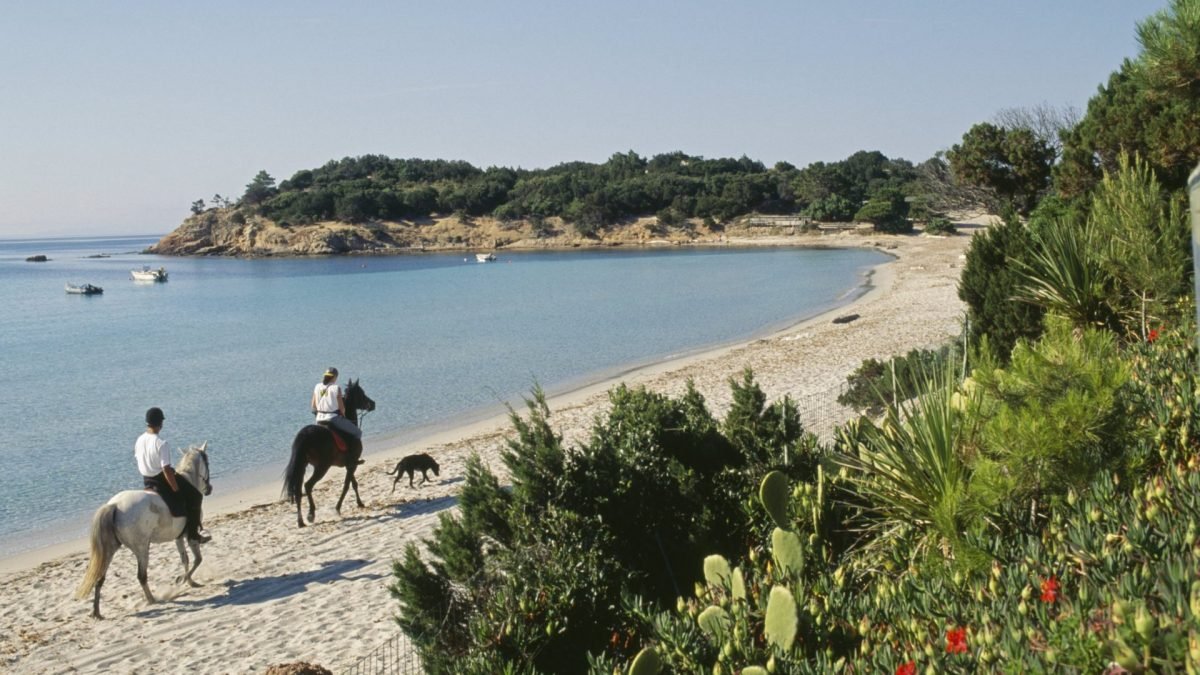
I wrote my first guidebook to France 25 years ago and have returned regularly ever since. A ferry journey to an island with empty beaches and fresh seafood is always a treat, but these magnificent seven – far from France’s tourism hot spots – each have their own charms. Here is how I reckon they stack up for a summer escape, in terms of beach appeal, hotel variety, culture, food and drink and activities…
Corsica
France’s biggest island is a microcosm of the Mediterranean, with plenty of golden sands and fine wine. Its tumultuous history of invasion and independence struggles has given it a distinctive character that sets it apart from the mainland. These days it is popular among French and Italian holidaymakers, many of whom own holiday homes on the island, though flies under the radar of British visitors. Access is by plane to Bastia or Calvi, or ferry from the mainland (Toulon, Nice or Marseille).
Beaches: 10/10
Three of Corsica’s 200 beaches regularly rank among the top 10 in the world. Saleccia, Palombaggia and Rondinara are icing-sugar stretches of sand you’d struggle to better in the Bahamas.
Hotels: 6/10
Corsica has a handful of cracking hotels, such as Domaine de Murtoli, an exclusive hamlet flipped into an experiential residence with farm-to-fork dining. Elsewhere, the accommodation scene is lacking, as a reliance on repeat French customers means there is little innovation among hotels. Airbnb has plugged this gap with fun, friendly rental offerings.
History and culture: 9/10
Calvi is a beach-facing citadel where Romans, Pisans and Genoese crafted today’s architectural legacy. Indigenous culture thrives across the island in the form of oral storytelling and mountain traditions, making the island seem decidedly un-French. Napoleon was born in Corsica and his Ajaccio birth home – now a museum – venerates the dictator.
Food and drink: 9/10
Midway between France and Italy, with a 620-mile coastline, Corsica is home to a Mediterranean mash-up cuisine rich in seafood, garlic and olive oil. Must-eats include figatellu smoked sausage and brocciu ewe’s cheese, while the welcoming vineyards grow grape varieties unique to the island.
Getting active: 10/10
No French island does outdoor pursuits better. Corsica’s landmark activity is the GR20, a 113-mile sea-to-sea hike among 2,706m-high peaks. Elsewhere, choose between canyoning, kayaking or snorkelling inside a Unesco-protected marine park.
Total = 44/50

Oléron
France’s second-largest island is a sand-ringed paradise for biking, hiking and history. Just south of the popular Île de Ré, it offers a refreshing alternative to the busy holiday isle, with lived-in villages, watersports and the freshest seafood. A bonus is that you can drive from the mainland over the toll-free bridge.
Beaches: 10/10
Oléron has a variety of wonderful sandy stretches to choose from. On the island’s Atlantic coast, beaches such as Saint-Trojan offer wild sand and surf, while over on the sheltered eastern coast, dune-backed coves include Plage des Saumonards.
Hotels: 8/10
As well as traditional hotels, Oléron has splendid campsites alongside the upscale family-friendly “holiday villages” that France does so well. All bask in more than 2,000 hours of annual sunshine.
History and culture: 8/10
Oléron’s charm lies in its laid-back authenticity, from age-old bakeries to fishing boats chugging home with cod and bass. Take in the scene by climbing the 224 steps of Chassiron lighthouse, which guards the island’s northern tip.
Food and drink: 8/10
Nutty Marennes oysters can be slurped down at source on the east coast. In restaurants, mussels and shellfish are sprinkled with local fleur de sel salt. Vin de pays oléronais wines taste best just a few miles from where they were made.
Getting active: 9/10
You can surf and sail but the overarching Oléron theme is soft adventure. Life-affirming activities include cycling along 75 miles of bike paths through timeless villages, and spotting egrets and herons in the wildlife reserves.
Total = 43/50

Île d’Yeu
New accommodation and activities make this Atlantic isle off the coast of the Vendée shine, a 45-minute boat hop from the mainland. With golden beaches and a wild feeling, the island feels like a real escape.
Beaches: 9/10
Île d’Yeu is a nine square mile Atlantic speck, yet its 30 beaches have a Caribbean quality. Similar to most Breton islands, you have the choice of tidal rock pools on the west coast, such as Plage de la Belle Maison, or family-friendly coves such as Sables Rouis, to the east.
Hotels: 8/10
Bourgeois-bohemian hotels such as La Mission have transformed ancient architecture into hubs for e-biking and spa escapes, while converted fishermen’s cottages for rent distil the island’s seafaring soul.
History and culture: 7/10
The island has long been a place of retreat, from Neolithic stone worshippers to medieval Christian monks. Modern escapees can check out tuna fishing history in Port-Joinville and frescoed Romanesque churches across the island.
Food and drink: 8/10
Restaurants on Île d’Yeu have names like Le Navigateur and La Pêcheur, indicating the seafood-heavy mix. Sardines are the big catch, while rillettes de poisson is a fishy spread dating from the island’s cannery days.
Getting active: 8/10
Trotting through the Atlantic shoreline on horseback or sculpting ceramics with locals are part of Île d’Yeu’s laid-back vibe. Cycling is huge, with islanders nipping about on Parisian sit-up-and-beg style vélos. Swimming and surfing are popular on the unguarded shores.
Total = 40/50

Porquerolles
A slice of the Seychelles dangling off the Riviera, with an A-grade art gallery underground. Part of the Port-Cros national marine park, it is the largest and most-inhabited of the three “Golden Islands” (Port-Cros, Le Levant), but a limit on daily visitor numbers prevents overcrowding.
Beaches: 9/10
Porquerolles is a mere four miles long, but it has jaw-dropping beaches and crystalline waters alive with grouper and rainbow wrasse, as befits its status as a national park. Plage d’Argent has long, silver sands, while Le Langoustier is a wild beach with sunset views.
Hotels: 7/10
A handful of whitewashed, shuttered, Provençal inns form the only accommodation on Porquerolles. Hotels like Villa Sainte Anne bake baguettes for breakfast and pour island wine at dinner – charming in their simplicity.
History and culture: 9/10
The new Fondation Carmignac is a world-class contemporary art museum stocked with Warhols and Rothkos, built underground so as not to disturb the island peace. A 15-hectare sculpture park adjoins the gallery. Kids love to clamber around Fort Sainte-Agathe, a castle with precipitous views built to ward off pirate attacks.
Food and drink: 7/10
Porquerolles has a vineyard so bucolically arresting that it was recently purchased by Chanel. Domaine de l’Ile offers tastings of its high-end rosé that smacks of island herbs. Restaurant cuisine is seafood-heavy but ingredients are caught or reared elsewhere.
Getting active: 7/10
Swimming and snorkelling inside a marine park is Porquerolles’ biggest adventure pull. Mountain bikes can be hired by the arrival jetty for exploring the island’s sandy paths.
Total = 39/50

Ushant
The island at the edge of the world is France as its rawest, with feral beaches and salty landscapes channelling an otherworldly vibe. Part of Brittany’s Molène archipelago, 30 kilometres off the coast, it has a mythical charm that sets it apart.
Beaches: 8/10
The westernmost point of Metropolitan France – the country’s European part – has wild and windswept beaches. Sandy stretches such as Plage de Porz Doun embody an oceanic energy backed by sand dunes, and are near-empty outside summer.
Hotels: 8/10
Accommodation on Ushant is astonishingly varied for an island with fewer than 1,000 inhabitants. There are Gallic guesthouses, a simple campground and a highly regarded youth hostel, l’Auberge d’Ouessant.
History and culture: 7/10
Aside from some of the world’s most dramatic lighthouses, culture on Ushant is all about local interaction, be it buying lobster direct from the briny port or sipping cider in the timeless village of Lampaul. Local houses are squat and humble, many decked with furniture made from wooden flotsam and jetsam.
Food and drink: 8/10
Fishing is hooked into the soul of this six square mile island. Atlantic crab and lobster are popular, while seaweed is woven into some dishes. Breton classics such as crêpes and galettes make great snacks.
Getting active: 7/10
Coastal walks amid a dramatic end-of-the-earth landscape are the key activity. Stroll to spot bottlenose dolphins, grey seals and Ouessant sheep, a particularly shaggy breed.
Total = 38/50

Bendor
The private Riviera island, once owned by pastis magnate Paul Ricard, has recently reopened to guests and daytrippers, with a high-end hotel. Even if you don’t stay, it’s worth taking the boat over for a wander and a refreshing glass of pastis.
Beaches: 6/10
Just 10 minutes by boat from the beachy town of Bandol, Île de Bendor is tiny. Island experiences showcase nature, wellness and fine wine rather than sandy beaches, but handy swim spots connect to a small reef.
Hotels: 10/10
The big ticket. After five years of renovation, Bendor reopened in May with one of the hottest hotel offerings on the French Riviera. The grand hotel is styled on three distinct themes on three sites around the island – 60s chic Delos, tranquilly natural Soukana and Provençal-style Madrague.
History and culture: 6/10
French industrialist Paul Ricard purchased the seven-hectare island in 1950, then invited his artsy pals Salvador Dalí and Marcel Pagnol to stay. Ricard’s spirit lives on with pastis cocktails served in the Delos Cocktail Bar.
Food and drink: 9/10
Bendor has three restaurants, four bars, a café and a crêperie, all a few minutes apart. Le Grand Large is the signature restaurant overseen by Lionel Levy, a headline name in modern Mediterranean gastronomy.
Getting active: 7/10
Bendor’s mile-line coastline can be strolled in 30 minutes. The hotel offers a kids’ club and daily activities, plus a spa.
Total = 38/50

Chausey
Just a ferry hop from Jersey and Normandy, this French Channel Island has plenty of Gallic élan and the biggest tidal range in Europe, revealing gigantic beaches at low tide.
Beaches: 9/10
At high tide, Chausey is a small island with duvet-sized beaches. But when the tide is out, something magical happens. Beaches such as La Petite Cale become football fields of sand without a single footstep on them, and Chausey fractures into 365 tiny islets that can be strolled or waded between.
Hotels: 8/10
There are only two hotels on the island. Hôtel du Fort et des Îles is the kind of classic French seaside inn where you want to read a Maigret novel while nursing a cognac, while families will prefer the rustic self-catering apartments at Gîtes de la Ferme.
History and culture: 6/10
The tug-of-love between England and France over Chausey is evidenced by the stone forts that litter the coast. Nothing on the island is more than a 20-minute walk apart – just as well, because cars are banned.
Food and drink: 7/10
Mile-long Chausey is a living larder. Guests can forage for clams for dinner. Even the island’s post office sells oysters plucked from the shore. Note that all self-catering ingredients must be carried from the supermarché in Granville on the mainland before the 60-minute ferry across the Channel.
Getting active: 7/10
A three-mile coastal path links Chausey’s lighthouse, forts and beaches (look out for oystercatchers and seals along the way). With a year-round population of just 30 people, this is a place where you make your own fun.
Total = 37/50