
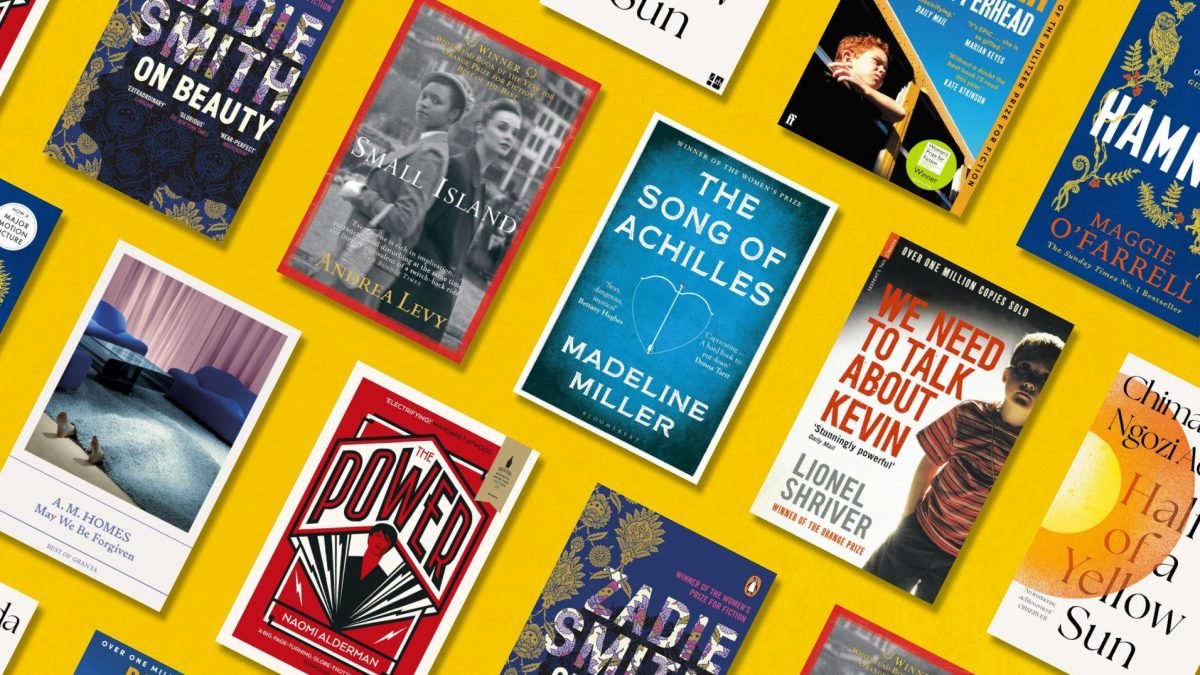
The shortlist for the 2026 Women’s Prize for Fiction was finally announced last month, with six novels that “interrogate the wealth of roles women play in society, the power they hold, and the extent to which they choose, or are able, to wield it”, according to The Women’s Prize Trust, which organises the awards.
It’s a fitting statement for an award (formerly the Orange Prize and the Bailey’s Women’s Prize), founded 30 years ago, that is still a much-needed counterweight to the historic imbalance in the literary coverage of female authors (nearly twice the number of men have won the Booker). The shortlist includes novels from established American authors Lily King and Susan Choi, as well as four debut novelists.
King’s Heart The Lover, a campus romance, is a companion piece to her brilliant 2020 novel, Writers and Lovers. Choi’s Flashlight is a historical family saga following the tragic disappearance of a 10-year-old girl’s father. Then, we have Dominion by Addie E Citchens, a reflection on Black womanhood in the American South, The Correspondent by Virginia Evans, an epistolary exploration of ageing, plus The Mercy Step by British newcomer Marcia Hutchinson, a coming-of-age story set in 1960s Bradford, and Kingfisher by Rozie Kelly, also British, about a young queer academic who becomes infatuated with his older female colleague. Four of the books were published by independent presses.
A exciting and worthy selection; the winner of the £30,000 prize will be announced in June. Meanwhile, we all still have favourites from the past 30 years. Here is my selection of the top nine winners from previous years.
Andrea Levy, Small Island (2004)

This tender but not overly sentimental book gently probed the impact of Caribbean immigration in Britain, exploring identity and the fallout of Empire long before the public airing of the Windrush scandal in the late 2010s. Set in 1948, in the aftermath of the Second World War, the novel brings together liberal-minded white landlord Queenie, her missing husband Bernard, and her black lodgers Gilbert, who fought in the Royal Air Force, and his slightly snooty wife Hortense, who has recently joined him in London, rather unhappily, from Jamaica. The timeline jumps around a bit so we can peek into the war years too. This offers as good as an understanding as any you’ll get from a history lesson about the events that brought a new Britain together in the post-war years.
Tinder Press, £10.99
Lionel Shriver, We Need To Talk About Kevin (2005)

Shriver’s clever and arguably very unpleasant book about a guilt-ridden mother, Eva, and a high school massacre perpetrated by her son, Kevin, remains a book club favourite, and no wonder: it yields different interpretations on every new reading. Is Kevin born psychotic? Did Eva have postnatal depression? Is Eva an unreliable narrator whose skewed view of her baby forever poisoned their relationship? Whatever your take, this is a cunning shape-shifter of a novel, that forces you to think hard about parental responsibilities, gender norms and teen violence.
Serpent’s Tail, £7.99
Zadie Smith, On Beauty (2006)

In her loose reinterpretation of EM Forster’s Howards End, Zadie Smith transposes the Edwardian writer’s fixations with class and clashes of ideology from the English countryside to a modern world of American academia and racial tensions. Nowhere is Smith’s extraordinary Dickensian talent for writing wildly different personas, with their varying backgrounds and idiosyncrasies, better showcased. From the hypocrisies of the liberal Belsey family to the straining conservativeness of the Kippses, this big bold campus novel unites its large cast with an impressive lightness and Smith’s distinctive dry humour.
Penguin, £9.99
Chimamanda Ngozi Adichie, Half of A Yellow Sun (2007)

This lyrical but unflinching novel was many readers’ introduction to the Biafran Conflict, the Nigerian civil war that left a million dead from violence and starvation. In 1960s Nigeria, we meet Ugwu, a poor young boy who works for the university lecturer Odenigbo, Olanna, a wealthy, educated woman with a strained twin sister relationship and Richard, an Englishman researching art in Nigeria. Adichie is also an activist in real life, but her prose stays strongly character-driven, pulsing with the hopes and dreams (and future devastation) of a nation that will never be.
Fourth Estate, £9.99
Madeline Miller, The Song of Achilles (2012)

Classical retellings are two-a-penny now, but this is one of the first and best. Technically, it’s a reimagining of Homer’s The Iliad, the story of Achilles and the Greek troops outside Troy. But here Miller tells it, in smooth, rhythmic prose, from the point of view of Patroclus, Achilles’s lover. Through Patroclus’s devoted eyes, Achilles becomes both more of a God and more of a man. “This is what it will be, every day, without him,” Patroclus panics. “I felt a wild-eyed tightness in my chest, like a scream.” We know that Achilles will die, and the novel is filled with dread, but it’s the dread of man, not of war.
Bloomsbury, £9.99
AM Homes, May We Be Forgiven (2013)

Maligned by some, this is an uneven book, with moments of repetition and some clumsy moralising. But its pitch-black humour and clever talent for the absurd also make it unique and not one to miss. Harry is an underachieving and green-eyed New York professor specialising in Nixon, who has an affair with Jane, the wife of his mentally ill (and far more successful) brother, George. When George finds out, he kills Jane and is locked away, so Harry moves to the suburbs to take care of George and Jane’s rather bratty kids, a role he is far from suited for. Cheeky, subversive humour with a picaresque flair.
Granta, £9.99
Naomi Alderman, The Power (2017)

What would happen if entrenched sexism went completely the other way? One of the things that remains so powerful about this book is Alderman’s understanding that it’s not just the big stuff that would change (war, rape, CEOs), but the small stuff too: the book opens (in a futuristic palimpsest) with a boss referring to the norm of male secretaries with such casual oblivion that you know instantly you’re in good hands. Through four characters we travel back in time and see what happened to the world when teenage girls started developing “skeins” that give them the ability to emit electric shocks. A lot, it turns out. Alderman has written video games too, and the book combines the skill of a writer who has really thought this dystopia through with the pace of a gamer.
Penguin, £9.99
Maggie O’Farrell, Hamnet (2020)

Before the film and all the Oscar buzz, there was this: this remarkably moving book about the death of Shakespeare’s son, Hamnet, for whom his play Hamlet, in this version at least, is named. In the novel, Shakespeare is mostly off in London. Instead, centre stage are the playwright’s wife, Agnes, with all her weird and wonderful herbs and potions, and the plague, whose malevolent journey we follow from afar and which is coming for them all. What’s so notable about this novel is that it doesn’t really feel historical. O’Farrell builds up the period with mood rather than facts, leaving the reader with an intense feeling that this grief could just as easily be yours, too.
Tinder Press, £10.99
Barbara Kingsolver, Demon Copperhead (2023)

Kingsolver had already won the Women’s Prize with The Lacuna in 2010, but this is her masterpiece, transporting Dickens’s 19th-century bildungsroman David Copperfield to modern-day, opioid-ridden Appalachia. The book is rightly outraged about the institutional poverty that Big Pharma’s drugs crisis has left in parts of America, but the book itself is often light and funny. “First, I got myself born,” announces its protagonist, and that’s no mean feat given his drug-addled mother lying close by. Demon is a savvier, more sardonic creature than David, and tells his story with a sense of entitlement that is every bit as enjoyable as it is educational.
Faber & Faber, £9.99