

Great moments of political change often dissolve into a circus and that’s what’s going on now.
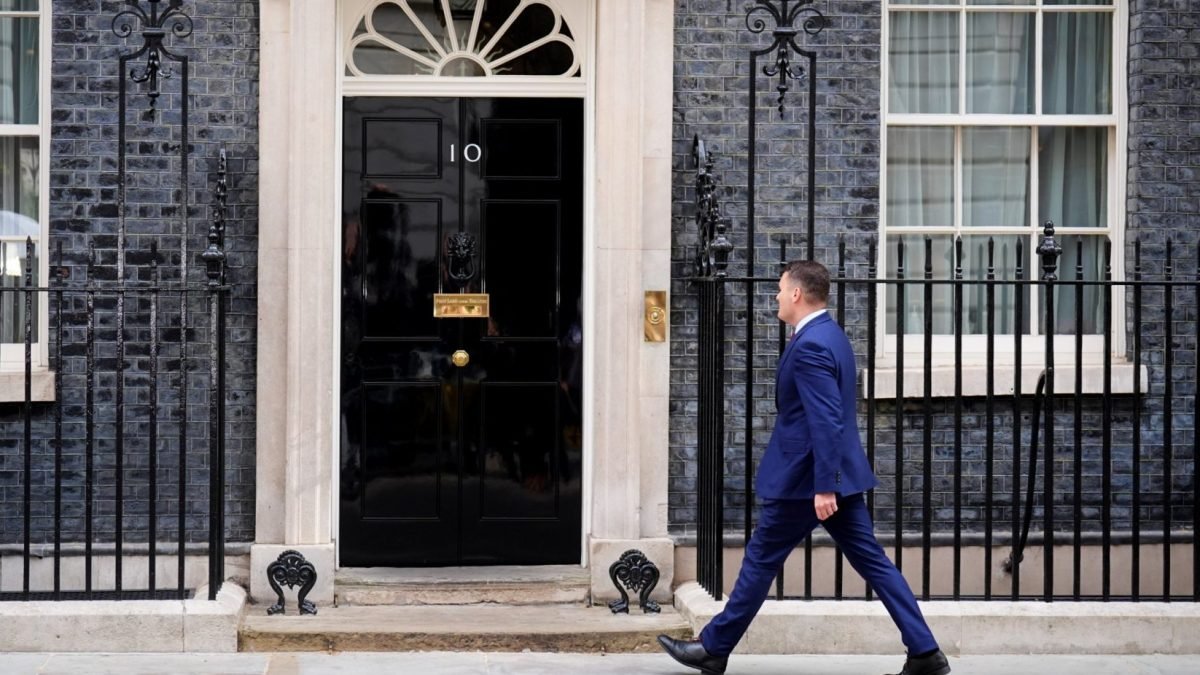
Wes Streeting did the mad British politics walk this morning. You know the one. The minister has to walk into No 10 to the sound of journalists shouting like the town drunk on a Saturday afternoon. “Are you going to resign, Health Secretary?” one screamed. “Are you going to stand for leader?” another said.
Streeting’s face took on the classic expression of this scenario: a practised look of steely indifference, as if he were taking a perfectly ordinary walk on a Wednesday morning and was entirely unaware of the mad shrieking all around him. Paradoxically, this actually makes them look more mad than if they’d respond to the questions.
You can summarise the whole political culture of this country through this weird tradition. In a sense, there’s something faintly admirable and democratic about it. Many countries don’t allow independent journalism at all. Those that do certainly do not allow cabinet secretaries to be assailed by snarling ranks of reporters. In the US and Europe, the culture works to protect the dignity of the minister, something that is basically alien to British political life.
It is also utterly vacuous. No journalist shouting expects to have the minister answer their question. No minister acknowledges the howls of the press. It is all theatre: vivid, distracting, and really quite completely meaningless. There isn’t even a purpose to the walk itself. There are plenty of other ways into that building. Prime ministers actively choose to engage in this absurd spectacle, for reasons that only they understand.
The same giddy emptiness surrounds the speculation around Streeting’s meeting with Keir Starmer. What should be a crucial discussion about Britain’s future descended into the usual procedural soap opera.
Starmer refused to see Streeting until this morning, just ahead of the King’s Speech, when any subsequent political move would risk undermining the dignity of the king. In the end, the health secretary was in the building for less than 20 minutes. Who knows how many of them were spent waiting outside the prime minister’s door. Who knows what was said. Perhaps he threatened Starmer. Perhaps Starmer threatened him. We’ve no idea, although reports suggested he was preparing to resign and trigger a leadership contest.
We do know one thing though: This is not how these things should be done. This is simply the silliest, most childlike way we could possibly proceed when deciding the prime minister of the United Kingdom.
Even if it was less visibly preposterous, the idea of a sudden challenge and leadership switch is itself irrational. Streeting is an unknown quantity. We know his track record on health and a handful of other issues. We have no real idea what he would do as prime minister. What would be his defence policy? His immigration policy? Jumping from the current prime minister to the health secretary without a debate is basically like playing roulette – put it all on black, sit down, close your eyes and hope for the best.
We don’t need any more Westminster procedural soap opera. We don’t need a quick switch-out of leaders. We need a calm and open presentation of ideas. We need a conversation about what is happening in this country and how to resolve it.
Starmer has not provided it. He refuses to grapple with any of the core decisions dominating British political life. How are we going to boost defence spending? How are we going to fix social care? What is the right level of immigration? What is our policy towards Europe?
He will insist that he is handling these issues, but in fact he does nothing. The battle between the Ministry of Defence and the Treasury continues because he refuses to adjudicate. Social care has been kicked into the long grass. Immigration policy was reasonable, then draconian, and now seems like it might become reasonable again because Starmer has changed his mind for a second time, or at least until he changes it again. Britain is apparently going to be “in the heart of Europe”, but Starmer is unwilling to grapple with any of the trade-offs, particularly on free movement, which are required to make that a reality.
It’s not as if there’s a lack of ideas in the party. This week alone, Labour groups have been releasing thoughtful, trenchant reports exploring the moral and practical options available to the government, particularly on taxes and the fiscal rules.
The Labour Growth Group put out a manifesto on supply-side reform, in which the tax burden would be shifted from workers to asset-owners, with an increase in capital gains balancing a cut to national insurance. The Tribune group published a paper calling for a doubling of the time horizon on the fiscal rules from five to ten years, exploring ways of maintaining discipline while reducing arbitrary side-effects and boosting investment.
We need time for these ideas to be discussed – not just in economic policy but across the political landscape.
For once, the intellectual needs of the country and the self-interested needs of the Labour party are pointing in the same direction. The soft left of the party wants time for Andy Burnham to get into parliament. More sensible figures on the right of the party recognise that they need him to be involved in a leadership fight if they’re to secure a meaningful mandate under a Streeting leadership.
This process should take place in an orderly, open way, over the summer, with a decision in autumn. It should feature an urgent injection of ideas, a sense of intellectual engagement, a challenging of orthodoxy, a daring assessment of policy options which meets the historic demands of the period we’re living in.
We’re in an objectively terrible place. It is a disaster to find ourselves back in the leadership chaos of the Tory era. But given that this is where we are, we shouldn’t let a good crisis go to waste. The leadership issue should be settled in a meaningful debate over ideas, not the kind of superficial theatrical soap-opera we witnessed this morning.