Swaying as we clung to the sides of open-top Jeeps, honked at by tuk-tuks and waving at pedestrians, we created a spectacle while being chauffeured through a sparkling, dusky pink city after dark.
A motorcyclist briefly gatecrashed the party, rolling his shoulders to a beat as he pulled up alongside us in traffic. The soundtrack faded as we sped into Jaipur’s Nahargarh hills for a view of Jal Mahal (water palace) in Man Sagar Lake.
I had arrived in India alone. Without the company of this friendly convoy, I would have spent the evening in a hotel bar.
Jal Mahal fort is located in the middle of Man Sagar Lake in Jaipur, with four of its five storeys under water (Photo: Zoran Ivanovic/Getty)
Solo travel is in demand. In research published by Abta last October, nearly one in five people had been on holiday on their own in the previous year – the most since the travel association started tracking solo trips in 2014. But you don’t have to remain solitary to try this growing trend.
Joining an escorted tour offers ready-made company and confidence in an unfamiliar destination. It also takes the hassle out of planning. Tour operator Mercury Holidays has recorded a 55 per cent rise in solo bookings between 2025 and 2026 across its mixed group and dedicated solo tours.
I joined one of the former on its Essence of North India itinerary, hitting the Golden Triangle of Delhi, Agra and Jaipur, as well as Ranthambore National Park.
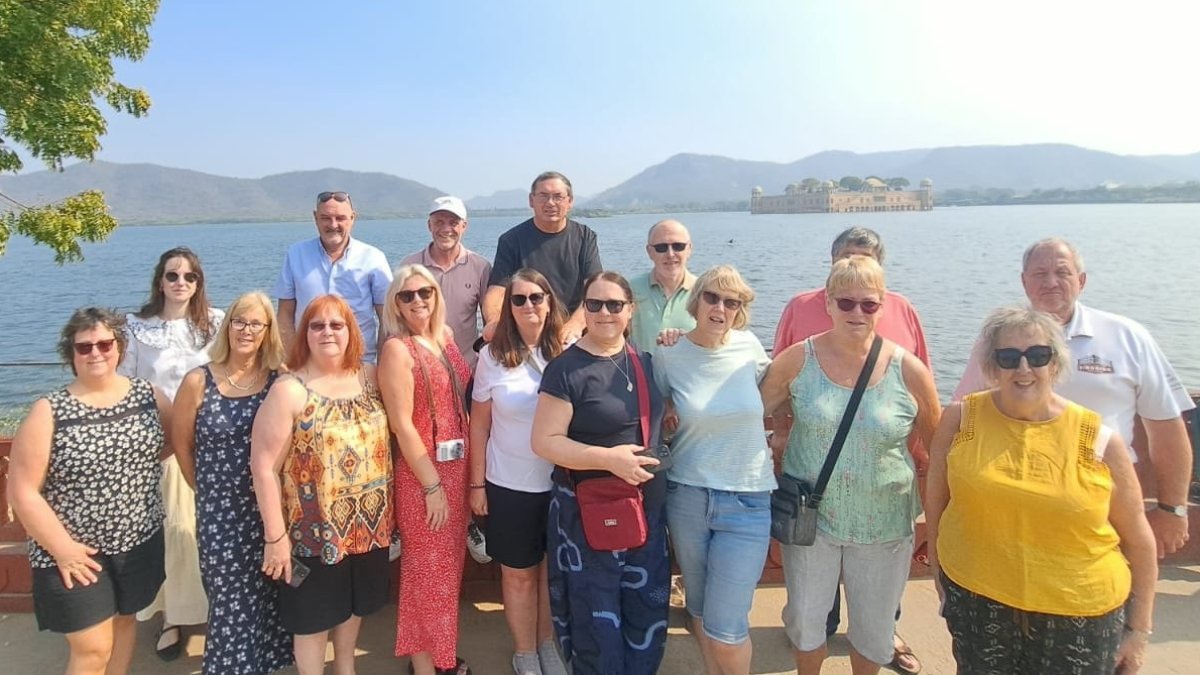
Among our group of 16 were four solos, two friends travelling together and five couples. It felt like a grown-up field trip, with gentle in-jokes, singalongs and ad-hoc geography lessons as our guide, Jaswant Singh, a Jaipur local, rolled down a map of India at the front of the coach.
His mini-lectures touched on monsoon season and less-visited parts of the country, such as the north-eastern state of Assam.
Jaswant’s expertise was the most praised aspect of our trip. The Jeep tour, which was also popular, was an extra excursion that cost £20pp, as was a visit to Chand Baori in Abhaneri, Rajasthan (£10pp), en route from Agra to Ranthambore. Sun broke through clouds above this striking inverted pyramid structure of 3,500 steps. Dating to the 9th century, it is India’s largest and deepest stepwell.
While it attracted a couple of dozen other visitors as we walked around, it was all but empty compared with the tour’s most-recognisable stops – the Taj Mahal, the red sandstone, Unesco-listed Agra Fort and Jaipur’s hilltop Ambar Fort with its tiled pavilions. Jaswant kept us moving while describing each site’s significance.
We packed a lot in between, indulging at buffets, haggling our way through Jaipur’s Bapu Bazar and cheering as Jaswant pulled out a bottle of Old Monk rum and “Indian” Bombay mix towards the end of day-long drive.
Mercury’s affordable itinerary attracted a ready-for-fun crowd, with an age range, on my tour, of 49 to 72. Several had travelled with the company before, including Sally Miller, 65, from east London. Her first experience with Mercury was Sri Lanka in 2017. “It was good value, and the people were as you take them, no airs and graces.”
Sally had previously joined group tours with her husband, but since he was diagnosed with dementia and she has become his carer, she has travelled less and usually to resorts with family. She missed the cultural insight of escorted tours and also booked a Morocco itinerary with Mercury last year.
Jaipur’s Amber Fort is among the wonders included on the itinerary (Photo: Ranjini Hemanth/Getty)
The Taj Mahal, and recreating the “Princess Di” photo from 1992 (in which she sat on bench, alone, in front of the white marble mausoleum), was the draw for many to this route, but I was looking forward to our safari drives in Ranthambore. The national park has a population of around 80–90 “royal” Bengal tigers, including cubs.
It was just after 6am and breezy as we set off on the canter – a bit like a giant Land Rover – the 14°C air warming with the rising sun. A dozen or so vehicles crowded round the park gates as men hawked tiger fridge magnets and Ranthambore-branded gilets.
Just 20 minutes into our safari, after passing the apex predator’s “fast food” – sambar deer and spotted deer – we got lucky. A tigress appeared to our left and our guide recognised her as Noori. Her fiery haunches tensed and stretched as she sauntered among trees with her tail curled high above the ground. Her rounded ears flicked to attention as she veered right and towards the road.
Tigers are a draw for visitors to Ranthambore National Park in Rajasthan (Photo: Getty)
I recalled Jaswant’s advice: “You must carry your passport with you on the safari.”
“So they can identify your remains?” someone shouted from the back of the coach, only half joking.
Sitting a few metres from a skilled killer, my fear was neutralised by awe. The canter buzzed with hushed “wows” and pleas of “did you get a picture?”
India’s supreme court recently passed a ban on using smartphones in the park. No one was patted down on entry, but our guide asked a visitor to put her phone away.
The one Mercury guest with a digital camera was tasked with documenting the wildlife. A treeful of monkeys threw us side eyes as they waited for a group of worshippers at a temple in the park to put out snacks. Crocodiles lounged on riverbanks, a warthog rolled in a mudbath and Indian rollers, with jade and emerald feathered wings, fluttered in and out of the canter.
We recounted it all that night while sipping Kingfisher beers around the firepit at Ranthambore Regency. With its lush central courtyard, it was the most memorable of our accommodation. Here, birdsong woke me at dawn and dinner was a generous spread from which I piled up my plate with curries and garlic naan.
As tasty as the buffets were, I yearned for other culinary experiences – such as street food. Trevor Hall, who’s in his sixties and from near Milton Keynes, is usually more adventurous while dining out on holiday. He and his wife have travelled independently around South East Asia, but decided on an escorted tour in India.
“Jaswant has been a seasoned professional,” Trevor said. “We couldn’t have seen the things we have without a tour.”
For a holiday so richly seasoned with once-in-a-lifetime sights, I was surprised by what lingered – the company.
Booking it
The writer was a guest of Mercury Holidays, which offers a 10-day Essence of North India tour, including accommodation, meals, return flights, seven excursions, in-country transport and a dedicated guide from £1,619 for a solo traveller, 08000 984288
More information
Most visitors need an e-visa or paper visa for India, indianvisaonline.gov.in
Para evitar Para enfrentar os piores impactos das alterações climáticas, a comunidade world deve fazer uma transição rápida para as energias renováveis, ao mesmo tempo que expande a remoção de dióxido de carbono – tecnologias que literalmente retiram este gás com efeito de estufa da atmosfera. Ambos os esforços serão dispendiosos, mas um novo estudo sugere fortemente que os EUA devem dar prioridade ao investimento em energias renováveis em detrimento de esquemas dispendiosos e com utilização intensiva de energia de captura directa de ar.
As descobertas, publicado Segunda-feira em Sustentabilidade das Comunicações, mostram que a energia renovável é muito mais rentável do que a captura direta de ar – uma estratégia crescente de remoção de carbono – na redução do carbono atmosférico. Em quase todas as regiões dos EUA até 2050, o dinheiro gasto na implantação de energia eólica ou photo voltaic proporcionará um maior benefício combinado para o clima e a saúde pública do que se fosse gasto na captura direta de ar, de acordo com o estudo.
“Nosso estudo basicamente pergunta: se alguém tem US$ 100 milhões e está disposto a investir na redução de CO2 na atmosfera, qual é a melhor maneira de gastar esse dinheiro?” o autor sênior Jonathan J. Buonocore, professor assistente de saúde ambiental na Universidade de Boston, disse ao Gizmodo por e-mail.
“Descobrimos que 100 milhões de dólares reduzirão muito mais CO2 se forem investidos em energia eólica ou photo voltaic, especialmente em redes pesadas em carvão nos EUA, do que se forem investidos na captura direta de ar”, explicou. “Além disso, investir em energias renováveis reduzirá a poluição atmosférica, o que a captura direta de ar não consegue.”
Rebaixamento versus redução de emissões
A remoção de carbono e a geração de energia renovável abordam a crise climática de dois ângulos opostos. A transição de combustíveis fósseis para fontes de energia limpa evita que mais carbono entre na atmosfera, enquanto a remoção de carbono reduz a quantidade de carbono que já existe na atmosfera. O Painel Intergovernamental sobre Mudanças Climáticas determinado que ambas as estratégias serão essenciais para estabilizar o aumento da temperatura da superfície world induzido pelo CO2.
Existem várias maneiras de retirar carbono da atmosfera. Os ecossistemas da Terra fazem isso naturalmente, armazenando o carbono atmosférico capturado nos solos, nas florestas e no oceano. Os seres humanos podem aumentar estes sumidouros naturais de carbono através de várias intervenções, mas à medida que a crise climática se intensificou rapidamente, tecnologias como a captura direta de ar surgiram como uma forma mais agressiva de reduzir o carbono atmosférico.
O problema é que a captura direta de ar continua subdesenvolvida devido ao seu custo proibitivamente elevado, à procura de energia e à necessidade de escalar a produção. Ainda assim, esta tecnologia é cada vez mais reconhecida como um complemento necessário a curto prazo para a eliminação progressiva das emissões. E uma vez que os recursos para a mitigação climática são limitados, é basic descobrir a melhor forma de alocar os investimentos.
DAC ainda não pode competir
Para descobrir se a captura direta de ar poderia ser competitiva em termos de custos com a energia renovável (especificamente eólica e photo voltaic), Buonocore e os seus colegas modelaram os benefícios climáticos e de saúde pública de cada estratégia para a mesma quantidade de dólares gastos.
Os investigadores monetizaram os benefícios climáticos utilizando o custo social do carbono: o montante em dólares equivalente aos danos a longo prazo causados por uma tonelada de emissões de CO2 num determinado ano. Para a saúde pública, utilizaram um modelo para estimar a exposição evitada à poluição atmosférica e a redução do risco de mortalidade, e depois monetizaram esses benefícios utilizando o valor de uma vida estatística – a mesma métrica utilizada pela Agência de Protecção Ambiental.
Como a captura direta de ar ainda está em sua infância, os pesquisadores modelaram seus benefícios sob quatro cenários diferentes de melhoria de eficiência, desde seu desempenho comercial atual (que requer 5.500 quilowatts-hora de eletricidade e US$ 1.000 para capturar uma tonelada de CO2) até um cenário “inovador” (800 kWh e US$ 100 por tonelada de CO2 capturado), que está no limite inferior das projeções publicadas.
“Somente no cenário ‘inovador’, que envolveria a melhoria da eficiência por um fator de aproximadamente 7 e a queda dos custos para 10% do que é atualmente, a captura direta de ar terá um desempenho melhor do que as energias renováveis”, disse Buonocore.
Parte do problema é que a captura direta de ar apenas take away CO2 da atmosfera. Ao substituir os combustíveis fósseis, a energia renovável reduz as emissões de partículas finas, óxidos de azoto, dióxido de enxofre e outros poluentes atmosféricos perigosos. Assim, a captura direta de ar oferece um benefício menor para a saúde pública. De facto, no precise cenário de desempenho comercial, a captura directa de ar ligada à rede produziu mais gases com efeito de estufa e danos causados pela poluição atmosférica até 2050 do que compensou.
Para ser claro, Buonocore e os seus colegas não defendem que devamos abandonar a captura directa de ar, mas o seu estudo enfatiza a importância de dar prioridade aos investimentos em energias renováveis no curto prazo.
“Nosso trabalho aqui indica que seria mais econômico implantar energias renováveis e provavelmente fazer outras descarbonizações para basicamente ‘interromper o fluxo’ de CO2 na atmosfera, e que o DAC seria então necessário para limpar o excesso de CO2 depois que a maioria das outras principais fontes de CO2 tivessem sido interrompidas.”
Welcome to Power Players, The i Paper’s opinion series in which our writers and experts take an in-depth look at the key figures in American politics as the US reshapes itself and the world. • The Bronx real-estate hustler who proves Trump is the boss from hell • The most powerful woman in the world you’ve never heard of • The ‘swamp creature’ eclipsing JD Vance in the race to succeed Trump • The white nationalist at the heart of the Trump machine • The greatest hope of the Trump resistance is a 34-year-old immigrant • The 28-year-old Trump attack dog ripping up the Washington playbook
Laura Loomer began an event at the annual conference of one of India’s largest news groups earlier this year by saying she had an “announcement” to make.
“I spoke to President Trump on the phone about an hour ago or so, actually. And I wanted to read you exactly what he said to me,” she said at the India Today Conclave in March, before reading a short message from the President in which he expressed his affection for India and its Prime Minister, Narendra Modi.
Loomer, 32, holds no official position within the Trump White House or its administration and thus may seem to be a strange unofficial ambassador for the President’s movement in India. The self-styled “investigative reporter” and former congressional candidate has been accused by critics on the left and the right of spreading conspiracy theories and hate. (Loomer once described herself as a “proud Islamophobe” and has said she’s “pro-white nationalism”.)
Yet within the past few years, she has ascended the ranks to emerge as one of Donald Trump’s most powerful loyalty enforcers. During his second term, she has claimed credit for multiple scalps, including that of his former national security adviser, Mike Waltz, who was removed from his job last March. Through her X account with nearly two million followers and her podcast, Loomer Unleashed, she chastises and smears Trump’s critics on the right for perceived disloyalty.
More than anyone in the President’s orbit, Loomer’s influence over Trump shows how the guard-rails against conspiracy theorists and cranks haven’t just crumbled. They’ve disappeared.
Loomer, for her part, has been building herself up for this moment. For over a decade, she has been a persistent and aggressive presence within the Maga movement. She’s run for Congress twice in Florida. In 2020, Trump’s endorsement carried her to victory in GOP primaries, but she lost the general election. She lost a subsequent primary race against a GOP incumbent in 2022.
And yet her reputation within the right is mixed. A former Trump spokesperson described her as “clown-like”. Others, including Trump, have praised her. “You work hard, and you are a very opinionated lady. I have to tell you that, and in my opinion, I like that,” Trump told Loomer during a visit to one of his golf clubs in New Jersey in 2023.
“You’re the best. I love you,” Loomer responded. A little less than three years later, it seems to still be the attitude that Trump most wants to hear.
Born in Tucson, Arizona, to a family of Jewish heritage, Loomer’s first foray into the right-wing media ecosystem came in 2015, while she was an undergraduate in college. At Barry University, a private Catholic school in Florida, she conducted her first “sting” for Project Veritas — a right-wing group founded by James O’Keefe that uses undercover operatives to produce sting videos targeting their political opponents. The university suspended Loomer in April 2015 after a stunt in which she filmed herself attempting to convince university officials to allow her to create a student group in support of Isis.
Through her involvement with Project Veritas, Loomer worked her way up through the right-wing media ecosystem. Islamophobia and depictions of Trump supporters as under attack were a persistent theme throughout her work. Ahead of the 2016 election, Loomer traveled to a series of polling places in New York City wearing a burqa and tried to procure a ballot under the name “Huma Abedin” (at the time, Abedin was vice chair of Hillary Clinton’s presidential campaign) to try and prove alleged voter fraud.
Then, in the summer of 2017, she joined Maga operative Jack Posobiec in storming the stage of a production of Julius Caesar in New York City. The production depicted Caesar, who is stabbed to death in the third act, as a Trump-esque figure. To the producers, this was a modern adaptation of a Shakespeare play; to Loomer, or so she said, it amounted to the “normalisation of political violence against the right”.
These sorts of recorded, high-profile stunts would come to define Loomer’s career for the next several years. She even concocted a term for them: “Loomered”. She registered the word as a trademark with the US Patent and Trademark Office in 2018.
“To be Loomered is to undergo an interrogation by Laura’s cell phone,” The Spectator wrote in 2019. “Loomerings” frequently devolved into accusations or bordered on harassment. In one case, The Spectator described Loomer as having trailed Abedin and her five-year-old daughter in a New York City Starbucks.
But “Loomering” required one thing besides, of course, a mobile phone: social media. In November 2018, Twitter banned Loomer on the grounds that a series of Islamophobic tweets about Representative Ilhan Omar, a Somalian refugee and Muslim woman, violated their terms of service. In response, Loomer chained herself to Twitter’s office in Lower Manhattan, donning a yellow Jewish star like the ones Nazi concentration camp guards forced Jews to wear. After several hours of standing in 40°C weather as journalists swarmed the site to ogle at the pro-Trump activist, police cut her handcuffs off. It wasn’t until 2022, when Elon Musk restored the accounts of previously suspended users, that Loomer made her way back to the platform.
The arc of Loomer’s career in far-right activism closely heeds to that of Maga’s own. Supposed “big tech” censorship of conservatives has been a core rhetorical and policy concern for Maga, especially after social media platforms’ efforts to quash misinformation about the 2020 election and the Covid-19 pandemic. Loomer’s suspension from Twitter and other platforms figured heavily into how she presents herself as an influencer — and, later, a congressional candidate in 2020 and 2022.
But while Loomer’s borderline comical obsession with her accounts on social media may not have made for a compelling congressional campaign, it has helped her build bridges with a white nationalist fringe that seemed to find common cause in her plight. When mainstream Republicans criticised their political allies who attended a 2021 conference that pro-Hitler livestreamer Nick Fuentes hosted, Loomer defended the attendees on the grounds of being “pro-free speech”. She did so again at one of the longest running white nationalist gatherings in the United States the following year.
At a 2022 conference that American Renaissance, a white nationalist organisation, Loomer attributed her lack of access to social media platforms to the same “cancel culture” that afflicted the white nationalists in the audience. Jared Taylor, who has said “civilisation … disappears” when black people are “left to their own devices”, founded American Renaissance in 1990. Since then, at the group’s annual conference that takes place outside of Nashville, Tennessee, he has hosted a variety of white nationalists, neo-Nazis, Klansmen, and other extremists as speakers.
In her remarks, which took place after she lost a primary election in 2022, Loomer described herself as a “white advocate.” She said her congressional campaign was running “to the right of the GOP” and cited “election integrity, combating big tech social media censorship and election interference, and a 10-year minimum immigration moratorium” as her three main priorities.
Years later, Loomer’s three-part campaign programme became official government policy. In early 2025, Meta — which operates Facebook and Instagram — vowed to revisit their trust and safety policies in a move that appeared explicitly differential to conservatives. When Trump returned to office in January 2025, he signed an executive order “restoring freedom of speech and ending federal censorship”. Those who researched the spread of disinformation and conspiracy theories online interpreted it as a veiled threat to their work. Their fears, of course, were well-founded. In December 2025, for instance, NPR and other outlets reported that the State Department was telling their staff to reject visa applicants whose work involved content moderation on social media.
For the President, whose decision to join Israel in waging war on Iran in early 2026 has fractured his own coalition of supporters, figures like Loomer are more important than ever. With midterms on the horizon and Trump’s approval rating hovering at around 38 per cent, Loomer has stepped up her attacks on Trump’s critics from the right.
“They want our country to be governed by the radical left, so that [they] can pack the courts, and they can give citizenship to the 100,000 illegals and foreigners on visas in our country so that we’re forever replaced,” Loomer said in a podcast in March, naming several commentators and politicians who have criticised Trump over the war in Iran. “And Republicans will never get re-elected or have any power in our country ever again.”
A atriz Janine Butcher recebeu mensagens de apoio de vários de seus famosos colegas de elenco
Charlie Brooks com sua falecida avó Jean(Imagem: Instagram/charlie_brooks_xx)
A lenda de EastEnders, Charlie Brooks, foi inundado de apoio depois de compartilhar a notícia de uma morte acquainted comovente.
Charlie é mais conhecido por interpretar a vilã de EastEnders, Janine Butcher, que estreou na novela da BBC em 1999. Aparecendo em EastEnders em quatro passagens distintas, Charlie deixou o programa pela última vez em 2022, quando Janine foi presa por cinco anos por perverter o curso da justiça.
Janine, que teria dado à luz na prisão, foi vista pela última vez em um enredo explosivo em que enganou Mick Carter fazendo-o pensar que sua esposa Linda Carter estava presa no mar. Acredita-se que o personagem de Danny Dyer tenha morrido na água como resultado de sua mentira.
Clique aqui para receber as maiores histórias diretamente em sua caixa de entrada em nosso boletim informativo diário
Desde que saiu da novela mais uma vez, Charlie começou a explorar o mundo do teatro, interpretando o Little one Catcher em uma produção de Chitty Chitty Bang Bang em 2023. Charlie sempre mantém seus fãs informados sobre os meandros de sua vida em sua conta do Instagram, onde ela possui mais de 300.000 seguidores.
No Instagram na semana passada, Charlie informou a seus seguidores que sua avó Jean infelizmente faleceu. A postagem sincera viu Charlie compartilhar uma série de fotos dela e Jean juntas ao longo dos anos.
A ex-vencedora do I am A Superstar legendou sua postagem: “Hoje nos despedimos da babá Jean. Ela me levou para ver meu primeiro present ‘profissional’, Copacabana.
“Ela period mãe de quatro meninos. Ela sapateava, nadava, viajava pelo mundo, se divertia muito comigo em Ibiza, period extremamente independente e fazia as coisas exatamente do jeito que ela queria.
“Vou sentir falta dela. Hoje é uma comemoração de seus 90 anos. Vejo você novamente um dia, Nan.”
A seção de comentários da postagem de Charlie viu vários de seus ex-colegas da Albert Sq. enviando mensagens de solidariedade a Charlie e sua família durante o período de luto.
A atriz de Linda Carter, Kellie Vibrant, disse: “Enviando todo o amor para vocês”. Simone Lahbib, de Katy Lewis, acrescentou: “Sinto muito por sua perda, adorável.”
Lorraine Stanley, de Karen Taylor, escreveu: “Enviando muito amor”. Kacey Ainsworth, do Little Mo, declarou: “que garota !!”
Natalie Evans Lucy Velocity comentou: “Você pertence a uma linhagem épica de mulheres, Charlie, e elas certamente vivem em você! A estrela de Coronation Avenue, Shobna Gulati, postou: “Amo você, Lucy, ela vive em todas as suas memórias, que mulher incrível.”
Enquanto isso, foi anunciado na semana passada que Charlie estrelará a estreia mundial de The Hidden Risks of Tenting, uma nova peça de Liesl Wilke, que será exibida no Windsor Theatre Royal neste verão. Charli está atuando ao lado de Max Brown, de Downton Abbey, no emocionante drama acquainted, dirigido pela diretora indicada por Olivier, Bronagh Lagan.
A sinopse da peça diz: “Quando a vida de Casey é abalada pelas escolhas de sua filha, ela volta para um acampamento de infância que não foi tão perfeito quanto parecia.
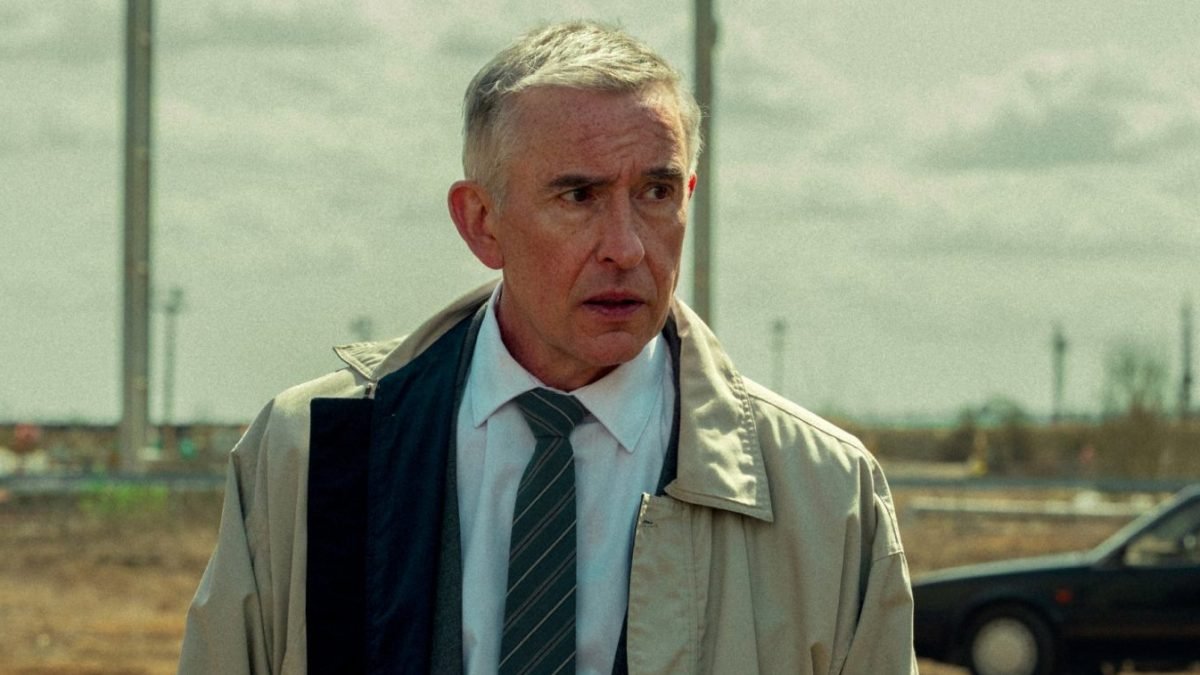
In Netflix’s new crime drama, Legends, Steve Coogan plays a steely customs investigator intent on infiltrating a drugs gang, a task that carries with it a distinct risk to life. The very fact that Coogan – who will forever be associated with Alan Partridge, a man whose mid-life crisis prompted him to drive to Dundee barefoot while gorging on Toblerone – can pass himself off in such a role is remarkable. But then it’s also testament to a career-long tenacity that has seen him strive repeatedly to swerve stereotype.
Few actors are required to stay in their lane quite as much as comedic ones. If you are funny once, you’re funny for ever. Think of David Jason, Catherine Tate and, more recently, Jack Whitehall. Even if they do stray towards drama, they return to their comfort zones soon enough.
Not Coogan, though. Who else could play a buffoon and the reviled Jimmy Savile, and get away with both? Yes, his experiences in Hollywood have resulted in some very rum movies – 2018’s mulchy emotional drama Irreplaceable You, for one – but the 60-year-old’s CV nevertheless remains notably impressive given that he spent much of the 1990s shouting “A-ha!” in front of a live studio audience.
Here are his seven finest screen performances:
Philomena (2013)
Coogan as Martin Sixsmith and Judi Dench as Philomena Lee. Sixsmith is a journalist who develops a bond with Lee, an Irish woman looking for her son (Photo: Alex Bailey/BBC Picture Archives)
This was perhaps the first indication that Coogan wanted to be viewed as a serious thespian. Philomena is an adaptation of the journalist Martin Sixsmith’s book about an Irish woman, Philomena Lee (played by Judi Dench), and her tireless search for the son she was forced to give up for adoption 50 years previously.
Coogan plays Sixsmith, a taciturn news journalist more used to warzones than emotional stories, but who quickly develops a bond with his subject nevertheless. He proves not only an able co-star to Dench, but was later nominated for an Oscar for co-writing the screenplay, a fact he likes to point out at the slightest opportunity, not least to Rob Brydon on The Trip.
Available to rent or buy on Prime Video, Apple TV, YouTube and Sky Store
Saxondale (2006-07)
‘Saxondale’ is an overlooked BBC sitcom (Photo: Baby Cow Productions/BBC Studios)
Back in the 1990s and early 2000s, when Coogan seemed doggedly determined to leave Partridge behind in favour of carving out new comedic niches, there were several misfires, subsequent creations revealed merely as Partridge knock-offs, or else very close cousins. If his obnoxious travelling salesman Gareth Cheeseman (who appeared in his 1995 series Coogan’s Run) was an example of the former, then Saxondale is the latter, a Partridge-adjacent middle-aged man increasingly at odds with modern life, and who can never quite outrun the geek within.
A former roadie, Tommy Saxondale owns a pest control business, and nurses persistent anger issues – but he does at least have the love of a good woman in new girlfriend Magz (Ruth Jones). It is their deeply felt – and deeply sexual – relationship that gives this overlooked BBC sitcom its surprisingly tender heart.
Available to rent or buy on Prime Video, Apple TV and YouTube
I’m Alan Partridge (1997-2002)
The series revisits the BBC’s most hapless sports presenter-turned-failed chat show host following his disgraced exit from the corporation (Photo: BBC Worldwide)
There have been many incarnations of his most beloved television character over the years, but Alan Partridge was best when he was at his lowest ebb. I’m Alan Partridge revisits the BBC’s most hapless sports presenter-turned-failed chat show host following his disgraced exit from the BBC. He has reluctantly pivoted to radio, doing the graveyard shift on local Norwich radio. Currently between homes, he lives first in a roadside hotel, then a static caravan, his only friend a local petrol station attendant with an impenetrable Geordie accent.
But Alan is nothing if not eternally – one might say foolishly – optimistic for brighter days ahead, and convinces himself that he still has another shot at the big-time. If a game show revolving around monkey tennis, or youth hostelling with Chris Eubank, doesn’t usher in a renaissance for him, what will?
Streaming on ITVX Premium
Greed (2019)
Playing billionaire retail magnate Sir Richard McCreadie (Photo: Amelia Troubridge/Sony)
While Coogan has proven himself capable of great subtlety, he is rarely more comfortable on-screen than when playing a larger than life character. Teaming up with Michael Winterbottom, with whom he had previously made 24 Hour Party People and A Cock and Bull Story, he plays Sir Richard McCreadie, a billionaire retail magnate whose fashion emporia have dressed Britain for decades (think Philip Green’s Topshop), but whose business is now beginning to collapse, taking his reputation with it.
McCreadie, who didn’t get where he is today by readily capitulating, decides to throw a mega party on the Greek island of Mykonos, where he believes that, like the phoenix, he will rise again. Coogan has enormous fun ostensibly playing second fiddle to a set of teeth so bright you could see them from the moon.
Available to rent or buy on Prime Video, Sky Store, Apple TV and YouTube
The Reckoning (2023)
Coogan delivered a masterful performance as Jimmy Saville – even if the drama did not make a lasting impact (Photo: Matt Squire/ITV Studios/BBC)
This was surely going to be the television project that saw the ever-confident Coogan stretch himself too far, by impersonating Jimmy Savile in all his shell-suited, cigar-chomping horror. The story of the former Radio 1 DJ and television personality who hid his decades-long crimes of paedophilia – and, so it was rumoured, necrophilia – in plain sight, The Reckoning proved thoroughly unpleasant viewing at 9 o’clock on a weekday evening.
Coogan plays him from a young buck making his name in the 1960s up to his death in 2011, and not once does he slip into cheap imitation. If the drama itself made curiously scant impact, and is not fondly remembered, then that is surely because the subject matter continues to abhor. But its lead performance? Masterly.
Streaming on BBC iPlayer
Stan & Ollie (2018)
John C Reilly as Oliver Hardy and Coogan as Stan Laurel – his physical transformation was extraordinary, and eerie (Photo: eOne/Aimee Spinks)
Perhaps his most nuanced cinematic role, this lovely and doleful biopic of comics Laurel and Hardy as they navigate the end of their career exemplifies, as with Savile, just how much Coogan can occasionally disappear into someone else’s skin entirely. Here, he not only offers his customary canny vocal impersonation, but actually becomes Stan Laurel, his face seeming to grow longer, his ears more pronounced, his gaze ever more forlorn. It’s eerie.
John C Reilly is terrific alongside him as the more ebullient Oliver Hardy, as the comedy legends arrive in 1950s England to reconnect with an otherwise dwindling fan base. There are echoes of Partridge here, another character who lives mostly on past glories; perhaps this is why Coogan seems to understand him quite so intuitively, and so well.
Streaming on BFI Player
The Trip (2010-)
Rob Brydon and Coogan as themselves in ‘The Trip’. Over four series, the pair undertake a succession of gastronomic adventures across the UK, Italy, Spain and Greece for Coogan’s side hustle as a restaurant critic (Photo: Rory Mulvey)
Sometimes the funniest comedy is that which cuts closest to the bone. We’re back in Michael Winterbottom territory for what is billed as a thinly disguised autobiographical tale of two television comedians – Coogan and Rob Brydon, both playing versions of themselves – in a perpetual battle of one-upmanship. Over four series (a fifth is looming), the pair undertake a succession of gastronomic adventures across the UK, Italy, Spain and Greece for Coogan’s side hustle as a restaurant critic.
Over a lot of fine dining, and much daytime drinking, they bicker, compete in Roger Moore impressions, and thoroughly eviscerate one another with passive aggression. It is Brydon who emerges as the more comfortable in his skin, while Coogan wants only to assert his ultimate superiority and his greater finesse, determined that Brydon afford him the respect he feels he deserves.
Series one and two are streaming on BBC iPlayer. Series three and four are available to rent or buy on Prime Video
‘Legends’ is streaming on Netflix from Thursday 7 May
Diz-se que o iPhone 18 padrão e o iPhone 18e de baixo custo compartilham componentes, de acordo com o vazamento conhecido como “Fastened Focus Digital”, como mais uma evidência de que a Apple está diminuindo a distância entre os dois dispositivos.
Em novas postagens no Weibo, a Fastened Focus Digital disse que certas peças são intercambiáveis entre os dois modelos, acrescentando que a informação vem de uma fonte de fabricação confiável. O vazador descreveu a sobreposição de componentes como uma confirmação de que a convergência de especificações entre o iPhone 18 e o iPhone 18e é actual e mensurável no nível da cadeia de suprimentos. “Acredite em mim: o modelo padrão do iPhone 18 foi rebaixado e seu lançamento adiado – esta decisão é last e não mudará”, acrescentaram.
As postagens também sugeriram que se o iPhone 18 for lançado na primavera de 2027, em vez de junto com os modelos Professional no outono, setembro e outubro se tornarão efetivamente a “temporada carro-chefe” para a Apple, uma janela ocupada pelo iPhone 18 Professional, iPhone 18 Professional Max e o dobrável “iPhone Extremely”. Uma estratégia de lançamento dividida separando os modelos Professional e padrão tem sido amplamente divulgada desde o ano passado, com Ming-Chi Kuo e Nikkeis entre aqueles que corroboraram o plano.
A reivindicação de compartilhamento de componentes baseia-se em uma série de relatórios de downgrade nas últimas duas semanas. O vazador relatou primeiro que a Apple está implementando certos downgrades de fabricação no iPhone 18 como uma medida de corte de custos, antes de acrescentar que as especificações da tela e o chip serão afetados. A Apple pode estar planejando ajustar o nome do chip da série A usado no dispositivo para ocultar a extensão da mudança do chip. Diz-se que os testes de validação de engenharia do iPhone 18 e do iPhone 18e ocorrerão simultaneamente em junho, o que se alinha com a ideia de que os dois dispositivos agora compartilham uma sobreposição significativa de engenharia.
Hoje, o iPhone 17 e o iPhone 17e são dispositivos significativamente diferentes: o modelo padrão apresenta uma tela de 6,3 polegadas com ProMotion e até 3.000 nits de brilho externo máximo, Dynamic Island, uma GPU de cinco núcleos, uma câmera Extremely Large e vida útil da bateria significativamente melhor. O iPhone 17e, por outro lado, tem uma tela menor de 6,1 polegadas, um entalhe em vez de uma Ilha Dinâmica, sem ProMotion, uma GPU de quatro núcleos e sem câmera Extremely Large. Se a Apple agora estiver compartilhando componentes entre o iPhone 18 e o iPhone 18e e reduzindo as especificações de tela e chip no modelo padrão, muitas dessas distinções poderão diminuir ou desaparecer completamente na próxima geração.
O iPhone 18, o iPhone 18e e o iPhone Air 2 devem ser lançados na primavera de 2027, com o iPhone 18 Professional, o iPhone 18 Professional Max e o iPhone Extremely previstos para serem anunciados no outono.
When Wendy Turner was in her late fifties, she and her husband were just beginning to enjoy their empty nest together in East Sussex. Their two adult children had left home, they had enough money to go on holidays – Wendy had a well-paid job as a book-keeper – and the house was tidy for the first time in years. “We were spending lots of time together again, me and my husband,” remembers Wendy, now 71, “and we were looking forward to retirement.” Then came the phone call.
Social services rang Wendy one morning to ask if they would come and get their 17-month-old baby grandson Callum – otherwise he would be put into the care system. Wendy was in shock. She had seen her grandson on a regular basis, and knew that her daughter and son-in-law were facing challenges, but hadn’t known that things had got so bad. “When you’re expecting a baby you’ve got time to plan for it,” says Wendy, “but in my case, we went from being lovely, fun grandparents to becoming full-time parents – and it happened overnight. There was no time to think.”
Every aspect of life was radically altered after that phone call. Social workers told Wendy she’d have to stop working in order to look after baby Callum – the time and attention she’d need to give him wasn’t compatible with a job. Wendy left her job immediately. Finances became strained, and Wendy’s husband worked extra hard to get early retirement, so he could help with his grandson at home.
‘We went from being lovely, fun grandparents to becoming full-time parents,’ recalls Wendy (Photo: Teri Pengilley/The i Paper)
They are two of a surprising number of people across the UK who, with no warning, are plunged into full-time, round-the-clock childcare for grandchildren. Census data estimates that at least 141,000 children in the UK are in kinship care – the term for when a family or friend takes on full parental responsibility when a child loses their birth parents as a result of death, a family court order, severe illness or imprisonment. Grandparents are the carers in 51 per cent of these cases. Of 2,000 kinship carers surveyed in 2025 by Kinship charity, half are over 65 and 34 per cent have found themselves raising two or more children. This kind of care arrangement is on the rise, according to Foundations, a UK charity for vulnerable families and children.
Baby Callum ended up permanently with Wendy and her husband, and then, two years later, just as Callum was about to start school, Wendy was told that her daughter was expecting another baby. “I knew that this child would come to me, too. So there I am, in my early sixties, with a newborn (a girl called Willow), doing night feeds and changing nappies – oh my goodness, it was quite something.”
Their role, and relationship to their grandchildren changed. “We lost that loveliness of, ‘Oh, come and stay with granny and we’ll have ice cream for breakfast’, and then send them home. Instead, we had to be the strict parents. And if I’m ever poorly, I just have to get on with it, there’s no sitting back on the sofa. I can’t ring granny for help like I did as a parent. But then there are so many things you are there for – the big milestones, teaching them to read, helping them find their talents, taking them on holiday. We met a lot of other grandparents taking their children on holiday. But of course, we’d be taking ours home with us.”
Willow, who has spent her whole life living with her grandmother. She now plays inline hockey for Team GB (Photo: Teri Pengilley/The i Paper)
Wendy’s husband – Callum and Willow’s beloved grandfather – died almost four years ago. “We never did have our retirement together,” says Wendy, “and because I’m only human, sometimes when I’m making packed lunches in my seventies now, I do think, ‘I should be on a cruise ship somewhere,’ – but it’s not resentment, it’s just that some days it can feel a bit unfair. At the same time, I feel the pride in the children, and love for them, that any parent would. I’m so happy they’re safe and well. I can’t imagine life without them.”
‘It’s difficult but we wouldn’t change it for the world’
Meanwhile, in South Yorkshire, Michael* and his wife Sally* had, in 2017, just sold their four-bedroom house in order to downsize when they were asked to raise their grandchildren. Their older son was grown up and gone, and they had only their 11-year-old son still at home. They were temporarily renting a two-bedroom bungalow, before looking to buy their own little house to settle into for the future. “Then, literally at the stroke of a phone call,” says Michael, “our three grandchildren – two-and-a-half, three-and-a-half and six years old – came to live with us.”
Their son’s children had suffered severe neglect, hunger and physical harm at home. “We’d gained these three grandchildren, but we also felt we’d lost a son,” says Michael. “Your fears are suddenly confirmed that he’s failed as a parent, so you’ve got this grief for the life you’ve got that you’re not going to have and that you were looking forward to, a grief for your child who has failed as a parent, and grief on behalf of the children that they’re not going to have their life with their parents that they expected, and that you expected them to have.”
Before his three young grandchildren came to live with him, Michael – who is now still only in his ffties – was working all over the UK, training people to drive machinery. “My work bumbled on for two months,” he says, “I took as much annual leave as I could, but my employer was not very friendly about my situation – probably, in hindsight, because they had no idea about kinship care. In the end, I just had to quit. I had three traumatised children at home, a very upset young son in the house, a very upset wife, marriage being strained, and all sorts of things going on in the background. The pressure of work on top of all that was impossible.” Sally was working in retail, but she resigned the day the grandchildren arrived.
The Children Act (1989) demands that kinship care is used whenever possible for the long-term placement of children, but the financial and practical support offered is often very patchy, especially when compared to the support offered to foster carers, who are entitled to a minimum of £170 and £299 a week. Grandparents like Wendy and Michael also aren’t entitled to paid leave from work even when suddenly taking on a newborn baby.
Wendy on a holiday with her grandchildren. Kinship care is on the rise and grandparents like Wendy continue to campaign for better support and understanding (Photo: Wendy Turner)
Soon after their grandchildren came to Michael and Sally, they moved to rent a bigger home. The children had bedrooms, while Michael and Sally slept in the dining room. “Because of our work situation, we’d suddenly become unmortgageable,” says Michael, “so we spent a large amount of the deposit we had left from our house sale just keeping ourselves afloat for a year or more. At that point, we were well off the property ladder, out of the world of homeownership, and never to return.” Today, Michael works two jobs, while Sally is at home focused on the children.
Does Michael think of himself as a grandfather? “No, they’re all our children. We have four children in our home. There’s no two ways about it. Life has been hugely difficult, and it continues to be, but we wouldn’t change it for the world.”
One of the toughest things about being a grandparent like Michael is that because you’re a blood relative, and because you chose to step in rather than allow the grandchildren to be fostered, you’re often left to get on with it. Once you’ve taken charge, it’s a private family matter, and carers say that the over-stretched, under-funded social services tend to go quiet on them.
Nigel Priestley, a lawyer at Ridley & Hall and leading expert in kinship care and adoption breakdown, was awarded an MBE for services to family and children. Priestley – himself a former kinship carer – has for years taken on local authorities to get financial help for grandparents who end up in dire straits, unable to work, and struggling to access the professional, therapeutic support their grandchildren so often need.
“They’re often left outside the support system,” says Nigel. “When they try to get help they often find themselves banging on the door until their knuckles are bruised and bleeding. Yet this bunch of grandparent heroes are saving local authorities tens of thousands of pounds.” There is a glimmer of hope, though. As of February 2026, some grandparents who provide full-time care for their grandchildren to prevent them being taken into care are guaranteed financial support under a government pilot scheme. Kinship carers in seven council areas will get a financial allowance in line with that of foster carers, depending on where they live and the age of the child. This has been something campaigners have been fighting for for more than 20 years.
‘My life came crashing down’
Getting an allowance to help bring up her grandchild has been transformative for Lesley, 62, from Leeds, who had to quit her job in a vegetable factory 11 years ago to take in her two grandchildren, then aged two and four.
She was renting a two-bedroom flat, but one was a box room, so she had to move. Her vicar friend told the congregation about Leslie’s situation, and friends and strangers rallied, providing her with a bed for the children, food parcels, toys, and clothes. “I was so moved by their generosity,” she says, “because I was getting no wages, but I was also getting pressured by job seekers to get a job, even though I’d just given up a full-time job to look after the children.
“I hardly saw the social worker, who said I was doing a good job, but my life was turned upside down. I’d get phone calls from my friends asking if I was coming out, and I had to tell them no, I’ve got two kids now, and I can’t leave them with anyone else. I lost lots of friends. I had to start applying for benefits, but I’d worked all my life and never done that before. My life came crashing down.”
Lesley spent several years relying on food banks, charity shops, and friends – “scraping the barrel,” as she puts it – before going to court to fight for some help. “The judge said that I should have a financial package,” she says. “Now I can take the children places, on days out, to have a meal, just nice things to make good memories. I try to help them remember the good times and get rid of the bad times.”
In a 2023 study in the Journal of Women and Ageing, academics Jenny Birchall and Amanda Holt wrote; “Kinship carers are taking on a huge unpaid care burden and as a result are experiencing lif-changing economic penalties… we need a social, economic and cultural shift.”
‘You think you’re the only person in the world doing this, until you find out you’re not,’ says Wendy (Photo: Teri Pengilley/The i Paper)
The grandparents contacted for this article all said that through attending support groups and events for kinship carers, they’ve regained some form of social life, and realised that all kinds of grandparents, from all kinds of backgrounds and walks of life, can end up in their position.
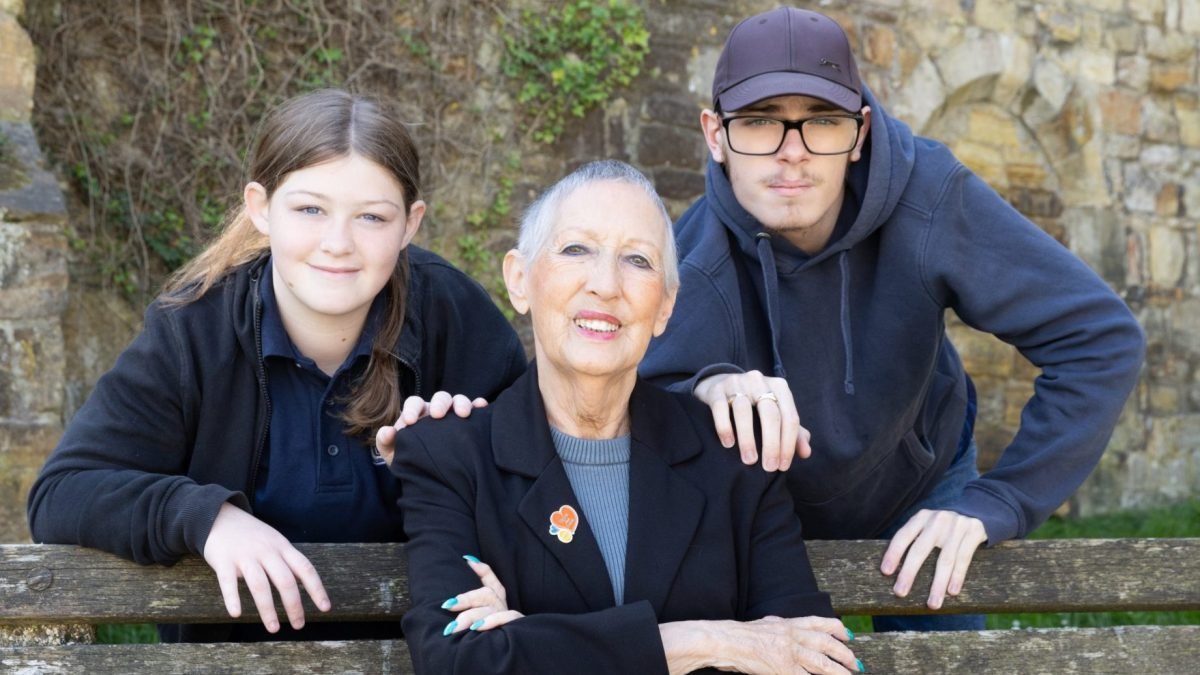
Wendy’s grandchildren had an incredibly tough start in life, but they are doing well. Callum does football refereeing and Willow plays inline hockey for Team GB. Wendy- as well as Lesley, and Michael, and many other grandparents like them – continue to campaign for better support, and understanding.
“You think you’re the only person in the world doing this,” says Wendy, “until you find out you’re not. We’re the invisible army of forgotten carers. We battle these challenges every day while trying to look after the children and give them the best childhoods they can have. The childhoods that our grandchildren deserve.”
Kinship is the leading kinship care charity in England and Wales. It provides, information, support and advice to kinship carers through it’s peer support group network, advice line, training and campaigning.
The financial reality for kinship carers
Kinship’s annual survey of nearly 2,000 kinship carers, grandparents, aunts, uncles and siblings, reveals that nearly one in five kinship carers report that either they, their kinship child, or another child in the family sleeps in unsuitable conditions due to lack of space and support
Four in 10 (44 per cent) are using savings to cope with the high cost of living compared to 30 per cent of the population
One in five (18 per cent) had a direct debit, standing order or bill they couldn’t afford to pay in the last month – three times the national average (6 per cent)
Nearly one in three (28 per cent) are using credit more than usual, such as credit cards, loans or overdrafts, to provide for their children, nearly twice the national average (15 per cent)
More than one in eight (13 per cent) remain concerned they won’t be able to continue caring for their kinship children in the next year, citing poor health, lack of support and financial worries
Of the 2,000 kinship carers surveyed, 80 per cent of carers who stopped working when they became kinship carers have never returned to work
A Volkswagen empurrou a Amazon para fora do primeiro lugar para se tornar o maior acionista da Rivian, mostram novos registros junto à Comissão de Valores Mobiliários dos EUA.
A crescente participação acionária do Grupo VW na Rivian, que cresceu de 8,6% para 15,9% em menos de dois anos, está vinculada a uma three way partnership com a startup de EV. A three way partnership Rivian e Volkswagen Group Applied sciences – formada oficialmente em novembro de 2024 – tem como foco o desenvolvimento de arquitetura elétrica e software program.
E essa participação continuará a crescer, enquanto a Rivian continuar a cumprir a sua parte no acordo.
A VW se comprometeu a investir US$ 5,8 bilhões na Rivian, capital que é desbloqueado à medida que determinados marcos são alcançados. A montadora alemã iniciou o acordo com um investimento inicial de US$ 1 bilhão, seguido por mais US$ 1 bilhão em meados de 2025.
Rivian recebeu mais US$ 1 bilhão no mês passado após concluir os testes de inverno do VW ID.EVERY1, um pequeno hatchback de quatro portas que será o primeiro veículo da three way partnership a ser equipado com seu software program e arquitetura elétrica.
O mais recente Documentos da SECarquivado na segunda-feira, mostram que o Grupo VW agora possui 209,7 milhões de ações da Rivian.
A Amazon, patrocinadora e cliente de longa information, detém 12,28% da Rivian. A Amazon foi uma das primeiras financiadoras da Rivian, investindo US$ 700 milhões na empresa quando ela ainda period uma empresa privada iniciante. A empresa divulgou em 2021, antes do IPO da Rivian, que detinha uma participação de 20% na Rivian. A Amazon não é apenas uma investidora na Rivian, mas também uma cliente. Em setembro de 2019, a Rivian firmou um acordo com a Amazon para produzir 100 mil vans elétricas de entrega.
Outros principais acionistas incluem Oryx World com uma participação de 8,6% e Vanguard com 5,1%. O fundador e presidente-executivo da Rivian, RJ Scaringe, detém uma participação de cerca de 1,1% na empresa.
O acordo da Volkswagen com a Rivian ocorreu em um momento crítico para a fabricante de veículos elétricos, que investiu milhões de dólares em pesquisa e desenvolvimento e pressionou para levar seu R2 do estúdio de design para a linha de montagem. A Rivian iniciou a produção do R2 em abril e deverá começar a entregar o SUV de médio porte aos clientes nas próximas semanas.
Se for bem-sucedida, a three way partnership VW-Rivian poderá levar a futuros acordos de licenciamento de tecnologia com outras empresas ou novas categorias. Por exemplo, a three way partnership com a VW exclui IA e autonomia, duas áreas nas quais a Rivian concentrou capital considerável nos últimos anos. Rivian investiu US$ 1,7 bilhão em pesquisa e desenvolvimento em 2025, acima dos US$ 1,6 bilhão em 2024, segundo o relatório da empresa. mostra de arquivamento anual. Muito disso foi direcionado para os seus esforços de autonomia – tanto que levou a empresa a impulsionar o seu objetivo de rentabilidade para além de 2027.
Num documento que detalhou a nova parceria da Rivian com a Uber, a Rivian revelou que não espera ter um EBITDA positivo no próximo ano devido aos seus gastos em I&D.
Quando você compra por meio de hyperlinks em nossos artigos, podemos ganhar uma pequena comissão. Isso não afeta nossa independência editorial.
Os streamers do Manosphere contam com o isolamento social dos meninos para manter suas caixas registradoras funcionando.
Em um dos muitos momentos cruéis e surpreendentes do recente documentário de Louis Theroux na Netflix, Dentro da Manosfera, O streamer americano Sneako dá autógrafos para um grande grupo de adolescentes.
De repente, uma dupla, com idade não superior a 12 ou 13 anos, começa a gritar “Foda-se as mulheres” e “Todos os gays deveriam morrer” na cara de Sneako, visando sua atenção e, sem dúvida, aprovação. O horror passa brevemente pelos olhos do streamer antes que ele se lembre que está diante das câmeras. Ele tenta rir com “O que eu fiz?” Sneako tem mais de um milhão de assinantes no YouTube, mas parece que seu passado o está alcançando: inúmeros comentários misóginos em suas transmissões ao vivo, incluindo afirmações repetidas de que o direito de voto das mulheres deveria ser retirado.









Copiar hyperlink
E-mail
Fb
Twitter
Telegrama
LinkedIn
WhatsApp
Reddit