
To wander the fine streets of Bury St Edmunds is to stroll back 1,000 years in time. The Suffolk town’s medieval grid has changed little since pilgrims began flocking to the shrine of St Edmund, England’s first patron saint, who was buried in Bury’s enormous abbey. Although the abbey now lies in ruins, it remains the town’s focal point, with its great gate, glorious gardens – planted with 20,000 spring bulbs – and St Edmundsbury Cathedral, created from the old abbey church.
Bury is a flourishing modern market town, too, with huge civic pride and strong foodie scene that includes lovely cafés (such as No 5 Angel Hill); the county’s only Michelin-starred restaurant; and arguably Britain’s most striking Wetherspoons, in the Grade I listed old Corn Exchange.
Combine gems such as St Mary’s Church and the 13th-century Guildhall (also home to the only surviving Royal Observer Corps’ Second World War operations room) with enjoyable wanders and you will doubtless concur with Charles Dickens, who declared Bury a “thriving” and “handsome” little town.

Quick guide
- Nearest station: Greater Anglia trains run from London Liverpool Street to Bury via Ipswich and Cambridge; the total journey takes around two hours.
- Transport: The town is walkable, and the award-winning Bury St Edmunds Tour Guides team lead themed strolls, including a daily tour from April to October (£10pp). EcoCarriers offers pedicab tours (£10pp), which are great for those with limited mobility.
- Stay: Try Dickens’ favourite The Angel, which has 77 bedrooms an abbey views.
- Eat: No 5 Angel Hill, Pea Porridge, Maison Bleue
- Drink: Corn Exchange, Midgar, The Wine Cellar, The Nutshell, Greene King’s Westgate Brewery
- Shop: Buttermarket, Makers Market, Farmers’ Market, Smoking Monkey Antiques, Edis of Ely, Pocket Watch & Petticoats, Fullers Mill Garden
- Visit: Bury St Edmunds Abbey, St Edmundsbury Cathedral, St Mary’s Church, Bury St Edmunds Guildhalll, Lavenham Guildhall, Little Hall Museum, Kentwell Hall, Long Melford, Holy Trinity Church, Nowton Park, Theatre Royal
- More: visit-burystedmunds.co.uk

Drop your bags
The town’s best address – and Dickens’s favourite – is The Angel, which used to have a tunnel running between the abbey opposite and the hotel’s 13th-century vaults (now an atmospheric underground bar), where monks traded with townsfolk.
Dating to the 18th century, the current building looks superb in spring, when the Virginia creeper clambering across its facade bursts into life. Low lighting, fun décor and excellent food make the bar and restaurant appealing hangouts, while the 77 bedrooms – across three floors and a courtyard – are spacious, warm and modern. Signature rooms have free-standing baths, and some have abbey views. Some courtyard rooms are fully accessible and there are dog-friendly rooms, too. Doubles from £178 B&B.
Browse the shops
Bury has hosted a market since 1202 – one of the oldest in the country. You can visit the Buttermarket twice a week (Weds and Sat) for fruit, flowers, clothes and street food. There is also a crafty Makers Market on the first Sunday of the month and a Suffolk-focused Farmers’ Market on the second.
St John’s Street is the main hub of indies, including Smoking Monkey Antiques, Edis of Ely butchers (known for its outstanding Scotch eggs) and the joyful Pocket Watch & Petticoats, purveyors of 50s-inspired dresses. Pop into Midgar for great coffee.

Spring days out
Thanks to the wool trade, Lavenham (35 minutes away by bus) was one of the wealthiest spots in Tudor England. It is now one of the prettiest, with a perfectly preserved core of colourful, half-timbered, half-crooked old buildings. Visit the 15th-century Guildhall and the Little Hall Museum, which has delightful walled and knot gardens. You could add on the easy 4.5-mile walk, via a disused railway and moated Kentwell Hall, to lovely Long Melford; browse its shops, tearooms and Holy Trinity Church’s unique medieval stained glass before catching the bus back to Bury.
Evening drinks
The Wine Cellar offers more than 80 wines by the glass, plus small plates. Beer drinkers may prefer The Nutshell; with a bar that measures 15ft by 7ft, it is Britain’s smallest pub – though the record number of people squeezed inside is 102, plus a dog.

Dinner reservation
Hidden down a quiet street, Pea Porridge looks unassuming, but holds Suffolk’s only Michelin star for its produce-led, charcoal-cooked, North African-Levantine-inspired menu. Inventive, flavour-packed dishes include muntjac kofte (£17), wild boar tagine (£36) and purebred Suffolk wagyu (£29). The fixed four-course lunch (£55pp) is a steal.
Or try Maison Bleue, where Pascal and Karine Canevet have been serving fine French cuisine for almost 30 years (set menu from £56.60pp). The perfect-glazed apple mousse and heaving cheeseboard are things of beauty.

Spring walks
Head to Nowton Park, on Bury’s southern outskirts. Trails loop via its arboretum, woods, wildflower meadows, maze (May-October) and lime avenue, lined with 100,000 daffodils.
Alternatively, head north on the 13-mile Lark Valley Path, which follows the river to Mildenhall. Stop en route for eye-opening archaeology at the Anglo Saxon Village at West Stow and the bursting flowerbeds at Fullers Mill Garden (April-October).
Three things you might not know about Bury St edmunds…
1) On 27 August 1645, 18 people were executed for witchcraft in the town, one of England’s biggest witch trials.
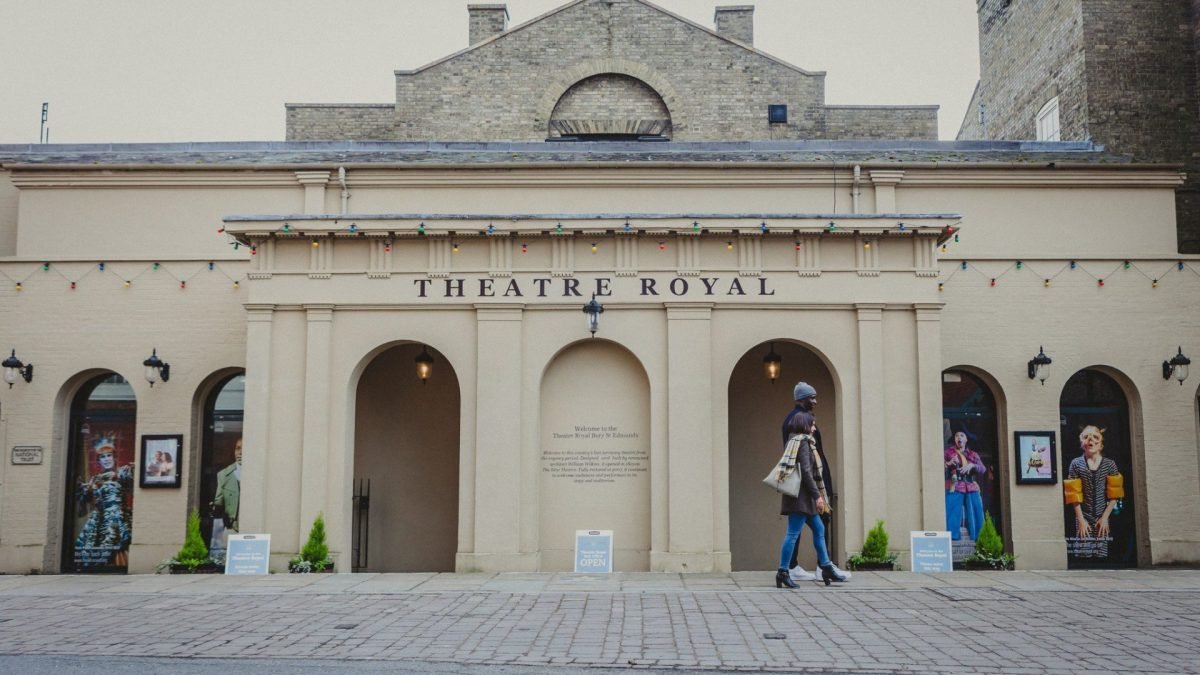
2) The beautiful, bijou Theatre Royal is Britain’s only surviving Regency playhouse.
3) Bury-based Greene King, the country’s largest independent brewer, makes up to five million pints a week.