
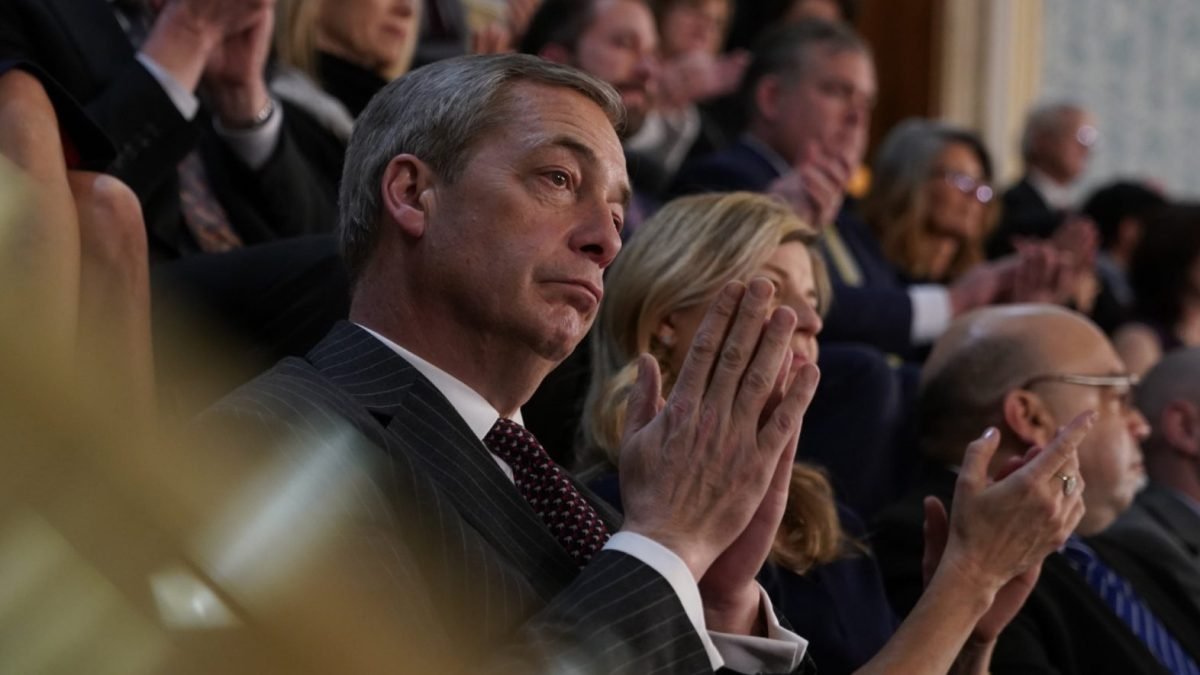

Like any successful populist leader, Nigel Farage loves to pose as a straight-talking man who dares take on the smug elites. So despite his public school and City of London trading background, he claims to have always been an outsider. He works hard to burnish a facade as standard-bearer for ordinary folks fighting a complacent establishment, polishing his everyman image with fags, flat cap and pints. Brexit, he declared, was a victory for “real people”. Shrugging off this act of national self-harm, he returned to the political fray two years ago at the helm of Reform UK supposedly to speak up “for the ordinary, decent, hardworking people of this country”.
Given this stance, it was curious to learn that this silver-tongued politician quietly pocketed £5m from a crypto billionaire called Christopher Harborne shortly before his surprise return. Farage had, after all, said he did not plan to stand as an MP; now polls suggest he stands on the threshold of Downing Street. He claimed the sum was a gift to pay for his security after being rumbled by a Guardian journalist; perhaps he plans to build a replica of Fort Knox in Clacton. Yet it always pays to follow money in politics. And this cash highlights how the anti-elitist populism sold to voters is a fraud, a rebranding of hard-right, anti-state conservatism by the super-rich and their fellow travellers.
Farage has long focused on leveraging his fame into a fortune while enjoying the largesse of ultra-wealthy people, despite claiming “there’s no money in politics”. His grifting has caused political hiccups, whether it was taking cash for appearances on the Kremlin’s propaganda machinery Russia Today or side hustles such as recording customised messages for Cameo punters.
Now an unsavoury stench wafts from this “gift”, which is being probed for possible investigation by the Electoral Commission after the Tories claimed it was an undeclared donation. Farage denies this and Harborne insists he wants nothing in return. Yet it is hard not to wonder why a tycoon based in Thailand – where he goes under the name Chakrit Sakunkrit – has handed an astonishing £17m to Reform UK and its leader?
Like many expats, the mysterious Mr Harborne – who has become Britain’s biggest political donor – holds a nostalgic view of our nation. A fan of Margaret Thatcher, he said in his first interview last week that he wants to see the country “renew itself and go back to the 1980s…and Nigel is the only person I know who can do that”. As a jet fuel broker, presumably he likes Reform’s hostility to net-zero policies. And no doubt Harborne also approves of Farage’s sudden enthusiasm for cryptocurrency since it is the key source of his immense wealth, which led to an appearance in the Panama Papers tied to offshore accounts. The Reform leader, now an investor and promoter of crypto, is pushing policies to assist this controversial financial sector.
The other big Reform donor is Ben Delo, who has given £4m. He is another crypto billionaire based abroad – living in Hong Kong under China’s repressive dictatorship while claiming to be a champion of free speech – although he says he is returning to Britain to evade new restrictions on foreign-based political donors.
Delo – pardoned by Donald Trump after conviction for breaking anti-money laundering laws – wants to build a war chest to “win back our country”. He also sees Rupert Lowe, the multimillionaire challenging Reform from the right, as “a breath of fresh air” who “shifts the Overton window a little further every day and keeps Reform on its toes”.
Delo, of course, chants the mantra of populism by talking about saving Britain from elites. Yet he funds a party bankrolled by billionaires and dominated by millionaires alongside its phalanx of washed-up Tory defectors. People such as Richard Tice – embroiled in controversy over his shell companies and tax arrangements – and Zia Yusuf, a former Goldman Sachs banker who made a fortune offering “luxury without limits” for the sort of people who instantly need private jets. Party treasurer is Nick Candy, who accumulated vast wealth selling homes to the global super-rich and is reported to have sold his own Chelsea mansion for £275m.
Farage stands before the electorate as the face of a populist force funded and shaped by ultra-rich plutocrats, repackaging their concerns under the banner of anti-elitism. Yusuf and Candy even joined him last year when Reform announced a plan to lure wealthy migrants with a £250,000 fee for 10 years of residency and a special tax regime, lambasted as a “billionaires bonanza” by rivals. The party relies on his unrivalled skill at riding waves of public fury over Westminster failures while posing as an ordinary bloke. And its success will depend on his ability to paper over the cracks between Reform’s base of working-class voters infuriated by crumbling public services and ultra-rich donors wanting to strip back the state and slash taxes.
The Italian media magnate Silvio Berlusconi blazed the trail for this corrosive style of plutocrat populism. But the pin-up is Donald Trump – pushing policies to aid the rich and his own family while distracting voters with culture wars, social media outrage and targeting migrants. I met many American voters during his campaigns seduced by the idea that this self-serving hustler was driven by desire to serve his nation and drain the Washington swamp. They have been rewarded with chaos, alleged corruption and a cost of living crisis fuelled by a foolish war. Aides claim his team – with the richest cabinet in United States history and a dozen billionaires – are “patriotic outsiders” even as the system gets tilted even more in favour of this elite and its interests.
Farage is suddenly trying to distance himself from his idol in the White House, just as he seeks to shake off past promotion of Kremlin propaganda. But as the Reform leader boasts that his party will do “stunningly well” in this week’s local elections, voters should take a hard look at the US and ask themselves if they really want this fraudulent model of billionaire and crypto populism to infect our country?