
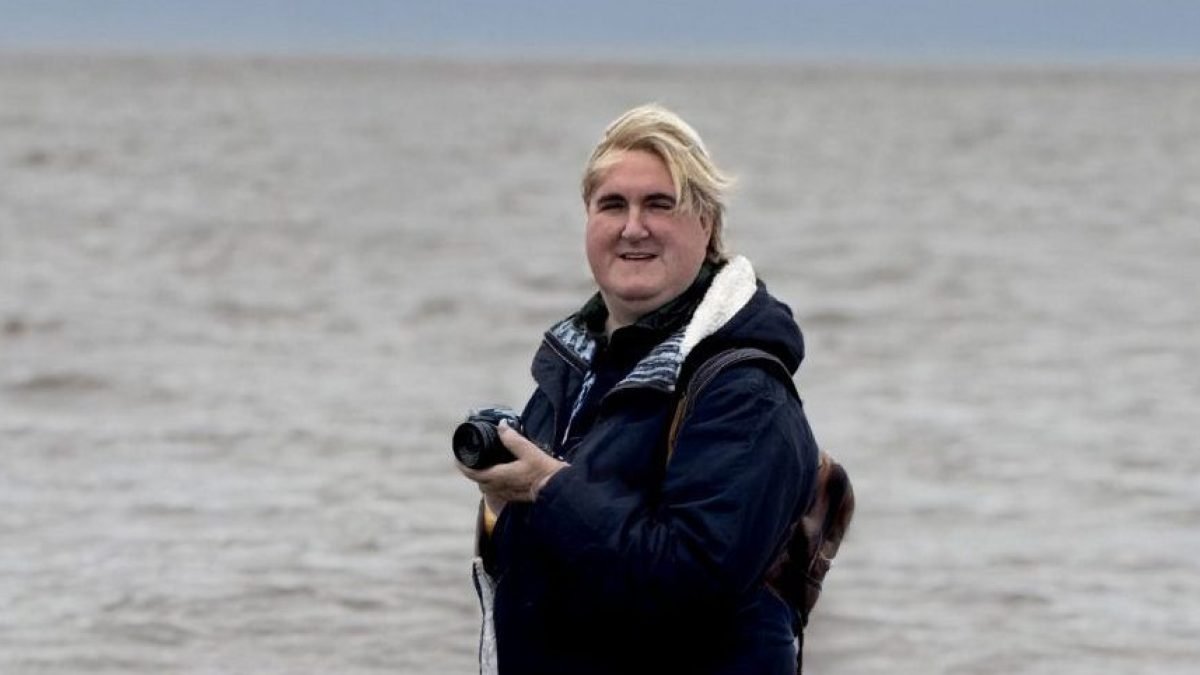
When writer Kestral Gaian, 40, was evicted from their Walthamstow home as the landlord wanted to sell up, the plan was to find another rental property in the capital.
Gaian and their friend had been paying £2,800 a month for a three-bed terrace house and had hoped to find a similar alternative. But it wasn’t long before they were priced out of the London rental bidding wars.
“We were looking right on the outskirts. And just in the time that we lived in Walthamstow, rent had gone up so much that on the next street over there was a one-bed flat where the rent was the same that we were paying for that three-bed house.
“It became really clear that we just couldn’t afford to stay living in London.”
The pair toyed with the idea of buying a flat in Zone 6 – further away from the centre of London, Walthamstow is Zone 3 – but even with their combined savings, they could not afford it.
“Then we looked at Scotland where we’d been to visit a bunch of times. We had friends that lived up here, so it wasn’t a complete unknown.”
The duo managed to buy outright a five-bedroom property in Ayr, a town on Scotland’s south-west coast. The property is located next to a river, has a “nice garden” and is a short distance from the sea.
“Basically for half of the deposit for a flat in Zone 6 in London, we’ve got an entire house,” Gaian said.
“The space we now have to be able to live and also the things we now get to do, it has expanded our lives considerably.”
Average house prices stood at £293,000 in England, compared with £193,000 in Scotland, in the 12 months to November 2025, according to data from the Office for National Statistics (ONS).
Better quality food and NHS care
The lower cost of living also means Gaian is able to afford better quality groceries, and the arts are more accessible too.
“We were paying about £150 to £200 a week for a food shop and we’re still paying that now, but the quality of what we get is so much higher. We’re able to go to a local fishmonger who gives us fresh fish caught that day.
“We get beef that’s been raised on hills that we can drive past in five minutes.”
As a member of the LGBTQ+ community, Gaian said they have been the target of a hate crime in London.
“I thought living in London would mean living in the most tolerant and accepting place as an LGBTQ+ person and that really didn’t end up being the case,” they said.
“Scotland really had a lot going for it and seemed ultimately more progressive than many parts of England,” they added.
Improved NHS care has also been a bonus.
Despite living on the same road as their GP surgery, Gaian said they found it hard to see a doctor, and “constantly had issues with getting repeat prescriptions”.
“NHS Scotland is much better and more affordable,” they said. “You don’t have to pay for prescriptions up here, which is an incredible thing in itself. Access to dental care is easier up here and cheaper.”
Data from the ONS shows net migration from England to other UK nations is higher than it has been for two decades.
Last year 58,000 people relocated to Scotland and 65,000 moved to Wales.
Amanda Burnside, 56, and her husband, Niall, who is originally from Scotland, relocated to Argyll and Bute in 2024. Niall took voluntary redundancy in 2023 and Amanda left her career in education.

They swapped a four-bedroom grade II listed cottage on a quarter-of-an-acre plot in Sussex for a five-bed with land. The nine acres is big enough for dogs, ducks, chickens and goats. And they are now mortgage-free.
“We could never have afforded that in Sussex,” Amanda said. “We were just priced out of finding something with land.”
Familial ties to Scotland and the desire for a wholesale lifestyle change were the main driving forces for the move, with Amanda falling in love with her husband’s homeland over the years.
“We’re a family that loves the outdoors and being out in nature,” Amanda said. “Although we lived in a beautiful part of Sussex, it had become very busy – queuing everywhere.
“Whereas I think the appeal of being up in Scotland is we can be quite rural. It’s just not as populated in the area that we’re in, it’s much more laid back, it’s a much slower pace of life.”

However relocating meant leaving their three adult children behind in England – or so they thought. Their youngest moved with them and now attends the University of Glasgow, while their middle child is set to make the move soon.
The Burnsides’s children, who grew up kayaking, hiking and white water rafting, can now do all those things from their parents’ front door in Scotland.
As well as the benefits of the great outdoors, Amanda has noticed money goes further in Scotland, finding dental care, property, hairdressers and pints cheaper.
“The cost of a pint, I mean that’s what really amazed us. The cost of a pint in our local back in Sussex, was just under £8 and here it’s around £5.”