
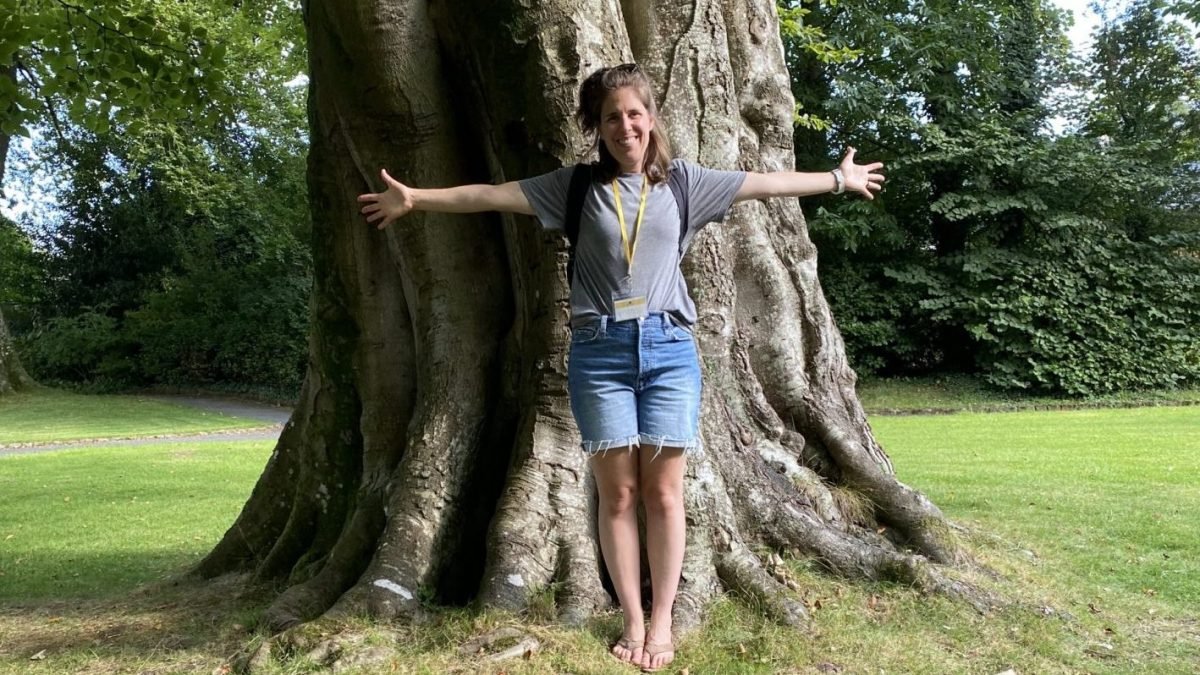
The i Paper’s Expat Files series follows Brits who have taken the leap and settled elsewhere. Data suggests a significant proportion of the UK population are moving or would like to move abroad – but it’s not just happening here. Emigration from many Western countries is soaring, including the US, New Zealand and Canada. In the third quarter of 2025, departures from Canada were 34 per cent higher than six years before. Here, Cara Howlett, 37, a freelance writer, tells why she moved from her native Alberta to Cumbria with her husband, a landscaper and their children.
There are not many Canadians living in the British countryside. “Are you enjoying your holiday?” is a question I am regularly asked. I’ve gotten used to the not-so-subtle looks in my direction when people hear my accent.
When I explain that I moved here from Alberta, the province whose claim to fame is Banff, Lake Louise and the Rocky Mountains, I am met with great surprise as they wonder out loud why I left all that beauty behind to come to northwest England, of all places.
“Why would anyone want to move here?” I’ve been asked a handful of times.
The British notion and image of Canada is one of awesome majestic mountain ranges and bright turquoise lakes. When I express my love of their landscape, culture, and way of life, people here balk. Their propensity to complain about their home is a distinctive British trait. I’m afraid those I have met have confirmed the way the world perceives them; they are prone to grumble and quibble despite having what others would deem picturesque and idyllic.
As an urban Canadian child of the 90s, I never imagined that I would live in another country, let alone England. My knowledge of England consisted of what I gleaned from The Spice Girls, Mary Poppins, and episodes of Mr Bean. It wasn’t until I met and fell in love with a Brit when I was 18, 19 years ago, that England became more than just a country of Union Jack platform boots, posh accents, double decker buses and a funny man with a teddy bear.
My now-husband and I met on the West Coast of Canada as freshly minted adults. Him, a wayward teen who had found his way to Canada as an outdoor education instructor, and I, a gardening assistant, met while volunteering on a small gulf island in British Columbia.
We lived together in Calgary and had the opportunity to spend month-long holidays in England with our children. It was during these visits that I started to fall in love with my husband’s home country. Instead of long drawn-out freezing winters, I pondered what it would be like to see flowers grow in January and experience year-long green grass. Compared to the concrete jungle of the city we lived in, I began to long for the access to nature that living in the British countryside would give us – since Canadian country life was unattainable and unaffordable. Instead of choking on oppressive wildfire smoke during the summer months, I desired the fresh air and freedom England offered.

Feeling restless in our predictable lives in Canada, we longed for a new adventure. After many months of packing, selling our belongings and waiting for my visa, we made the move in autumn last year, to a home in the area where my husband grew up.
I quickly realised that despite my month-long holiday stints in the United Kingdom, and the years I spent watching my favourite British television shows Gavin and Stacey, Location, Location, Location, Escape to the Country, Taskmaster, and The Great British Bake Off, I had a lot to learn about British culture that couldn’t be appreciated or fully comprehended until my feet were on British soil.
As I settle into country life around me, I observe the differences between my Canadian counterparts and the Brits. When I show people at home videos of our little cottage, they ask where the dishwasher is and why we have a washing machine in the kitchen. I’ve noticed that everywhere here has a cafe attached — the home goods store, the grocery store and even the garden centre all serve cakes, and importantly, tea. When driving on the narrow country lanes, drivers acknowledge each other with a unique four-fingered wave to say thank you. Instead of dogs being relegated to cars, they are welcome in pubs and cafes waiting patiently at their owner’s feet.
As a child, my parents took us on one holiday each year during our summer vacation. With only two weeks’ paid time off for both of my parents, a 10-day holiday was one we looked forward to each year. With our tent trailer (folding camper) hitched up to our van (people carrier), we headed west for a camping trip in the woods by the lake. It astounds me how many paid holidays the Brits are entitled to when first beginning their careers. “How lucky,” I think, while they plan their third or fourth excursion of the year.
A city kid, I never wandered too far from home. Children were kept close and under constant supervision. When I had my own children I assumed that this method of child-rearing was “normal”. In our new local village, and others I’ve visited, it is more uncommon to see a parent trailing behind a child rather than seeing a child walking around the village on their own. Bicycle gangs of pre-teen boys gather at the play park to eat their sweets and crisps. Gaggles of girls wander on the pavements as they whisper and giggle. My own notions of good parenting are questioned by locals who think that I’m crazy for constantly knowing my children’s whereabouts, while I simultaneously think the amount of freedom they give theirs is questionable.
Despite the differences between British northerners and Canadians, the Brits’ natural bent towards moaning about the weather, the state of things around them, or minor annoyances, they are an intentional people. The locals in our village have community events planned for nearly every weekend of the year. From markets, spring shows and bake sales to beetle drives, jumble sales and chess competitions, they are community builders. They are a people of togetherness. They are thoughtful and kind.
Upon arriving in England, while staying in holiday accommodation until we found a long-term rental, my children and I were in search of a post office in a village I wasn’t familiar with. I approached the director of a Salvation Army brass band. They were in between songs and I asked him for directions, to which he happily obliged. He then, of course, asked me where I was from and if I was enjoying my holiday. The usual proceedings took place as I explained our recent move. As we said goodbye, I said we would watch them play a song when we returned.
After our errand was complete, we stopped in the square to hear the band play their next song. I saw the director look at me and he took his position. To my surprise and delight, the band proceeded to play Canada’s national anthem, “O Canada”. With tears coming to my eyes, I listened as they played their instruments for us — for me. As they finished, they smiled and looked my way. Through tears I thanked them for their thoughtfulness. A caring gesture that proves the quality of the Brits.