
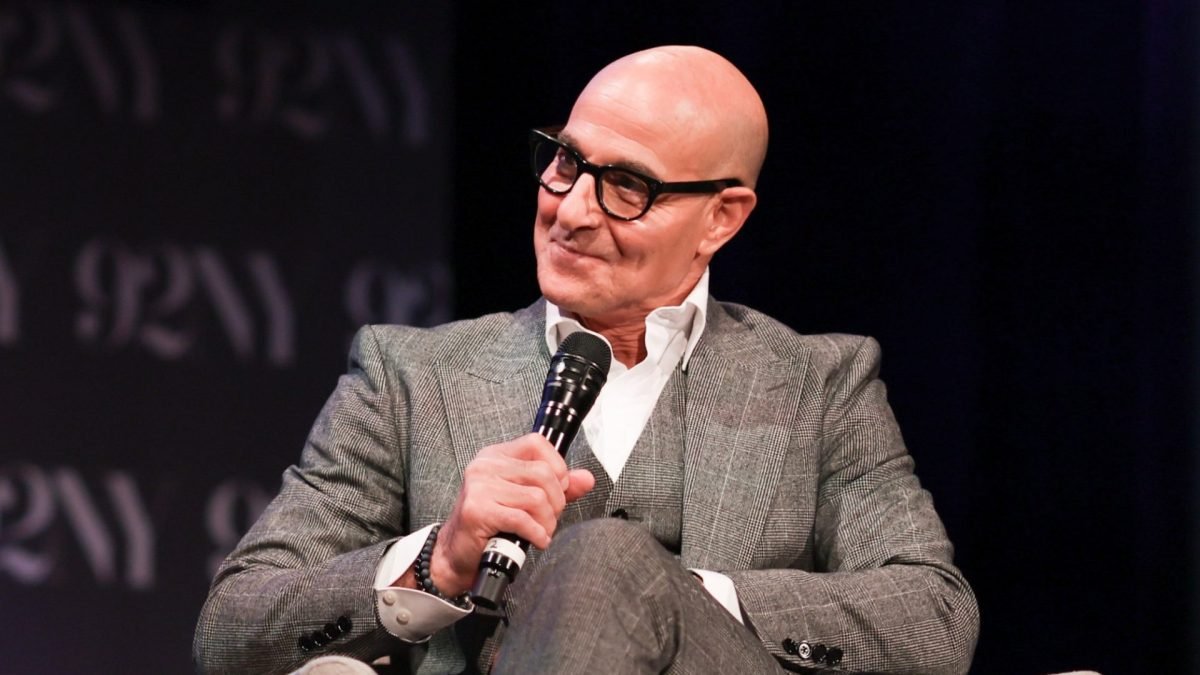

There was something quietly radical in what Stanley Tucci told the BBC last week. The actor has long been a passionate advocate for food as one of the great pleasures of life. But the age of Ozempic, Mounjaro and protein powders, he said, has “really messed up” how we think about food.
“We overthink it, and the idea of what we’re supposed to look like has messed up our relationship with food.”
It’s not simply a biochemical transaction. “Our relationship with food now is it’s just something you eat to feed your belly,” he said, “but that’s not what it is.”
It sounds obvious, yet it sounds faintly subversive. We now live in a culture where every meal arrives with protein targets, calorie deficits and carb avoidance. Entire supermarket aisles are devoted to products engineered to taste vaguely like joy while containing none of joy’s ingredients. For many, food has become merely a wellness strategy.
Tucci is right. Our relationship with eating has become confused. We talk about “fuelling” ourselves as though we are cars stopping at a service station. Pleasure now comes wrapped in guilt, caveated by fitness goals or justified by gym attendance. The rise of weight loss drugs has accelerated that. This is not an argument against them. For many people, particularly those struggling with obesity, they can be transformative. But culturally, they also reveal something unsettling about our lives.
Increasingly, appetite itself is viewed as a problem to be chemically subdued. Meanwhile, wellness culture bombards us with the language of “optimisation”. Social media is saturated with gym influencers dry-scooping pre-workout powders and treating lunch like an engineering challenge.
Every snack must now be “high protein”. Every coffee apparently requires collagen. People speak proudly about the protein benefits of meals that taste like chalk.
Growing up Italian like Tucci, food did not exist in isolation from emotion. It was never only about nutrition. It was language, identity, affection and ritual. The most important conversations happened around a table. If someone was grieving, you cooked for them. If someone had succeeded, you cooked for them. If relatives visited, there was food before anyone had even removed a coat. Literally! Love was measured in second helpings.
Some of my clearest memories are the smell of garlic softening in olive oil, or the spluttering sound of a Bialetti coffee pot on the stove. Nonna would insist you were too thin – regardless of all available evidence. Sunday lunch was an almost spiritual ritual. That can’t be replicated by a vanilla-flavoured shake containing 38 grams of protein.
The problem with modern wellness culture is that it strips food of its humanity. Meals become functional and joyless; everyone eats separate “macro-friendly” versions of dinner while staring at separate screens. What disappears is communion.
Mediterranean cultures have long understood something that diet culture struggles with: eating well is not simply about extending life, but enriching it. There is a reason the longest-living societies in the world – in so-called “Blue Zones” from Sardinia to Sapporo – place huge emphasis on shared meals and slower eating. Nourishment is emotional, too.
Perhaps that is what people hunger for now – not another powdered supplement, but rediscovering food as something that connects and comforts. We need to cook for people again and linger at the table. Every indulgence is not a moral failure.
Once food becomes nothing but fuel, something essential is lost. One of the oldest emotional bonds humans possess is to nurture and be nurtured through eating together.
Tucci’s point was not that health is unimportant. It was that each forkful we eat carries things – memory, culture, generosity, love – which won’t turn up on any influencer’s fitness plan, but which we need most of all.