
Donald Trump‘s threats to withdraw American troops from across Europe risk backfiring spectacularly on the United States by curtailing its leverage over allies and ability to project power.
The US will withdraw 5,000 troops from Germany over the next six months to a year, the Pentagon announced, in a move the President warned was just the beginning.
Trump’s remarks came just days after the German Chancellor Friedrich Merz said the US had “no strategy” and was being “humiliated” in its war against Iran, prompting a sharp personal rebuke from the President. Trump said Merz should be focusing on “fixing his broken country” and ending the Russian-Ukraine war rather than “interfering” with the US’s war with Iran.
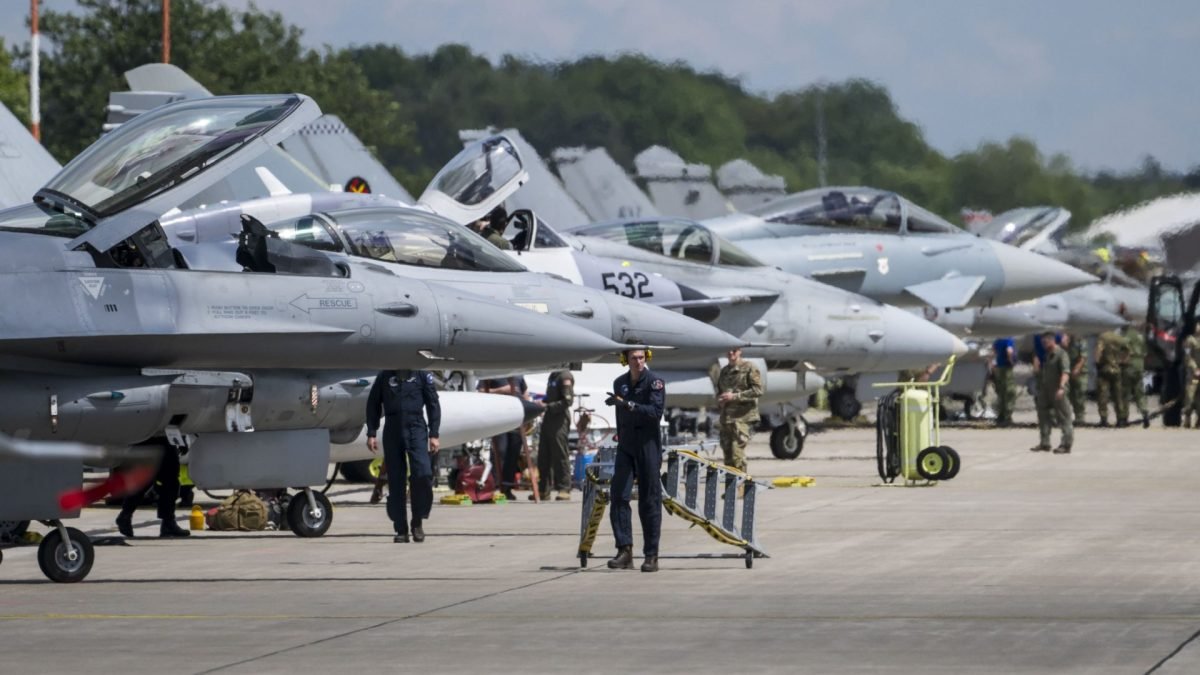
Germany hosts more than 36,000 active-duty US military personnel stationed permanently in the country, according to the US Defense Manpower Data Centre. The US Air Force’s European HQ is in the south of Germany at Ramstein Airbase, which is also the main base for Nato’s Allied Air Command, the central command of all Nato air and space forces.
Trump posted the initial suggestion hours after a phone call with the Russian President Vladimir Putin, who has long wanted to reduce Nato power and US military presence in Europe.
The clash between Trump and Merz marks a rapid deterioration of relations between the US and one of Europe’s top powers. The move also risks further undermining Nato, which Trump has repeatedly attacked.

Since Trump launched his war in Iran, he has escalated rhetoric Nato allies including the UK, suggesting he will punish those he feels have not been sufficiently supportive of the war. A leaked internal Pentagon email showed the US had considered reviewing the UK’s ownership of the Falklands and suspending Spain’s membership of Nato.
After the troops announcement, the Polish Prime Minister, Donald Tusk, warned that Nato was disintegrating. “The greatest threat to the transatlantic community are not its external enemies, but the ongoing disintegration of our alliance,” he said. “We must all do what it takes to reverse this disastrous trend.”
A blow to Trump’s war against Iran
A costly removal from German bases could undermine the US’s war against Iran if it continues. German bases are largely logistical, making them especially useful for supporting US operations in the Middle East. Ramstein in particular is a forward operating base for US operations in the Middle East.
Pentagon officials expressed surprise at Trump’s announcement. That same day, they had concluded talks with German defence chief, General Carsten Breuer, setting out Berlin’s defence strategy.
Germany provides free land for US bases and a local workforce to support American troops. The largest Pentagon hospital outside the US is situated in Germany, alongside two of the US’s most important military hubs: US European and US Africa Command, both in Stuttgart. These bases allow the US to project its military power well into Russia, Africa and the Middle East.

Moving troops and their families would require a monumental effort. “It is like rebuilding entire cities for tens of thousands somewhere else. This is not a question of a bunch of tents in a Middle Eastern theatre. This is effectively a question of American cities for the American military that currently happen to be in Germany,” Kristine Berzina, Senior Fellow at the German Marshall Fund, said.
Berzina suggested that moving troops would harm US interests most of all. She said: “It would be very disruptive to current American operations in the Middle East and that is the primary strategic interest of the United States right now so it would hurt the US military operations globally which is not something the US wants to do, especially not over a spat with Merz.”
However, Mark Webber, Professor of International Politics at the University of Birmingham, pointed out that the drawdown decision was part of a long-standing Pentagon review of US force posture globally. “The withdrawal will have been carefully planned in the Pentagon and with local US and German commands,” he said. “The remaining US forces will continue to carry out functions that benefit the US in its forward deployment. The Trump administration has no interest in jeopardising these functions.”
A hit to US power
However, Trump warned on Saturday the US would be “cutting a lot further” than the initial 5,000 troops. He has suggested that Washington could pull troops out of Italy and Spain, which have also refused to back the US in Iran.
However, withdrawing significant numbers of troops from across its bases in Europe would be a major blow to US power projection over large parts of the world, and would undermine its strategic interests. The US has over 68,000 active-duty military personnel assigned permanently in its overseas bases across the continent as of last December, according to the US Defense Manpower Data Center. Across Europe, it has 31 permanent bases and a further 19 military sites.
“Whenever America has done things in the Middle East it’s largely included assets from Europe. To withdraw that would be to cut America’s own nose off really,” Wyn Rees, Emeritus Professor of Political Science and International Relations at the University of Nottingham, said.
This does not mean a withdrawal should be ruled out, he added. “My instinct is that Trump could do something unpredictable and go ahead with it, but it would be contrary to American interests. I think it would be very hard for an American president to justify withdrawing America from the alliance because America gets an awful lot of benefit out of the alliance,” he said.
Practically, it would be very difficult to withdraw large numbers of troops from Europe. US law now restricts troop reductions below 76,000 without congressional approval.
Furthermore, as America withdraws money, troops and support from European allies, it loses leverage over those same allies. Europe will look to prioritise partnerships with each other as well as trusted allies elsewhere, especially when it comes to defence and technology spending.
“In the end, a strong, reliant, resilient, democratic Europe is in America’s interest,” said Noel Hadjimichael chair of the Defence and Security Circle cross-party think-tank in London. “America may achieve its strategic aims in terms of the Western alliance against Russia, but it could empower Europe to A, spend more money on their own companies, but B, potentially feel confident enough to take differing opinions.”

‘Existential for Europe’
A complete withdrawal of troops from Germany could be existential for Europe, said Berzina. “If there is a collapse of the American troop presence in Europe, Russia could see this as a green light to attack a Nato country. But it’s an incredibly small likelihood that any such action would happen,” she said.
Even if troops were to leave Germany, this would not signal the end of the US defensive partnership in Europe. She said: “I do not foresee a dramatic collapse of a US presence in Europe and that’s not what the Pentagon’s own planning documents have suggested, and that’s not what Congress has mandated.”
Hadjimichael pointed out: “It’s not the amount of withdrawal. It’s not even the type of troops….It’s all about the perception that the United States is less engaged, less committed, and less on the ground in Germany.
“There is no doubt that the adversaries of Nato that wish Nato to be either gone or diminished, they will take this decision as another win for any argument that the United States is pivoting away from Europe or the United States is no longer interested in the European relationship.”
He added: “It will then be like taking one brick out of the wall, which is Nato. And if you take enough bricks out of the wall, people start perceiving the wall to be weak and the wall to possibly be able to crumble. And that is dangerous.”
Rees said there was a risk that Trump could bring in yet more stringent cuts “because it’s a way of punishing the Europeans for their lack of support for the war against Iran”.