
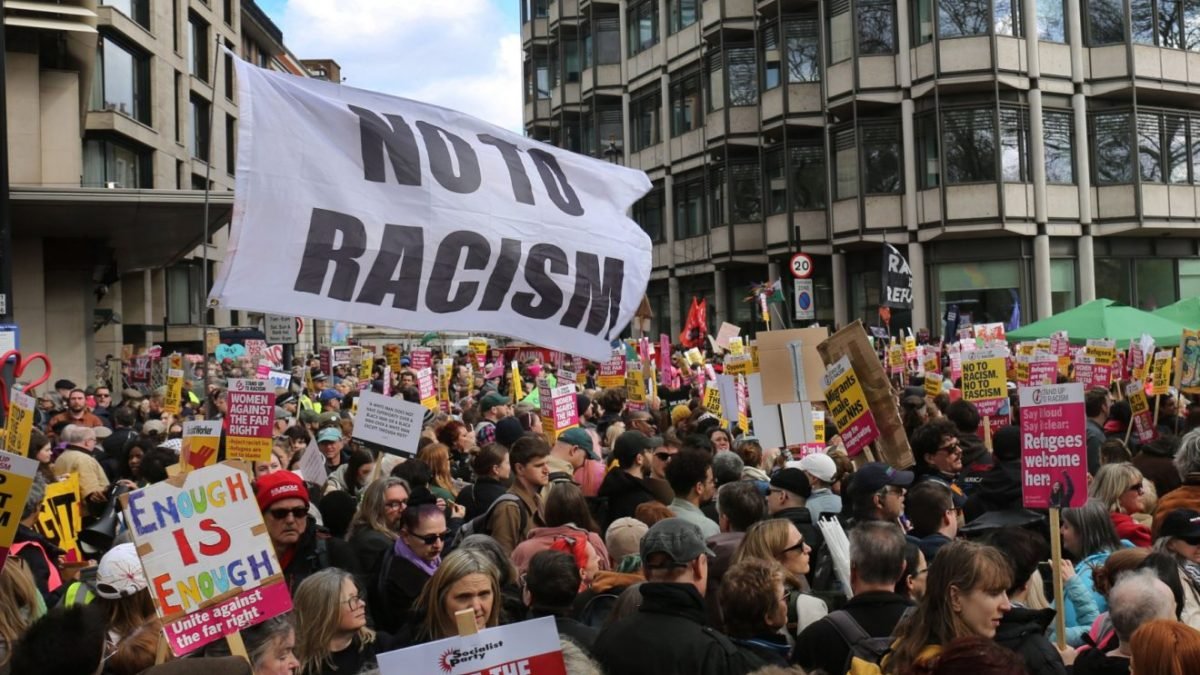

The aftershocks of last week’s elections continue to rumble. The Prime Minister is fighting for his political life, while the United Kingdom now has separatist parties governing three of its four constituent nations.
In local government, the challenge posed by the result is no less sizeable – in particular, the views of some of those new councillors are deeply troubling.
On both sides of the spectrum, and across the country, people celebrated victory on Friday who have a disturbing track record of what many will deem to be extremist and racist views.
The sewer of hateful positions runs deep and wide. From Glenn Gibbins, elected for Reform in Sunderland last week, who previously posted that Nigerians should be melted down to “fill in the pot holes”, to Saiqa Ali, elected in Lambeth on Thursday for the Green Party, who in 2024 posted antisemitic imagery showing the Earth being crushed by a Star of David-emblazoned serpent.
These are just two examples. There are plenty more where those came from. They show that of late our cordon sanitaire locking such people out of elected office has broken down.
We’ve never had a ban on particular views on the ballot. Nor should we; a democracy lives or dies on its capacity to debate and test ideas of all sorts.
Instead, we as a society have chosen to reject such poison for many years. Most bluntly at the ballot box, where voters repeatedly knocked back extremist candidates. But also through institutions, such as political parties, choosing to expel such candidates rather than promote them, and other means like through media scrutiny and social disapproval.
By and large that was effective. On the rare occasions that racists broke through, such as the BNP securing two MEPs in the late 2000s, the tide of voter disapproval and robust political challenge reversed it at the next election.
Generally the line held, particularly as mainstream parties promptly binned candidates if any got through, and were punished by the public at the ballot box if they failed to do so.
That is no longer the case. The two candidates above were successfully elected even though their dodgy history had been publicly exposed before polling day. How did this happen?
Some of it is logistics: small parties have been overwhelmed by a rush of hundreds of thousands of members and a need for thousands of council candidates. There’s some truth in Reform and the Greens’ line that it’s hard to vet them all.
But that can’t be the whole story. Vetting is a prophylactic; for it to be of use, there must still be problems for the vetters to find. The truth is that – like Corbyn’s Labour before them – some parties are attracting people like this in the first place.
For Reform, that arises from what looks like a deliberate weakening of the hard line Ukip and the Brexit Party used to take against extremism, egged on by Maga in the US.
For the Greens, it springs from the sense (no matter how strenuously denied) that the party’s strategy appears to be for a radical alliance with Islamists, and to piggyback on the antisemitism-riddled, anti-Israel movement.
The parties themselves do appear, in some cases, to be taking steps to clear up the mess they allowed to develop. Gibbins has been suspended from Reform pending investigation. The local Green Party says it has suspended Ali (inset) pending investigation and that candidates suspended from the Green Party at the time of election will not serve as Green Party councillors.
Ali apologised for “any offence or distress” caused by her comments, saying she “unequivocally rejects antisemitism in all its forms” and that her post was intended to reflect concern about the humanitarian situation in the Middle East.
Reform’s Gibbins, meanwhile, said his comments had been “dark humour” and he bore no ill will towards Nigerians.
Most disturbingly of all, it seems that the public themselves have weakened in their resolve to reject such candidates if they get through to the ballot paper.
We are demonstrably a far less racist country than at any time in our past, and yet stories like these run directly counter to that trend.
In part, I suspect it’s because of the fragmentation of trust, just as party politics has fragmented. It’s now more possible than it was before to live in an echo chamber, rejecting factual news that doesn’t match your political preferences.
In part, it’s because vibes-based politics has cross-bred with the culture war to urge that we increasingly prize our tribe – and stuffing the tribe we dislike – more than shared values like basic decency, to the extent that even legitimate criticism is itself celebrated a sign – in the words of the Green Party’s favourite memes – that you have got your opponents “rattled”.
It’s also because we allowed the word “racist” to become devalued, sacrificing its crucial and valuable meaning in service of increasingly bizarre political agendas.
When maths, correct grammar and classical music, to name but a few targets of particularly absurd campaigns, are supposedly “racist”, the term loses all meaning. And when you devalue the word that defines a real, serious threat that you need to defeat, you make that threat harder to fight.
It’s all very well to now say that we shouldn’t have let this happen. It has. The barbarians are inside the gate, the cordon sanitaire has been breached, and it falls to all of us to drive them back.