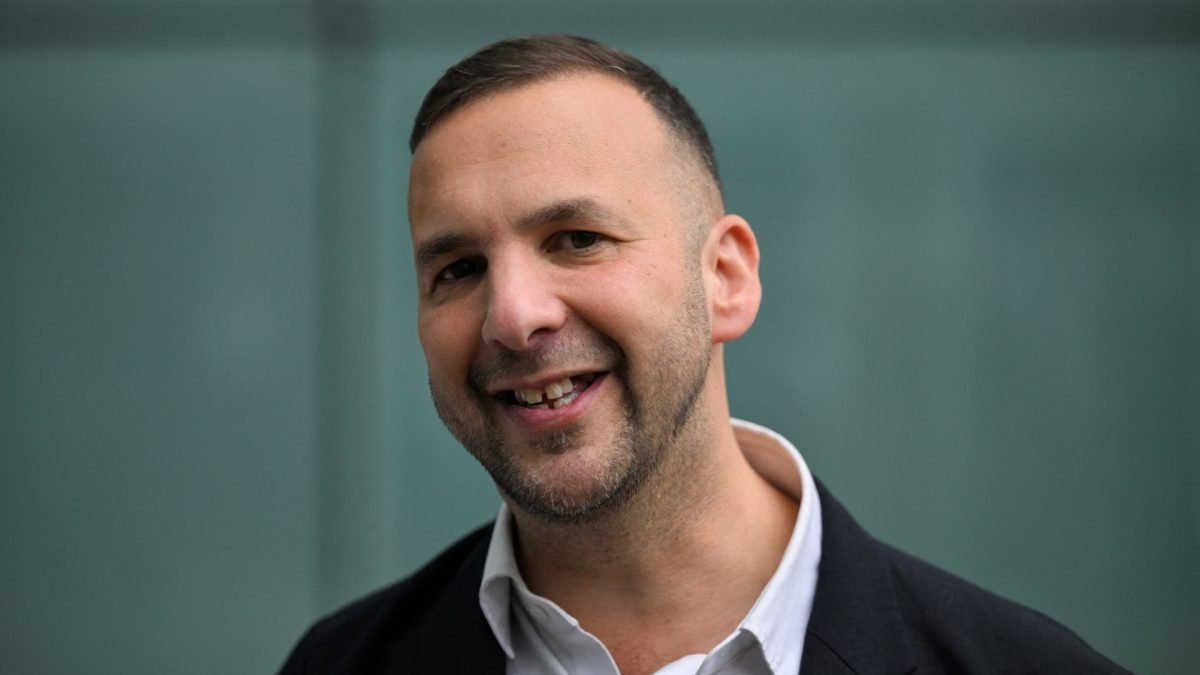
Zack Polanski’s council tax affairs just got more complicated

Zack Polanski’s time living on a houseboat in London continues to land him in hot water.

First, it emerged that he may have failed to pay council tax and is being investigated to see if he owes thousands of pounds. Now, there appears to be confusion over whether he was actually allowed to even live on the vessel.

Questions are even being asked over whether Polanski may have potentially breached electoral rules by registering to vote at a bungalow on the water’s edge that he did not live in.

Here is everything we know about the houseboat saga, and the unanswered questions:

Shorts

Should Polanski have paid council tax?

It all started with the revelation that the Green Party leader and his partner seem to have stayed on a narrowboat at an east London marina from around 2023 to 2025, according to The Times.

Polanski’s partner also advertised the narrowboat for sale online for £100,000, describing it as the couple’s “amazing home” for the last three years.

Initially, Polanski’s team said he only stayed on the houseboat “occasionally” while living at a rented property in Hackney, where his council tax was baked into the rent.

But the Green Party later said: “Until relatively recently, Zack was living on a houseboat, which came with its own unique practical circumstances and considerations. He has immediately taken steps to pay any council tax he may be found to owe.”

They added: “Zack apologises sincerely for the unintentional mistake.”

A Waltham Forest council spokesperson confirmed that it was “making assessments to establish whether or not there is any council tax owed to Waltham Forest or to any other authority”.

The borough said it was “taking legal advice” and working alongside Polanski’s team to “establish the full picture”.

The revelation that he may have failed to pay council tax is awkward for Polanski, coming after the Greens made major gains in London councils, taking overall control from Labour in Waltham Forest, Lewisham and Hackney.

Polanski has been a member of the London Assembly since May 2021, which is a 25-member elected body within the Greater London Authority (GLA) that scrutinises the Mayor of London’s decisions and budget.

The GLA is funded in part by local council tax, and the current salary for London Assembly members is £66,360. In the 2022 financial year, the base salary was £60,416.

Waltham Forest council added that “whether council tax is owed depends on several complicating factors” because the moorings appear to be in overlapping jurisdictions.

How much could Polanski owe?

Tax expert Dan Niedle, a Labour Party member, said that if the narrowboat was Polanski’s main residence for three years, he and/or his partner should have paid council tax of around £4,000.

Boaters without a permanent mooring – known as continuous cruisers, meaning they have to move every two weeks – are usually exempt from council tax, but those with residential moorings are generally liable to pay.

Waltham Forest council said that a leisure mooring – as appears to be what is permitted at the marina in question – would not ordinarily carry council tax liability. But if Polanski was living there full-time, this could complicate things.

The vast majority of houseboats fall into Band A. If Polanski is liable, he could owe yearly costs of £1,370.37 in 2023/24, £1,449.15 in 2024/25 and £1,518.43 in 2025/26. This comes to a council tax bill of up to £4,337.95.

There is also a fixed £70 penalty if someone fails, without a reasonable excuse, to notify a council of a matter affecting their council tax.

The Green Party did not respond to a request to comment ahead of publication.

Did Polanski break the marina’s rules?

The moorings at the marina for Polanski’s houseboat are meant to be for leisure use only, meaning boaters who live there permanently are breaking the regulations.

The Lee Valley Authority, which oversees the marina, said that all boat owners enter into a “non-residential mooring agreement” and must provide proof of ID and their home address.

Owners may have “short overnight stays if they are carrying out repairs or maintenance on their boats but are not permitted to reside permanently”, the Authority said.

It added that nobody should be living on a houseboat at a leisure mooring, nor should they be registered to vote at the marina, as it is not residential.

A handful of boaters – including Polanski – registered to vote at Springfield Bungalow, which is owned by Lee Valley Regional Park Authority and let as private rental accommodation. The Authority said the property was used for “post and out of hours deliveries”.

Last year, a member of Authority staff moved into the property, meaning it was removed as a postal option, and any boaters who were registered there were removed.

The Authority refused to comment on Polanski’s individual case but said the process for managing breaches of agreement ranges from “initial informal discussions to the final stage of agreement termination if a breach has not been resolved”.

What about electoral rules?

Niedle noted that if it had been true that Polanski only stayed on the houseboat “occasionally”, he may have broken electoral law by registering to vote at a bungalow near the marina, which served as his postal address.

But even if Polanski was living on the boat full-time – as he has admitted to – he could still be in breach of electoral rules. It all depends on whether the Green Party leader can legally be described as a “resident” at the waterside bungalow where he – and several others – were registered on the electoral roll until 2025.

Tom Gillie, an electoral law specialist at Matrix Chambers, said the rules surrounding residences are a “grey area”, as it is possible to be eligible to register to vote even if you are not a resident in a building, but there needs to be a “sufficiently close connection”.

According to the Electoral Commission, boaters without a permanent mooring are “entitled to make a registration by declaration of local connection at a place where they spend a substantial amount of their time”, such as a boatyard used for maintenance.

But Gillie told The i Paper: “There is certainly a grey area between a traditional residence and impermanence, and difficult questions are bound to arise when a person lives in a place fleetingly or lives in movable accommodation.

“In those circumstances, the person will be required to show that they have a sufficiently close connection to a particular electoral district which may in practice be difficult to demonstrate so far as fleeting visits are concerned.”

He added: “Whatever the circumstances, however, the law requires people to be truthful about the location of their residence: one cannot pretend to live somewhere one does not in order to get onto the electoral register.”

Polanski did not respond to a request for comment.

Streeting’s power grab looks doomed – but he’s taking Starmer down with him

There are many uncertainties but Wes Streeting’s resignation spells the end of Keir Starmer’s premiership – although Starmer, the master of process, could yet use all his procedural skills to delay his departure. After all, his reaction to all his political blows so far has echoed Monty Python’s knight, “’Tis but a scratch”. 

That does not, of course, mean that Streeting will be the next leader of the Labour Party and prime minister. In a new poll of the party membership by Labour List, Starmer would be defeated by Angela Rayner, Andy Burnham or Ed Miliband, but he would beat Streeting.

Nor, as I write, is an imminent leadership contest a certainty. Streeting has yet to present the national executive with a list of 81 Labour MPs supporting his challenge. Only that can trigger game on.

If he has that support, the control over who enters shifts to the National Executive Committee. They will determine the timetable for the contest – that could exclude Burnham even if he is permitted to resign as Mayor of Greater Manchester, finds a parliamentary seat and wins it.

Starmer blocked Burnham last time, but with his power draining away, it seems unlikely that the NEC would do his bidding once a contest is inevitable.

Of course it is possible that Starmer could give up and announce a timetable for his departure now. But nothing we have seen from this stubborn and proud man so far suggests that he will do that. Then again, even Mrs Thatcher was eventually persuaded to give way.

Streeting’s resignation letter says he wants a wide contest in the party and that is likely to be the will of the rest of the party, even though it will leave the governance of the country in the air for weeks if not months.

Burnham is desperate to run but may not make it. The King of the North taking over King’s Landing is very much a hypothetical.

Rayner now looks to be the strongest challenger, unless she decides to hold the door open for someone else. Her clearing of wrongdoing over her second home in Hove has cost her £40,000 in unpaid tax, plus lawyers’ fees, although No 10 will presumably still argue that she was in breach of the ministerial code because she did not uphold the highest standards.

But will others let her through? For all his modesty, Miliband is now the senior figure in the Cabinet and must be tempted by making a grab for No 10. Many in Labour think a female leader is long overdue. There are possible candidates in Louise Haigh, Foreign Secretary Yvette Cooper and Deputy Leader Lucy Powell.

My current reading of the mood in the Labour Party is that Labour’s transferable vote system just about guarantees that any of the above would eventually beat Streeting in the party leadership contest – whatever the wishes of the country as a whole.

If there is not a contest now – it is a racing certainty that someone will come for Starmer with a challenge this year.

Bluntly, he has passed the point of no return with his party. He is more unpopular than Labour “on the doorstep”. The voters simply do not like him. They hate his voice and even his glasses and hairstyle. They regard the North London lawyer as an inauthentic champion of “working people” – even if his father was a tool maker.

It is a terrible thing to depose a prime minister after less than two years in power. But he does not have the qualities of a national leader. He cannot speak to the nation and appears to find even normal personal relations with his colleagues troublesome. If he makes mistakes, he throws underlings under the bus. Labour was terrified by its setbacks in the local elections. The party seems to have no heartlands left – not Wales, not Scotland, not the Red Wall, not the cities and not the towns. His reset speech on Monday flopped, as did his King’s Speech.

Sir Keir Starmer is over. He will not see this Christmas in No 10.

The best books out in paperback in May 2026

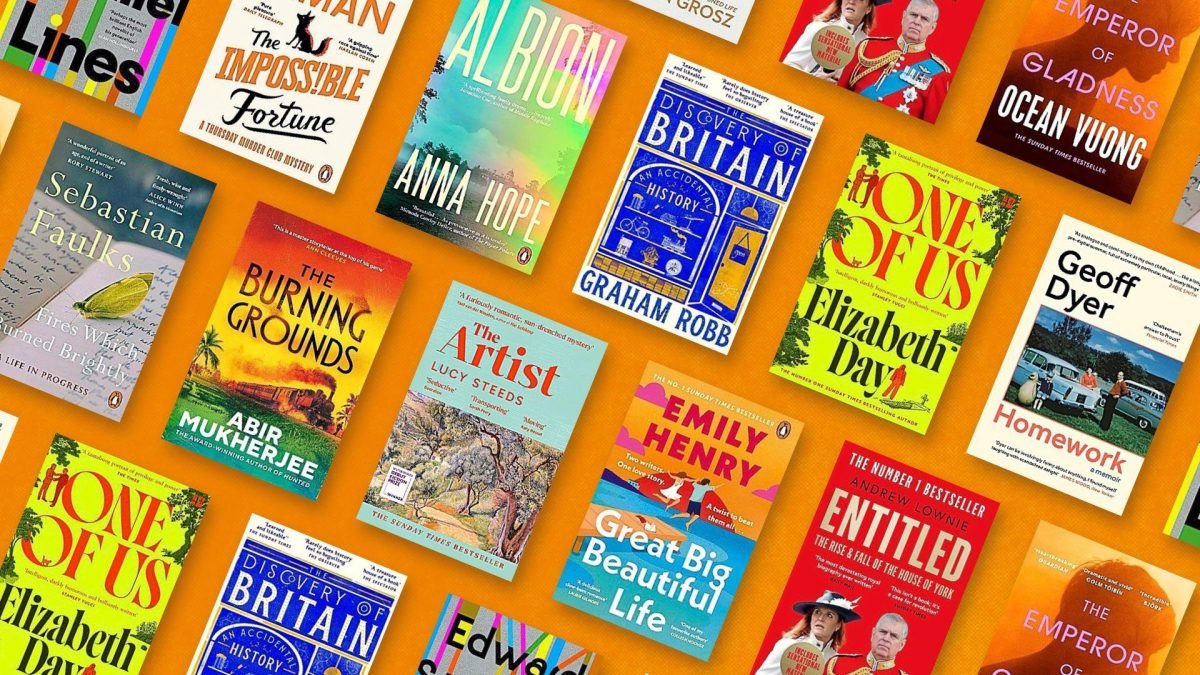
With summer holiday season around the corner (the year really is going by that quickly!), there is nothing better than a fresh batch of suitcase-friendly paperback releases. Which is why it is such good news that – almost as if it is planned – some of the biggest books of the last 12 months are newly out in such formats. Take Richard Osman’s most recent Thursday Murder Club mystery, for instance, or the latest romcom from queen of the beach read Emily Henry, or even Andrew Lownie’s jaw-dropping deep dive into Prince Andrew and Sarah Ferguson. Here’s our pick of the best…

Fun and Games by John Patrick McHugh; Love’s Labour by Stephen Grosz; The Emperor of Gladness by Ocean Vuong

Fun and Games by John Patrick McHugh

Set over one summer on a small island off Ireland’s west coast, this striking debut follows 17-year-old John as he grapples with masculinity, class, desire and the question of who he wants to become. Tender, perceptive and beautifully observed.

Fourth Estate, £9.99

Love’s Labour by Stephen Grosz

Drawing on four decades as a psychoanalyst, Grosz explores the complexities of love through a series of intimate case studies. Wise and compassionate, this is a thoughtful meditation on relationships from the bestselling author of The Examined Life.

Vintage, £11.99

The Emperor of Gladness by Ocean Vuong

Vuong follows the acclaimed On Earth We’re Briefly Gorgeous with another deeply moving novel, centred on a troubled teenager whose life is transformed after he an encounter with an elderly widow living with dementia.

Vintage, £9.99

Fires Which Burned Brightly by Sebastian Faulks; The Burning Grounds by Abir Mukherjee; Albion by Anna Hope

Fires Which Burned Brightly by Sebastian Faulks

From schooldays and Fleet Street to the publication of Birdsong and beyond, Faulks reflects on the experiences that shaped him as a writer in this warm and insightful memoir. Rich in literary and cultural history, it also offers a fascinating portrait of post-war Britain.

Penguin, £11.99

The Burning Grounds by Abir Mukherjee

Captain Sam Wyndham returns to Calcutta in the latest instalment of Mukherjee’s acclaimed historical crime series, this time drawn into the dangerous underworld of Indian cinema following a murder. Atmospheric and brilliantly plotted.

Vintage, £9.99

Albion by Anna Hope

When the Brookes family reunite at their sprawling ancestral home following the death of their father, long-buried tensions begin to surface. Both a sweeping family drama and state-of-the-nation novel, from the author of Expectation.

Penguin, £9.99

Parallel Lines by Edward St Aubyn; Great Big Beautiful Life by Emily Henry; The Impossible Fortune by Richard Osman

Parallel Lines by Edward St Aubyn

The Patrick Melrose author’s latest novel follows estranged twins whose reunion sends shockwaves through the wider family. Exploring intimacy, identity and the consequenses of the paths we choose, it is a typically psychologically astute read.

Vintage, £9.99

Great Big Beautiful Life by Emily Henry

A reclusive heiress invites two rival writers into her orbit, each hoping to tell her extraordinary life story. But in true Emily Henry fashion, what unfolds is far more complicated – and romantic – than either expects.

Penguin, £9.99

The Impossible Fortune by Richard Osman

Wedding bells are ringing, but the Thursday Murder Club soon find themselves caught up in another fiendishly puzzling mystery involving a cryptic code and oh-so dangerous secrets. Packed with humour and clever twists, Osman once again proves why he dominates the cosy crime genre.

Penguin, £9.99

The Discovery of Britain: An Accidental History by Graham Robb; One of Us by Elizabeth Day; Entitled by Andrew Lownie

The Discovery of Britain: An Accidental History by Graham Robb

From vanished ancient settlements and Stonehenge to multicultural Britain and modern political upheavals, Robb takes readers on a witty, wide-ranging journey through British history. An entertaining history which offers a fresh way of seeing the nation’s past.

Picador, £12.99

One of Us by Elizabeth Day

Years after a devastating fallout at his friend Ben’s 40th birthday party, Martin is unexpectedly drawn back into the orbit of the powerful Fitzmaurice family. As political ambitions, buried secrets and old resentments collide, Day delivers an addictive story of power and privilege.

Fourth Estate, £9.99

Entitled by Andrew Lownie

Drawing on years of research, interviews and previously unseen material, Lownie traces the turbulent lives of Prince Andrew and Sarah Ferguson, from their courtship and marriage to scandal, divorce and links to Jeffrey Epstein. Royal biography at its most jaw-dropping.

William Collins, £10.99

Homework by Geoff Dyer

In this funny and deeply nostalgic memoir, Dyer reflects on his working-class childhood in post-war England, from Airfix kits to grammar school, prog rock and discovering literature. It captures both a vanished Britain and it the universal strangeness of growing up.

Canongate, £11.99

The Artist by Lucy Steeds

In 1920s Provence, Joseph, a young journalist, arrives at a remote farmhouse to interview a reclusive painter. There, he is drawn into the world of his enigmatic niece Ettie, and all is not as it seems. An award-winner for good reason.

John Murray, £10.99

What Burnham as PM could mean for your taxes, welfare and immigration

Andy Burnham is rumoured to be ready to attempt a Westminster comeback yet again – and his eye is understood to be on the leadership.

Allies of the Greater Manchester mayor have claimed he has found a Labour MP ready to stand aside so he can re-enter Parliament and challenge Sir Keir Starmer for the party leadership.

This first step is crucial, as Burnham cannot stand in a leadership contest without a Westminster seat. In January, Labour’s ruling National Executive Committee blocked an attempt to secure him a place in the Commons at the Gorton & Denton by-election.

Shorts

But with over 90 MPs calling on Starmer to go following a historically bad set of local election results, pressure on the Prime Minister is growing.

Burnham’s record in government, his mayoralty in Manchester, and a string of high-profile disagreements with Downing Street give a clearer picture than most of what his premiership might look like.

Welfare and disability benefits

Burnham has been among the most vocal Labour figures to oppose the Government’s welfare cuts.

Speaking on BBC Radio Manchester in March 2025, following Rachel Reeves’s Spring Statement, he said the package – which targeted personal independence payments, carer’s allowance and universal credit – felt like “the wrong choice.”

He added that he struggled “to believe there will be no detrimental effect that further makes the lives of disabled people harder”.

However, Burnham stopped short of calling for a full reversal at the time.

The Mayor told the BBC that “the system does need fundamental reform and we have a large amount of agreement with the Government on that” – but he argued the pace and scale of the cuts went too far.

Burnham’s position implies that, while he might seek some reform of the welfare system, he is unlikely to continue the scale of cuts the current Government is pursuing.

The NHS

Health policy is where Burnham – who was health secretary between 2009 and 2010 under Gordon Brown – has the clearest record.

His central argument, developed over more than a decade, is that the NHS and social care must be fully integrated into a single publicly run system, free at the point of use – what he calls a National Care Service.

Burnham has said that forcing hospitals and care providers to compete for contracts is “an alien ideology” that fragments care.

As Mayor of Greater Manchester, he has piloted this model through the city-region’s integrated health and social care partnership, overseeing a £6bn budget.

In March 2026, he secured a deal to appoint the UK’s first health commissioner, jointly accountable to him and the health secretary.

As health secretary in 2009, Burnham introduced the “preferred provider” policy, making the NHS the first choice for new contracts over private firms.

A Burnham premiership would almost certainly look to extend that principle nationally – a sharp departure from Wes Streeting’s willingness to use private sector capacity to cut waiting times.

Taxes and the economy

Burnham’s most consistent economic argument is that Britain taxes work too heavily and wealth too lightly.

Speaking to Sky News in June 2025, he said: “We’ve overtaxed people’s work and we’ve undertaxed people’s assets and wealth and that balance should be put more right.”

His proposed remedies are specific: a revaluation of council tax bands – unchanged since 1991 – land value taxation reform, and replacing inheritance tax with a “care levy” to fund a National Care Service, with the wealthiest contributing the most.

But it is his comments on borrowing that have caused the most turbulence.

In an interview with The New Statesman in September 2025, Burnham said politicians needed to “get beyond this thing of being in hock to the bond markets”.

Mayor of Greater Manchester, Andy Burnham speaks at a Fringe event on the first day of the annual Labour Party conference in Liverpool, north-west England, on September 28, 2025. Britain's ruling Labour party began to gather for its annual meeting on Sunday, with underfire Prime Minister Keir Starmer battling to convince nervous lawmakers that he is the right leader to fend off soaring support for the hard right. (Photo by Paul ELLIS / AFP) (Photo by PAUL ELLIS/AFP via Getty Images)
Burnham at a fringe event at the Labour Party conference in September 2025 (Photo: Paul Ellis/AFP)

Starmer responded the following day, likening his proposals to the Truss mini-Budget of 2022 which he said had been “a disaster for working people”,

The Prime Minister added: “The same would be true if you abandoned fiscal rules in favour of spending.”

Burnham pushed back at an event at Labour’s Liverpool conference, saying he would “stick to fiscal rules.”

He went further in February 2026, telling the Resolution Foundation think-tank that he had “never said Britain should ignore the bond market”, and insisted his words had been “twisted”.

The episode nonetheless points to a vulnerability. His calls for renationalisation, higher wealth taxes and greater public control of essential services could spook financial markets.

Immigration

Burnham has been critical of the Government’s increasingly hardline stance on immigration.

Speaking on BBC Radio 4’s Today programme in November 2025, he said he agreed with Home Secretary Shabana Mahmood that “root-and-branch reform of the system” was needed, but added: “I do have a concern about leaving people without the ability to settle.”

He was particularly critical of Mahmood’s plan to quadruple the length of time asylum seekers must wait to gain permanent residency – from five to 20 years – with status reviews every two-and-a-half years.

Burnham said the policy would leave people “in a sense of limbo and unable to integrate”, and argued it would be “better to stick with the decision of long-term leave to remain.”

His overall position suggests he would pursue lower net migration figures less aggressively than the current administration, placing greater weight on the rights of those already in the country to settle and contribute.

Foreign affairs

Burnham’s foreign policy positions are more developed than his rivals’, shaped partly by his public break with Starmer over Gaza.

In October 2023, the mayor became one of the first senior Labour figures to call for a ceasefire, breaking with the party leadership alongside London Mayor Sadiq Khan and Scottish Labour leader Anas Sarwar.

He warned Starmer not to brand MPs who disagreed on the issue “as disloyal or as if they don’t care about innocent lives.”

In June 2025, Burnham joined three other party figures in urging the Government to recognise Palestinian statehood “without further delay or equivocation.” The Government did so in September.

On Europe, he has gone further than any of his rivals. Speaking at a fringe event at Labour’s Liverpool conference in September 2025, he said he hoped to see the UK rejoin the EU in his lifetime – a position well beyond the Government’s current reset – and has repeatedly described Brexit as a financial “disaster.”

As prime minister, that would likely mean a more assertive stance on Israel and Gaza than Starmer has taken, and greater ambition on the EU relationship than the current reset allows for.

Why Jim Ratcliffe has reservations about Michael Carrick at Man Utd

It is currently a matter of time until Michael Carrick is officially charged with being the latest rabbit in the headlights at Manchester United.

The senior figures leading the managerial recruitment process, chief executive Omar Berrada and director of football Jason Wilcox, are convinced and will recommend the former midfielder for the role in the coming days and weeks.

Other candidates remain in the frame, but nobody has impressed Berrada and Wilcox enough to persuade them to overlook what Carrick has achieved in steering this faltering giant back into the Champions League.

There were dream targets, Paris Saint-Germain’s Luis Enrique being the ultimate pick, but of the attainable options, Carrick is deemed the best fit.

The days of United being able to attract anyone they wanted are long gone.

Formal talks will begin shortly, only after one person in particular can be completely assured over the 44-year-old’s credentials.

Gravitas important for the owner

Carrick’s appointment could be confirmed before the end of the season (Photo: Getty)

When Sir Jim Ratcliffe purchased a minority stake in United, one of the many business-focused mantras he was keen to get across was that appointments in senior positions had to be the “best in the class”.

Before Ruben Amorim was hired, Ratcliffe was a fierce proponent of then England coach Gareth Southgate, someone he saw as having the global footballing persona and fluid public speaking acumen to lead a sporting behemoth like United.

Amorim was hardly the biggest name, but his honest and fiery approach to the media, where he wasn’t afraid to speak his mind, while also keeping the gravitas of being United manager in mind, sat well with the Manchester-born billionaire.

The Portuguese coach said the right things behind the scenes early on, too, which is why Ratcliffe persevered with Amorim longer than many would, given the disastrous form on the pitch

Ratcliffe has been buoyed by United’s uptick in results since Carrick took charge – no team has taken more Premier League points in that time.

Where he isn’t quite won over is with personality. Carrick is comfortable enough in the media spotlight, but doesn’t really give much away, in terms of insight or passion.

Ratcliffe wants the manager to have the character to match the size of the club. It is unlikely to be a sticking point enough to overrule Wilcox and Berrada, who Ratcliffe entrusted to identify the next candidate, but it is understood to have dampened the co-owner’s enthusiasm.

Player power still has a sway

Bruno Fernandes has given the interim boss his public backing (Photo: Getty)

Whoever you ask around Carrington, first-team regulars or those on the periphery, there is unanimity.

Mason Mount insisted he “likes the way Michael works” in a recent interview with The i Paper. Matheus Cunha claimed Carrick has the “Fergie magic”, while captain Bruno Fernandes hailed the interim coach’s attempts to champion togetherness.

Carrick and his close-knit team of coaches have really enhanced the feelgood factor, with the mood in the camp as buoyant as it has been for many years.

Ineos has made a point of making the right signings in terms of personality to compliment the playing talent, which has helped create an impressive widespread bond, with no cliques.

Senior sources suggested it would be somewhat foolish to go against so many senior players’ wishes.

Backroom staff equally impressive

Steve Holland was Gareth Southgate’s right-hand man for eight years (Photo: Getty)

Steve Holland is starting to develop something of a cult following at Old Trafford.

Having someone of his experience and enthusiasm has been a welcome addition, with sources insisting the assistant coach has played as big a part in United’s success under Carrick as the interim boss himself.

What has been so unusual for a short-term appointment is how Carrick already has a full coaching staff in place. Not just assistants, but first team coaches already gelling with players.

Holland, Jonathan Woodgate, Jonny Evans and Travis Binnion come as part of the Carrick package. There would be no bedding-in process that could have a detrimental effect on results early in the season, effectively writing off yet another campaign before it had even begun.

Signing up Carrick includes a backroom staff who have forged relationships with the club’s shiny new data department, one who are in regular consultation with the recruitment team, ahead of what promises to be a huge summer in the transfer market.

Fits perfectly into the Ineos structure

Former coach Ruben Amorim was not very good at managing upwards (Photo: Getty)

What got Amorim sacked in the end was what had earlier earned him a stay of execution: his mouth.

Once you clash with the director or football over power, there is only going to be one winner. It is unlikely Carrick would repeat the same mistake.

Carrick is more than happy to take a backseat in recruitment and overall vision. If he has to play a certain way, then so be it. That is what he has been doing since he walked in the door.

It is not clear what Carrick’s tactical approach will be long-term, as he hasn’t had the opportunity to showcase it. Should he get the role on a permanent basis, we will get a better indication of his philosophy.

There will be no Amorim-esque insistence on a back three, however. Carrick’s style of play could come to the fore and bring great success. If it doesn’t, and the powers that be insist he changes his tactical approach, Carrick would be more than willing to toe the company line. Keeping everyone important happy.

Read more

Prince Harry is desperate to return to the royals. He just doesn’t know it yet

For a man who supposedly wants to be left alone to live a “non-working Royal” life, Prince Harry certainly is… well, everywhere.

We saw him in April, accompanying his wife, Meghan Markle, on a four-day tour of Australia. While she promoted her lifestyle brand “As Ever”, did other charitable ventures and charged £1,400 per ticket for an appearance at a luxury “girls weekend” in Sydney, her husband met war veterans, discussed Aussie sport and Indigenous culture and spoke at a mental health summit about the death of his mother, Princess Diana.

Just weeks later, up popped Prince Harry again – this time in Ukraine, where he urged the world not to lose sight of what the country is up against. He gave a speech at the Kyiv Security Conference, drawing on his own military experience and warning the impact of the war will last “for years to come”. He wanted to leave Ukrainians with the message, he said, that “the world sees you and respects you”.

And he should know. Prince Harry, it appears, is desperate to be seen and respected – how else to explain the way he keeps saying one thing and doing another?

Take, for example, his comments about how being a Royal “killed my mum” (he told a crowd in Australia he “never wanted” the job or the role, and was “very much against it”) and juxtapose that with what he said in Ukraine: “I will always be part of the Royal family and I’m here working and doing the very thing I was born to do.”

And then there are his fierce attacks on press intrusion. The Duke of Sussex recently gave evidence in the Daily Mail phone-hacking trial in which he fought back tears, saying the Mail had made his wife’s life “an absolute misery”. Meghan, meanwhile, has said that for a decade, she was the “most trolled person in the entire world” – and the couple have previously said they stepped back as senior royals in 2020 to move to California, in part to escape the “toxic” UK tabloid press and protect their mental health.

Yet this week, you guessed it: here’s Prince Harry, once again, like whack-a-mole, writing in the British press about antisemitism and Islamophobia. You couldn’t make it up.

I don’t disagree with Harry – what he says in his first op-ed in – well, forever? – is spot on: he talks about the “moral blurring” that’s taking place in Britain, as “outrage outpaces humanity” and fear and division “are amplified faster than truth”. He was compelled, he says, to speak out because “silence is absence” and he didn’t want to stand on the “sidelines”, because “that allows hatred and extremism to flourish unchecked”. He also warned of a “deeply troubling” rise in antisemitism in the UK which has led to “lethal violence” against the Jewish community.

And he put his hands up to his own historical blunders (presumably reflecting on the time he wore a Nazi uniform to a fancy dress party in 2005), saying: “I am acutely aware of my own past mistakes – thoughtless actions for which I have apologised, taken responsibility and learned from.”

But it seems to me there is a certain irony in this apparent “comeback tour” filled with public mea culpas, earnestness and virtue-signalling. And even at 41, Prince Harry still seems to be the same “lost, betrayed, and completely powerless” boy he talked about being in Australia. To put it bluntly: he doesn’t seem to know what he wants.

After all, he is, at once, one of the most famous people in the world – and keeps reminding us of that fact by making bids for armed security for his visits home, provided by the government – yet insists he wants to be “left alone” to live a “normal” family life in Montecito.

He’s publicly bemoaned the way he grew up “in a goldfish bowl under constant surveillance” – and “Megxit” allowed him and Meghan to remove themselves from the palace spotlight – but they then went on to thrust themselves, very publicly and very intentionally, into a Netflix one.

From their warts-and-all reality TV show, Harry and Meghan, to Meghan’s solo cooking and candle-making series With Love, Meghan (cancelled after its second season), the couple haven’t exactly been living the quiet, homely life they professed to want. They’ve transformed themselves into documentary makers, lifestyle gurus and motivational speakers – even Middle East envoys, in Meghan’s case.

On a personal level, the Duke of Sussex has already sought to repair the relationship with his dad, spending 50 minutes with him at Clarence House last September, in their first face-to-face interaction since the King’s cancer diagnosis in February 2024; and Harry is expected to return to the UK again in July for a one-year countdown event for the Invictus Games in Birmingham in 2027.

Like an unwanted guest who keeps turning up on the doorstep, whether we like it or not, Prince Harry keeps coming back – and we better get used to it.

Trump’s biggest failure as a leader will lead to a new conflict

Forget, for a moment, the pageantry. The flag-waving children. The language of partnership and apparent mutual respect.

Because beneath the choreography in Beijing sat the subject Washington still prefers to discuss obliquely: the growing possibility that the United States and China are moving towards a confrontation over Taiwan. If anything, after this summit, that prospect feels less remote.

On one side of the vast table inside the Great Hall of the People sat an imposing leader accused of testing institutional limits, centralising power around himself and insisting only he could restore national greatness. A man who presents himself as something larger than a temporary steward of the state.

And opposite him sat Xi Jinping.

Shorts – Quick stories

The symmetry was striking. But it only went so far. Trump arrived in Beijing with a squad of American executives and the instincts of a transactional politician. He spoke the language of chemistry, leverage and, as always, deals. For Xi, this summit was never fundamentally about tariffs or trade balances. It was about Taiwan.

This, for him, was not an “Art of the Deal” episode dressed in diplomatic costume. It was a warning. “The Taiwan issue is the most critical issue in China-US relations,” Xi said, according to Chinese state media. Mishandle it, he warned, and the two countries could “collide or even clash”, pushing relations into an “extremely dangerous situation”.

His remarks implied that he could at some point try to persuade Trump to reduce US arms sales to Taiwan, which relies on American political and military support.

Beijing sees Taiwan not as a distant aspiration, but as a medium-term and inevitable objective. Chinese officials have not ruled out the use of force. And while American presidents traditionally frame Taiwan as one issue among many in the relationship, for Xi it sits at the centre of China’s national story: the final unresolved question in what Beijing sees as the restoration of the Chinese state.

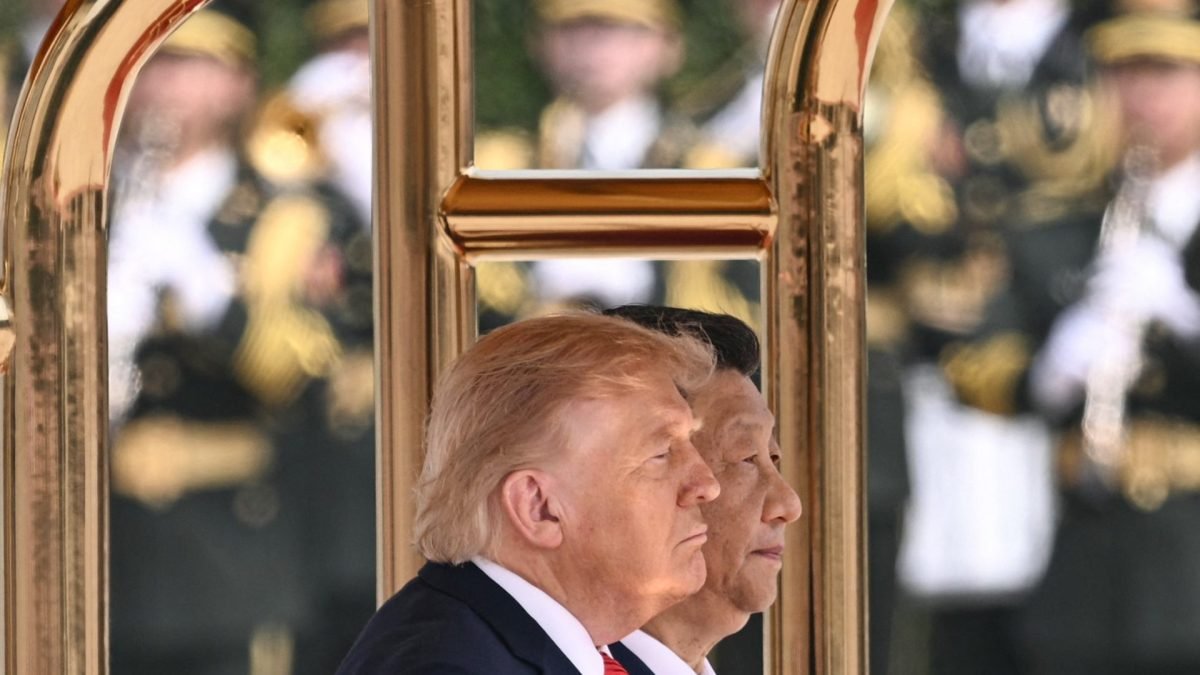
U.S. President Donald Trump, right, and Chinese President Xi Jinping, left, review the honour guard during a welcome ceremony at the Great Hall of the People in Beijing, Thursday, May 14, 2026. (Maxim Shemetov/Pool Photo via AP) CORRECTION: Corrected to President Trump at right, not left.
The two presidents, pictured reviewing the honour guard during a welcome ceremony at the Great Hall of the People in Beijing on Thursday, have very different perspectives on this meeting (Photo: Maxim Shemetov/Pool Photo via AP)

Beneath this summit sat a deeper imbalance. Not simply of military power, but of time horizons.

When Trump delayed the meeting by two months to focus on the war with Iran, the postponement consumed headlines in Washington. Politically, it mattered. After all, it represented roughly four per cent of his presidential term. But to the leadership in Beijing, a system capable of thinking in decades rather than election cycles, it may barely have registered.

At the summit, Xi spoke about “our two peoples” and “the future of humanity”. Trump often framed the summit more personally: the meeting of two powerful men. “It’s an honour to be with you,” he told Xi. “It’s an honour to be your friend.”

Later, during their visit to the Temple of Heaven, the contrast felt almost too neat. Trump may have seen beauty and spectacle, the theatre of diplomacy. Xi almost certainly saw continuity: the physical expression of a civilisation that measures itself in centuries. Beside it, the United States, at barely a quarter of a millennium old, looks historically young.

Xi’s worldview is built around patience. The slow accumulation of leverage. The assumption that pressure, applied steadily enough, eventually reshapes reality. On Thursday, he invoked the ancient Greek historian Thucydides to describe the dangers that emerge when rising and established powers collide. He speaks in civilisational terms.

BEIJING, CHINA - MAY 14: U.S. President Donald Trump arrives for a state banquet hosted by Chinese President Xi Jinping at the Great Hall of the People on May 14, 2026 in Beijing, China. Both President Trump and President Xi addressed ways to enhance bilateral economic cooperation and investment, and agreed that Iran should not be allowed to have a nuclear weapon. According to Chinese state media, Xi emphasized the importance of the Taiwan issue, and that a mishandling could sour U.S.-China relations. (Photo by Alex Wong/Getty Images)
While the Trump administration works on cycles of outrage, Xi’s worldview is built around patience and the slow accumulation of leverage (Photo: Alex Wong/Getty Images)

“The world has come to a new crossroads,” he said. And if Beijing increasingly believes that crossroads leads through Taiwan, the implications stretch far. This would not be a contained regional dispute, or another distant conflict absorbed abroad purely through headlines.

Taiwan is the world’s most advanced semiconductor manufacturing hub. Chips produced there are used in smartphones, cars, hospitals, satellites, data centres and advanced weapons systems. A war over Taiwan would not feel like a distant regional conflict when supply chains are fracturing across the world. Markets could convulse. Industries could stall. The economic shock would reach directly into homes in the United States and Europe, potentially dwarfing the disruptions caused by the wars in Ukraine or Iran.

And yet modern Western politics often struggles to operate on the terrain that Xi instinctively understands.

For the Trump administration, politics moves at the speed of outrage cycles, market reactions and social media clips. The tempo has accelerated during this second term, with governance shaped by zone-flooding announcements, algorithmic attention spans and the constant pressure of immediate reaction. That is democracy, of course: reactive by design, shaped by public mood and electoral pressure.

Perhaps there’s a reminder from Beijing for politicians here – and for those of us who report on them.

While Washington ricocheted between crises and viral moments, China’s position on Taiwan appeared almost unchanged and unchallenged. If anything, the prospect of confrontation appears to have grown clearer.

It could be the crisis that defines the second Trump presidency.

In an age where political dramas erupt and disappear during a single rush-hour commute, it is easy to mistake movement for history. But some of the forces shaping this century are moving slowly, over decades, gathering weight long before they arrive in full public view. The danger is not that we cannot see them. It is that we are too distracted to look up for long enough.

The surprise names who could run in a Labour leadership race

As Sir Keir Starmer braces for a potential leadership challenge, the field of potential candidates has started to widen.

All eyes in Westminster are on Wes Streeting and whether he will quit his role as Health Secretary, along with former deputy prime minister Angela Rayner, who has now been cleared of wrongdoing by HMRC over her tax affairs.

Greater Manchester Mayor Andy Burnham’s quest for a seat so he can enter the fray will also occupy minds in SW1, but several less likely names are now being discussed as potential challengers should a contest be triggered.

Shorts – Quick stories

Here, The i Paper looks at the unlikely leadership candidates that could take a tilt at the top job…

Energy Secretary – and former Labour leader – Ed Miliband

Energy Secretary Ed Miliband has previously said he would never consider launching another bid to head the party, insisting he’d “been there, got the t-shirt”.

Having lost the 2015 general election, Miliband resigned as leader, and that was considered the end of his ambitions to run the country.

But Miliband’s supporters have been forced to admit in recent days that should Burnham fail to secure a seat to enter any leadership race, the Energy Secretary would feel duty-bound to throw his hat in the ring as the candidate from the soft Left of the party in opposition to Streeting.

Lesser-known ex-Royal Marine Al Carns

Armed Forces minister Al Carns is a relative unknown in the conversation as to who could challenge Starmer.

Sources have insisted Carns will stand in any contest should the starting gun be fired in the coming days.

A former Colonel in the Royal Marines who served in the elite Special Boat Service, Carns boasts an impressive CV and could have a broad appeal to the electorate.

HELLIGSKOGEN, NORWAY - FEBRUARY 02: The UK Armed Forces Minister Al Carns records a media clip before climbing a frozen waterfall as he carries out his reserve training alongside British Commando Forces on February 02, 2026 in Helligskogen, Norway. Minister for the Armed Forces Al (Alistair) Carns, Labour MP for Birmingham Selly Oak and a Colonel in the Royal Marines, visited the Royal Marines from 30 Commando, Surveillance and Reconnaissance Squadron (SRS), amid the extreme winter conditions of northern Norway. The UK and Norway have committed to stepping up their joint military partnership in the Arctic, as NATO allies look to strengthen security across the region against threats from Russia. (Photo by Leon Neal/Getty Images)
Al Carns carrying out reserve training alongside British Commando Forces in Norway. Despite being a political novice, he has done little to dampen any leadership speculation (Photo: Leon Neal/Getty)

But in political terms, the Scotsman is a relative novice and the party and its membership may feel rolling the dice on another leader without the political experience after Starmer may be too risky.

It has also been suggested that Carns might drop out of a leadership contest after his profile has been raised, before lobbying the most likely victor for the role of Defence Secretary.

Leadership contest veteran Yvette Cooper

Having already contested a leadership election and failed, Foreign Secretary Yvette Cooper has been largely overlooked in the fevered speculation that has gripped Westminster.

But several senior Labour sources have insisted that Cooper would consider entering the race, should a full leadership contest begin.

Having served in the Cabinet in two Labour governments, the Foreign Secretary is perhaps one of the most experienced figures in the party.

But questions remain over her ability to lead and there are significant doubts as to whether she would be able to garner the number of MPs needed to enter the fray.

‘Steady pair of hands’ John Healey

From a similar mould as Cooper, Defence Secretary John Healey has his admirers as a steady pair of hands and a wise head, having also served in two Labour administrations.

He was briefly tipped as a potential caretaker prime minister should Starmer decide to step down.

Whether he would be able to accumulate the numbers to enter the race remains doubtful, however, but there are claims that he has sounded out MPs for their backing in the event of a contest.

Defence Secretary John Healey and Foreign Secretary Yvette Cooper take a selfie during a visit to Royal Navy carrier HMS Prince of Wales in Naples, Italy. Britain's aircraft carrier the HMS Prince of Wales has been placed under Nato command in a European first, as the two senior ministers visit Italy to mark the occasion and to hold talks with Italian defence minister Guido Crosetto and foreign minister Antonio Tajani, onboard the ship as it sits off the coast of Naples. Picture date: Monday November 17, 2025. PA Photo. Photo credit should read: Stefan Rousseau/PA Wire
Defence Secretary John Healey and Foreign Secretary Yvette Cooper take a selfie during a visit to Royal Navy carrier HMS Prince of Wales in Naples, Italy (Photo: Stefan Rousseau/PA)

A representative of the Socialist Campaign Group

An MP from the left of the party has usually stood in any leadership contest in a bid to widen the debate.

This delivered a surprise outcome in 2015 when it was Jeremy Corbyn’s turn to stand as the group’s candidate only to win, beating the likes of Burnham and Cooper.

Corbyn is no longer in the Labour Party, and Rebecca Long-Bailey lost to Starmer in 2020.

Whoever is next – Dawn Butler? Nadia Whittome? – will be upholding a tradition going back to the early 1980s.

Statins don’t cause side-effects, it’s down to your brain

In early 2020, when I was 49, surgeons successfully removed a golf ball-sized tumour from my bowel. Cancer, they said.

There’s never a good time to be told you have cancer, but it’s especially ‘not good’ at the start of a global pandemic. With the SARS-CoV-2 virus ripping around the globe, I found myself stuck in bed with too much time to ruminate.

One thought, in particular, vexed me. Having worked as a neuroscientist, I already knew that there are close links between the brain and the body, so I wondered; could the maelstrom in my head somehow affect my prognosis?

The idea sparked a two year investigation into a phenomenon called the nocebo effect, and my new book, called This Book May Cause Side Effects.

You may have heard of the placebo effect, which is the mind’s ability to positively influence health. Take a dummy pill that has no medicine in it, and lots of people feel better for it. The nocebo effect is its evil twin. It occurs when thoughts, conscious or otherwise, conspire to conjure symptoms and steal wellbeing. Take a dummy pill whilst being warned that it could cause side effects, and lots of people develop side effects.

The effect has been seen millions of times in hundreds of thousands of clinical trials, where it occurs in the ‘control group’ of people who take placebo treatments.

When people are led to expect symptoms, very often, symptoms ensue. This includes fuzzy, subjective sensations, such as headache, dizziness and fatigue, and tangible, objective ones such as seizures, allergic reactions and constricted airways.

These sorts of symptom aren’t just confined to clinical trials. The nocebo effect exists in the real world too, where you have almost certainly experienced it.

When we have negative expectations about medicines, we make them less likely to work and more likely to generate side effects. Accordingly, it has been shown that more than two-thirds of the common side effects experienced by people after their first Covid jab were caused, not by the vaccine, but by the nocebo effect. The same is true for most of the reported side-effects caused by statins and many other drugs. A University of Oxford study, published this year and funded by the British Heart Foundation, which looked at 19 randomised trials with nearly 124,000 people in total, found those who were taking a dummy pill without any medicine were just as likely to report side-effects as those taking a real statin. That’s not to say these symptoms are imagined – they feel very real, but they weren’t caused by the drugs.

The nocebo effect taints our response to food too. When people who think they are gluten-intolerant are fed gluten-free bread, but told it contains the offending ingredient, some still develop abdominal pain and bloating. The same trend has also been seen in some lactose intolerant people.

Across longer time frames, the work of Becca Levy from the Yale School of Public Health shows that when people have negative expectations of ageing, they go on to age less well, even when other factors such as diet, exercise and smoking are factored in. Decades down the line, they are more likely to experience disease and ill health and die on average 7 years earlier than contemporaries with more positive views.

The more researchers look for the nocebo effect, the more they find it. Negative thoughts generate self-fulfilling prophecies that either cause or contribute to ill health. With each new example, the boundaries said to separate mind and body become shakier.

Dive deeper, and the repercussions of this false dichotomy can even be seen at the level of molecules and cells. Diabetics, for example, commonly believe that their minds hold no sway over their wayward blood glucose levels. Yet, in an experiment where people with diabetes sat in a room with a clock that ran at double, regular or half speed, their blood sugar rose and fell with the perceived – rather than the actual – passing of time.

Animal studies go further still. Asya Rolls from the Technion-Israel Institute of Technology has shown how activating specific cells in mouse brains causes changes to the immune system, which can speed the recovery from heart attacks and slow the growth of cancer.

In other words, physical problems in the body can be affected by neural processes in the brain.

What does all this mean for people with cancer, like me?

I’m six years cancer free, on a treatment plan called ‘watch and wait’. The strategy infers that my body may contain slow-growing cancer cells that could kick off again. Thoughts can’t cause cancer, but Rolls’ animal studies hint at a possible link between the activity of certain brain cells and the growth of existing cancer cells.

But to state the obvious, mice aren’t people. Their biology is similar but not identical, and Rolls’ setup is both intrusive and experimental.

Her results certainly don’t mean that thinking positively can cure cancer, or that thinking negatively can make it worse. Nor do they mean that cancer patients should veer away from conventional treatments, such as chemotherapy and immunotherapy, which remain the best option.

However, it does suggest that the idea of a mind-body connection needs a rethink. Mounting evidence suggests not just the mind and body are connected, but that they are so intertwined, it no longer makes sense to consider one without the other.

In light of this, I think twice about googling cancer-related information, and would urge anyone seeking any kind of health-related advice to do the same.

Around half of medical information on the internet has been found by experts to be inaccurate or contested. Search engine algorithms prioritise the rare and the sensational over the common and the benign. Meanwhile on TikTok, only 9 per cent of health influencers are professionally qualified and 40 per cent of medical information is either misleading or wrong.

The result, according to one survey, is that 43 per cent of people end up misdiagnosing themselves with serious diseases they don’t have. This creates anxiety and kindling for the nocebo effect, which can then dial up the salience of existing symptoms and cut fresh ones from whole cloth.

When they occur, nocebo-generated symptoms like this aren’t imagined. They’re not somehow less valid, because their roots lie in psychological rather than physical processes. It is precisely because mind and body interact so deeply that most, if not all, symptoms contain an element of the nocebo effect.

If we can accept this, it actually puts us in a position of power. We don’t have less control over our symptoms. We have more, because studies show that when people understand the nocebo effect, it lessens its grip. Expectations may have the potential to cause symptoms, but expectations are also malleable. When they change, symptoms can ease. New self-fulfilling prophecies are generated, that are helpful, not harmful.

So, for now, I choose deliberately to feel good about my health. If I have symptoms that concern me, I don’t consult Dr Google. I talk to a real doctor. For what it’s worth, I commit to the belief that my cancer is never coming back, and I choose actively to participate in the things that bring me joy, including my family, my friends and my fabulously scruffy dog. The nocebo effect may be out there, lurking in the shadows, but I choose to walk in the sun.

This Book May Cause Side Effects by Helen Pilcher is published by Atlantic Books (£22)

I’m not a diva – I have rejection sensitive dysphoria, and it’s derailed my life

My heart is beating hard in my ears. BangBangBangBang. Adrenaline is surging through my veins. My breath is the pant of a big, hot, dog. I am on the ceiling and spinning round in circles. My heart is broken – both empty of love and full of disabling hurt – and I am so angry I am combustible.

What just happened? A falling out with a partner, a colleague, a friend or my family, has triggered the kind of volatile response that has defined my life for as long as I can remember. It was a mystery to me – but five years ago I discovered I have rejection sensitive dysphoria (RSD), a sneaky little byproduct of my attention deficit hyperactivity disorder (ADHD) and oppositional defiance disorder (ODD), diagnosed 20 years ago. A psychiatrist explained this characteristic of ADHD to me when I was in the middle of an episode. If I’d understood this earlier on, I might have been able to protect myself from myself.

Not another medical acronym, you groan? Well, I don’t love them either but sometimes they are what we need to make a little more sense of the world and how we move through it. Although RSD is not officially recognised as a medical diagnosis, it is widely acknowledged by clinicians and researchers.

RSD is “extreme, intense emotional pain triggered by the perception of rejection, criticism, or failure,” says psychiatrist Dr Jon Goldin. “It is closely linked to ADHD, and involves an intense reaction to real or imagined slights or ‘rejection’ of some sort. It is not a formal diagnosis, but it can be treated with specialised therapy and medication to manage symptoms.”

Most people I meet think I’m on drugs, even when I’m not. I overshare, over-explain, overcompensate and over-egg every single pudding. I take everything to heart. I get angry, defiant, sometimes violent. I self-harm. Much of this I put down to my extreme case of ‘rejection sensitive dysphoria’, a condition that sits within ADHD and autism spectrums; where any kind of jibe, knock, criticism, or disruption takes me to a place where I am unable to process my thoughts in a rational way.

It feels like the only solution is to rage and implode and, at times, RSD took me to the roughest of places where the abuse turned inwards. It’s heavy shit, and I know that no matter how much therapy, anger management and rehab I try, the impulse is so intense, my head is so frenzied, that I have been scared for my life.

I spend a lot of my time really loathing myself, thinking about all the people that I’ve upset over the years, and ruminating about what people think of me, often making up dramatic ideas about why they can’t bear me and waiting for the people I really cherish to walk out of my life and abandon me.

And when it rears its head, I’m impossible, so badly behaved; childlike tantrums erupt. It’s me being a diva, right? A problem child. Petulant, because I didn’t get my own way. All my life, that’s how other people have described my behaviour. But RSD is another term for it, which, as the person experiencing the behaviour, I find a lot more helpful.

My RSD doesn’t simply nudge at me, it consumes everything. It’s like a tide that sweeps over the simplest social interactions. For some people, a sideways glance or a critical word might just be a passing cloud. For me, it’s a storm that spirals, devouring my sense of self. More than sensitivity, it’s as if a thin membrane between me and the world is constantly tearing.

While my RSD is a recent diagnosis, people have been telling me for decades that my reactions are oversensitive and out of proportion. I’ve always felt this way and while, for the most part, I know I’m a pretty good person who loves hard and loves and protects everyone, this has lived in me for as long as I can remember. But I do know this: when I was nine, my parents split up. I don’t remember the break as particularly traumatic, but it gave me a wariness, a constant fear of an absence to come. Not just pain, but a seismic shift.

So as a child, I felt this tempest brewing. My mother once described me as a dreamy, ethereal kid. But that sweetness was always shadowed by something sharp. I had a temper that flared without warning, driven by impulses I couldn’t control. ADHD gave me a fast brain that always wanted more, but also a short fuse that I was too young to deal with. I’d retreat, lock myself in a bathroom, and lash out. I don’t say this lightly, but self-harm was my only release and my only anchor.

When I was a teenager, everything split open. My father was dying, and my mother travelled much of the year for work. Then suddenly, the world was a raw nerve, and every rejection or social failure felt like a full-body wrecking ball.

And this is how I am today. Any setback is unleashed as heartbreak that unfolds like a full-scale grief. Its weight drops me into a spiral. Both my mind and my body ache. It’s a physical sensation that seizes me, like a ghost squeezing my chest.

I explode in sudden rage, and then I implode; always the same cycle. The guilt, the self-loathing, the sense that I’m a problem child, a nightmare. Even when I try to rationalise, I’m left with this relentless inner critic who never stops. I am not very nice to myself sometimes.

In this whirlwind, relationships fray. Friends have walked away and my family definitely struggles.

People could be frightened of me in the kitchen. The irony is that, most of the time, the thing underneath the impatience and the explosion isn’t ego. It’s fear expressed through perfectionism (a very common RSD trait). What I’m fighting for is always lost in translation.

I have an almost pathological sense of fairness, which sounds noble until you realise that when dysregulation enters the room, fairness can become warfare. I think I’m quite triggered by people in my industry who make up their mind about me based on false assumptions, who don’t give me credit for my achievements. The RSD means that over time, these judgments and criticisms have chipped away at my sense of self.

But people just see me as being a nightmare (I’ve been called difficult for as long as I can remember). And the awful thing is, when you hear those words enough times, they stop feeling like accusations and start feeling like an identity.

So, I must find ways to live with it.

First, I’ve learnt that the sooner I take myself out of that situation the better. The sooner I can calm down, the sooner I can rationalise and re-engage with people, but if it’s really bad, I need to be soothed, and this is probably me crying out for the need for those around me to prove their love for me. An impossible situation when you’re being a prick. How does one take seriously the 46-year-old teenager they never asked for?! With my boyfriend, we’ve worked out how to manage these moments together. And of course, I go off every so often, but we can walk away quite quickly and regulate, which previously we struggled to do.

With my friends, well sometimes they do just have to suck it up. This is part of me. It’s just truly always been out of my hands. And I’m always very, very, very, very, very sorry. Pretty quickly afterwards, but I try to be responsible for myself and be grateful for their tolerance.

And of course there are the meds. In my heart I feel like medication is the first thing that has made me able to cope. Using antipsychotics (I’m on quetiapine) has made me less explosive and more self-aware in the right ways.

But here’s what I want people to understand: with my ADHD, I have a lot of conditions that run off it, such as anxiety and oppositional defiance. ADHD is a neurological condition, and RSD is a byproduct, a shadow that trails it. I don’t want people thinking it’s an excuse for my behaviour – trust me, I know when I’ve been a d**k – instead, I want them to use it as a lens through which they can understand me better.

So, if you see me or someone neurodivergent reacting differently to you, it’s because our brains are not like yours. What might come easily to you comes harder to me. I’m not being a nightmare. I’m just having one.