
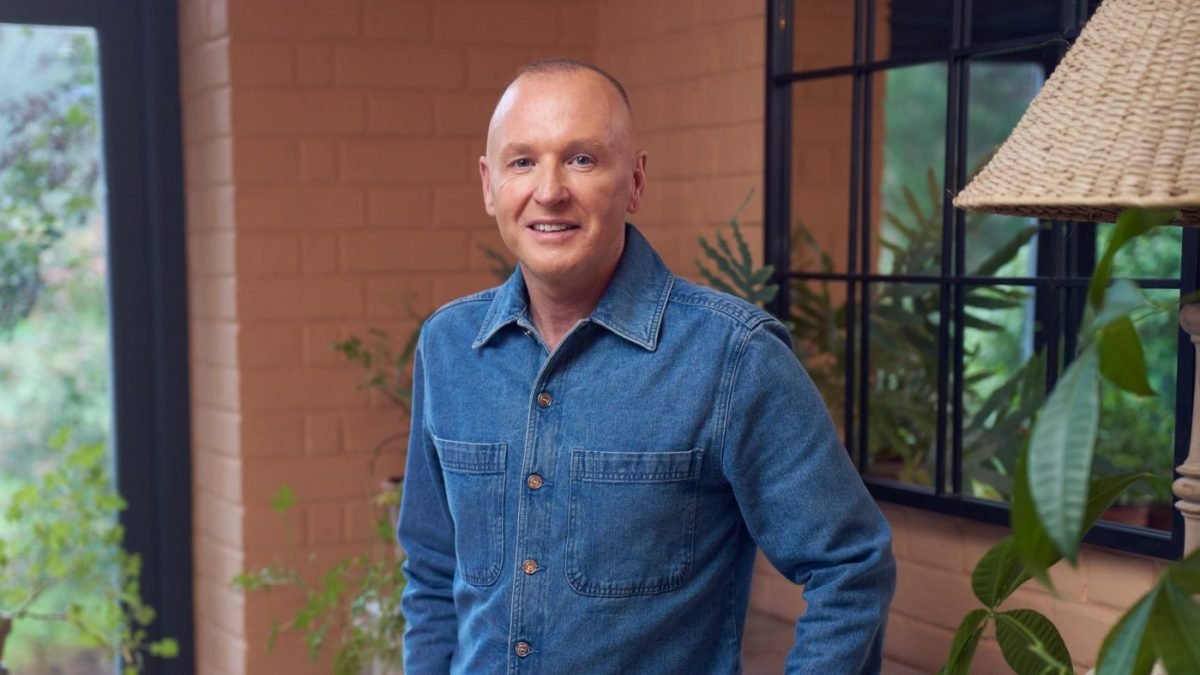

One in four adults will experience a mental health problem of some kind each year in England, and therapy is often suggested as a “solution” – but it is not realistic for everyone.
While the NHS offers counselling, waiting lists can be long, and private therapy remains financially out of reach for many. Other factors that hold people back include time constraints, stigma and feeling uncomfortable in the traditional therapy setting.
This is why psychotherapist Owen O’Kane is passionate about providing people with the tools they need to help themselves. “I want to empower people to know how to cope with all that life throws at them,” he explains. Even with his own clients, his goal is for them to move on, because “a therapist’s job is never to keep people in therapy”.
O’Kane is keen to highlight that every situation is unique, so while he is passing on his wisdom to the best of his ability, it needs nuance. “Telling people exactly what to do is unhelpful,” he emphasises. He points out that if there were a simple step-by-step formula to feeling better, nobody would struggle. “It’s damaging to think that there’s an instantaneous solution to fix people, or even that people need fixing.”
Make time to just breathe
However, there are things you can do, starting with scheduling time for yourself.
“Good therapy is about clearing away some of the clutter in the brain, because when there is a lot of noise, we can’t see the wood for the trees. Many people are either fixated on what is going to happen next or stuck on what happened in the past, so we want to teach people to come into the here and now. To do this, you need to unapologetically create gaps in your day where there is space to breathe. Without that, we’re just in a non-stop cycle,” he says.
There will always be a reason not to take a moment – an email to reply to, a call to make – but a supervisor taught him early in his career to make it a priority. “The conversation can get overcomplicated, but it’s just a case of needing time to stop and reset each day.”
Once you have the time, there is a “menu to explore”. “Have that exploitative curiosity for things that help regulate the nervous system, and slow things down so you can function. It could be meditation, yoga, breathwork, taking an ice bath, running, climbing mountains, cooking, painting or gardening. It could be that repeating a phrase such as ‘I am calm, I am safe’ is what you need to take your mind away from distractions,” he offers. “People know immediately if something is helping.”
O’Kane himself heads off on an hour-long walk every day, but even he didn’t always use it wisely. When younger, he would spend the time “overanalysing and overthinking”, but now he “decompresses and slows down”. That doesn’t mean trying to eliminate feelings, but rather working with them more productively.
Deal with all your feelings
“When people repress and push down feelings, they aggravate them and create resistance. The body automatically constricts, then you’re in a state of stress, and that sends a message to the brain that there’s a problem, and it ramps up this whole anxiety state.
“You need to realise that feelings like anxiousness, vulnerability, insecurity or loneliness are often there for protection, not to cause hurt or damage. Get to know them, understand what they are communicating, and work alongside them. You’d be gobsmacked how quickly the emotion eases off when you don’t put all the energy into fighting it.”
He advises thinking of your emotions like dinner party guests. “You want to welcome every part of you to have a seat at the table with equal value, because there’s no good or bad, right or wrong; they are all part of your humanity.”
This is a skill O’Kane puts into practice whenever he has a public speaking event. “There will be knots in my stomach, my heart will beat faster, and my brain will be saying: ‘What if you forget what you’re saying? What if they don’t like it?’ The thoughts are trying to protect me, because if they scare me enough, I won’t do the event, and won’t have a chance to make a fool of myself. Because I understand their function, I can negotiate and say: ‘I know you mean well, and I appreciate you showing up, but we’re going to do it anyway.’”
There is no quick solution in therapy, no epiphany that will make you well for ever; it is instead about continually doing the work and making an effort to treat yourself with kindness through every chapter. O’Kane suggests nurturing your relationship with yourself in the same way you would with someone you love. “In a healthy, functional relationship, there will be a conscious awareness of how you treat them. What could I do that would be nice? How can I give a bit more support? When will I make time for them? Will I cook them something nice for dinner? Transfer that to yourself!”
Be careful with AI
While on this journey to therapise yourself, there may be a consideration to use AI. It is an increasingly popular choice, with 41 per cent of UK adults happy to use it for counselling, according to a recent study by Bournemouth University.
“AI will take the information provided as a given, and it won’t actually look at the broader context of what’s going on or why,” O’Kane warns. It can be potentially detrimental for people who get stuck in a reassurance loop, he says – a cycle where anxiety triggers a need for certainty, leading to repeated requests for comfort. “I had a client who asked ChatGPT a question in many different ways until he got the response he wanted. There’s an argument that these tools will reinforce unhelpful behaviours.”
Sometimes, it’s just about going back to “simple, everyday stuff”, rather than using modern technology.
Perspective is key
“Research is telling us at the moment that anxiety is an inflammatory condition, so if you’re shoving food in all day that’s high in fat or sugar, or are not hydrated enough, they’re going to inflame the body. An inflamed body is an inflamed mind.
“It’s also thinking about whether we are surrounded by radiators (people who lift us), or drains, who take all of our energy. If it’s always the latter, you’re going to be depleted and exhausted. If you realise you’re the drain in analysing your social group, it can inspire you to present yourself better. It’s an opportunity, rather than a problem.”
And if you only remember one thing from O’Kane, it should be that perspective is key. “About 1.3 million Earths fit inside the Sun, and we’re all microscopic dots on it. When we place more significance than is needed on ‘problems’ and catastrophise, it is really useful to step back and think about that. I even set a picture of the Earth as my phone lock screen; it immediately grounds you in reality.”
Learn practical tools to handle anxiety and build lasting control with Owen O’Kane’s ‘A Life Less Anxious’ course on BBC Maestro