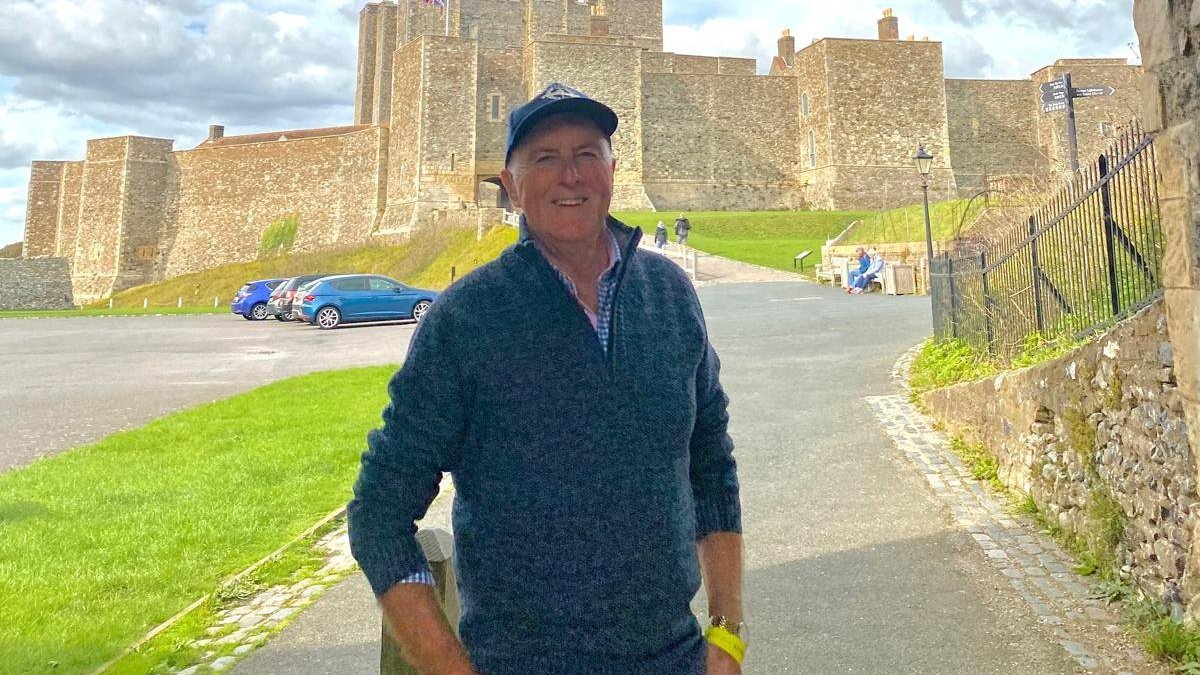
Tighter regulation on landlords will force more out of the market, as they fear fines and rent controls further down the line, a 69-year-old landlord from Chelmsford said.
Neil France, who has a training business, has a portfolio of seven rental properties.
He has four properties in the north, which are rented out to families and three nearby in Essex, which are mixed home occupancies and aimed at young workers.
Despite steady demand and profits of around £35,000 a year, Neil says the regulatory environment is making being a landlord more stressful and with rising costs it’s harder to maintain returns.
New regulations include the Renters’ Rights Act that came into force for most private rented tenancies in England on 1 May.
It bans Section 21 “no-fault” evictions, ends most fixed-term assured shorthold tenancies by moving renters on to periodic tenancies, limits rent increases to once a year, restricts rent in advance, and gives tenants stronger rights to challenge unreasonable rent rises and poor landlord behaviour.
The Government says the aim is to give renters more security and make the private rental sector fairer, though landlords warn the changes could add more risk as they have less power to deal with problem tenants and adds extra administration.
Neil said: “It’s bad enough with all the regulatory change, you’re left thinking, have I done it right? Because if you don’t, then you get a £7,000 fine. Everything is going up so you’re constantly a bit nervous”
“There is a lack of clarity on how an ombudsman will work in terms of evicting problem tenants.
“That makes me extremely, extremely nervous because if I do get a bad tenant, it looks like it’s going to be a nightmare. I totally understand why people are just saying, forget it.”
He was also concerned over the rumours that Rachel Reeves was considering a year-long rent freeze to help households with the effect of the US-Israeli war with Iran.
Government ministers, including housing minister Matthew Pennycook, have denied the plans, saying, “It’s not a credible or serious policy proposition”.
However, should they come into force in the future, Neil is worried it would have a negative impact on the whole industry.
He warned that a rent freeze would mean that he would have to put up rents before rules were to come in, if they ever were to, and believes that smaller landlords would be under more pressure to sell up.
He said: “I can understand why Rachel Reeves [might do] that because it would stop a major cost of living increase.”
Scotland enforced a freeze on rents in October 2022, with a cap of a 3 per cent increase from April 2023. These rules were temporary and expired in March 2024.
“I looked at what happened in Scotland… when they stopped it after two years some people were suffering from 10 per cent increases,” Neil said.
“All that happens is that it just builds up, so when it stopped rents went through the roof again”.
He added: “I think people like me of my age group are progressively bailing out. I think there’s going to be a lot of people [who] just can’t be dealing with the hassle anymore.”
Neil has tried to shield tenants from sharp increases in rents where possible, despite rising costs from mortgage rate rises and other bills going up and says he has a “moral responsibility” to his tenants.
He said: “We’ve had a stonking great increase but I said to them I’ll absorb that for the next couple of years and pass on some of it to them – but rents will need to go up every year.
“If you don’t keep putting them up by £10 or £20 a month, then very quickly you’re going to be in a situation where you break even at best.”
Neil added that the regulations make it much tougher for private landlords to make a profit, arguing that corporate landlords are not as understanding if tenants have financial issues.
He often works with tenants who have had such issues to put payment plans in place and warns that corporate firms may not be as understanding.
Neil believes supply remains the fundamental issue in helping to ease housing costs, adding: “The real answer to all this, of course, is just to build more blooming houses.”
This is Armchair Economics with Hamish McRae, a subscriber-only newsletter from The i Paper. If you’d like to get this direct to your inbox, every single week, you can sign up here.
Energy inflation is already hitting us, as you can see at the pumps. Petrol is up 24p a litre since the Iran war began and diesel is up 50p. Food inflation is still to come.
That’s because there are different timescales for a supply shock, such as we are having now, to work its way through the economic system. So the increase in the price of crude oil has had an almost immediate impact on fuel at the pumps. But the effect on the cost of other things will take months to come through, so that inflation as a whole will carry on rising through the summer and autumn – and maybe beyond.
The next big blow will be food. The Bank of England reckons that food price inflation could rise to between 6 and 7 per cent by the end of the year. It could be much higher. For example, data aggregator Helios AI calculates that global prices could be 12 to 18 per cent higher by the end of the year, and then climb even further in the first half of 2027. The argument is that the impact of the war comes in three stages.
The first, which is already happening, is the increase in transport and fertiliser costs. Natural gas is a key feedstock for producing nitrogen-based fertilisers, and there is already a big increase in its price and some shortages of availability. The second, which will come through later this year, will be when crops planted this spring have lower yields because of the shortages and higher cost of fertiliser. And the third stage arrives because some food-producing countries are likely to restrict exports, as they did in 2022 for wheat, beef and palm oil. That will further increase prices.
It is easy to be alarmist, and scare stories catch the headlines. But it does seem realistic to expect both that food prices will rise faster than inflation as a whole, and that they will be more sticky; it will take longer for them to come down after the war ends. That’s an obvious economic problem in the sense that money spent on food is money not available to buy other things, but it is also a social concern. The issue here is that poorer people – and poorer countries – spend a higher proportion of their income on food than richer ones.
Here in the UK families spend on average about 11 per cent of their income on food and non-alcoholic drink in the home, according to the Office for National Statistics. However, for the poorest fifth of households, that figure is over 14 per cent. Other sources calculate the numbers slightly differently, for example excluding non-alcoholic drink, and the UK average comes out a bit lower at 9 per cent. There is the further complication that an increasing proportion of meals eaten in the home are prepared by restaurants and delivered by courier. But the fundamental point stands that rich countries spend proportionately less on food than poor ones. Nigeria is an extreme example, with 56 per cent of family income spent on food, and some estimates putting it higher still. The poorer you are the harder you will be hit.
So what’s to be done? There is already huge pressure on the Government to try to hold down food prices. It has said that it will scrap tariffs on a raft of imported foods, including pasta, juices, tuna, oranges and peaches. The British Retail Consortium wants it to go much further, arguing that government policies have already increased food costs quite apart from the impact of the war.
On energy it wants Labour to remove the renewables obligation and feed-in tariff costs. It also wants a delay to the implementation of the nutrient profiling model, which will mean that food manufacturers have to reformulate their products, and also a review of the new packaging levies, including the plastic packaging tax.
We’ll see what the Government comes up with. But to be realistic, it’s hard to see it making a material difference to food prices. So what can we do? Economists should beware giving practical advice but here are five basics.
One is to remember that our grandparents used to eat food when it was in season. You can get strawberries at Christmas, but if they have to be flown in from Africa, you will be paying for the doubling of the cost of aircraft fuel. It makes sense to adjust our diet to what’s in season, because what’s plentiful is what’s cheap.
A second basic is that it is much cheaper to cook your own food than pay someone else to do it and then deliver it to your door. You are paying for someone else’s rates, their national insurance – and their profit.
Three, vegetables are cheaper than meat or fish. That does not mean going vegan: just rebalancing the ratio between the two. Four, cheap cuts of meat and fish can produce memorable meals. Think Irish stew rather than fillet steak, mackerel rather than Dover sole.
Finally, there are always deals. Supermarkets will be under greater financial pressure of course, but also under social pressure to be seen to be doing the right thing. So they will find ways of holding down the price of the basics, and try to make their money on the fancy lines.
None of this is going to be easy. Eventually let’s hope food prices come back down. Meanwhile we should accept there may well be less choice, but be thankful that we have an efficient food distribution system. And, let’s be frank, two cut-price German supermarkets in Aldi and Lidl to force the home team to lift their game.
Need to know
There is an inevitable tension in all retailing between choice and price. As you might imagine, there is sizeable industry examining why people buy things, how much they are prepared to pay, whether they really want choice or do they simply say they do – and on it goes.
At the very top end of food and drink retailing – and particularly drink – there is the massive premium on exclusivity. That’s bottles of Scotch available £1,000 a pop, or auction results where a single bottle has gone for upwards of £200,000.
But in our regular supermarkets the premium is more rational. It’s about Waitrose being consistently the most expensive one, with Lidl and Aldi fighting it out at the bottom. However, on their own terms the two German groups do supply quality; what they don’t do is offer choice.
Over in the US it’s different. Choice is universal; quality, however, is ho-hum. But then, space is cheap and energy is cheap, so it is easier to offer a massive variety of lines, and most consumers seem to care less about the quality of what’s on offer – or maybe define quality differently from Europeans.
There is a fascinating question about the transferability of retail skills and experience across national borders. UK efforts to succeed in America have almost always failed: Marks & Spencer tried; Tesco tried; Sainsbury tried. All failed, with Tesco losing more than £1bn on the venture.
It doesn’t really work the other way either. The Whole Foods experience in the UK has been salutary, for the US group has consistently failed to make a profit, with losses of more than £200m.
The shining exception is those two German enterprises. They arrived in the UK in the early 1990s and now have 18 per cent of the grocery market between them. They tussle between each other to be the cheapest, but they are not simply competing on price. They have found that choice doesn’t really matter to many shoppers as long as they can offer quality, and not offering choice means they can streamline their entire network. This leads to two fascinating questions: will the forthcoming surge in food prices give them a further edge? And will this surge also reduce shoppers’ interest in choice more generally?
I expect the answer to the first is yes. As for the second, I really don’t know – though I am fairly sure that Waitrose, at the other end of the market, will come out well from the squeeze on incomes. The top end is more secure than the middle.
Green Party insiders have said a sense of unease and panic has overcome the party just days from crucial local elections in England following the row over antisemitism which has seen some candidates arrested.
There is also concern over the way leader Zack Polanski has handled the issue, particularly his recent row with the Met Police over the way they tackled a man who had allegedly stabbed two Jewish men in Golders Green in north London in a terrorist incident.
Canvassers who had enjoyed a positive reception on doorsteps during a campaign expected to deliver record gains for the Green Party of England and Wales are uneasy about the force of the backlash they are seeing, sources say.
Shorts – Quick stories
Think you know all the signs of heart problems? Some might be myths rather than fact…
These are the beliefs to be wary of, according to Dr Abdul Mozid, a consultant cardiologist at Nuffield Health Leeds Hospital.
‘Getting out of breath is just a sign of getting older’
Caption: Senior man laying down on the sofa, watching tv and holding the remote control. Photographer: PicTour Studio Provider: Getty Images Source: iStockphoto
While ageing can contribute, breathlessness is also a common early warning sign of heart disease.
When the heart cannot pump efficiently, fluid can build up in the lungs, making simple activities difficult.
If it occurs while laying down, or while doing minimal activity, it should never be ignored.
LIFESTYLE
4 min read
‘Sleep has little effect on the heart’
There are ways to get a better night’s sleep (Photo: Maskot/Getty/Digital Vision/Copyright Maskot Bildbyr?)
Poor or fragmented sleep increases stress hormone levels, raises blood pressure, disrupts glucose metabolism and promotes inflammation — all of which contribute to cardiovascular disease.
Good-quality sleep is not a luxury; it is a pillar of cardiovascular health alongside diet and exercise.
‘Exercise gives you a healthy heart’
You can ‘out-exercise’ metabolic stress
A young Indian woman sits on a couch at home, holding her hand over her heart, grimacing as she feels severe pain in her chest – stock photo. (Photo: Getty)
This is not true. A poor diet high in saturated fats, refined sugars and salt promotes high cholesterol, diabetes and hypertension, regardless of your activity levels.
Analysis
3 min read
Other heart health myths to ignore
Only “bad” cholesterol matters
While HDL cholesterol may be associated with lower risk in some contexts, it does not provide total immunity to heart problems. Managing LDL levels remains crucial as part of your overall health.
(Photo: Jacob Wackerhausen/Getty).Midlife depression. Sad upset middle aged woman at home, feeling lonely. Aging anxiety and loneliness concept – stock photo. (Photo: Getty)
It’s just anxiety Women are more likely to present with less “classic” heart attack symptoms, such as fatigue, nausea, jaw pain or back discomfort. If symptoms are new or persistent, cardiac issues must be considered.
‘Heart disease is an older person problem’
Heart disease remains the leading cause of death in women, yet risk is often underestimated. Symptoms may be subtle and attributed to life stage or stress.
Recognising these unique risk enhancers is vital to earlier diagnosis and prevention.
The older couple has a conflict. Upset mature woman, quarrel with her husband. Relationship crisis – stock photo. (Photo: Getty)Caption: BERLIN, GERMANY – AUGUST 13: Symbolic photo on the topic of problems in a relationship. An older woman and an older man are sitting at home on August 13, 2024 in Berlin, Germany. (Photo Illustration by Thomas Trutschel/Photothek via Getty Images) Photographer: Thomas Trutschel Provider: Photothek via Getty Images Source: Photothek
Why eating eggs five times a week could cut Alzheimer’s risk
People who eat eggs more regularly could have a reduced risk of developing Alzheimer’s disease, a new study suggests.
Caption: A detail of cracked egg falling into the pan as woman holds egg shells in both hands. Photographer: SimpleImages Provider: Getty Images Source: Moment RF
What does the study show?
Having eggs at least five times a week suggests a…
27%
lower risk of developing Alzheimer’s, compared with those who rarely or never eat them.
The research followed nearly 40,000 adults aged 65 and over for an average of 15 years.
980,000
People are estimated to be living with dementia in the UK, with Alzheimer’s the most common cause.
This is forecast to rise to 1.4m by 2040 as the population ages.
What’s so special about eggs?
Photographer: Andrew Brookes Provider: Getty Images/Image Source Source: Image Source Copyright: Copyright Andrew Brookes
A no-brainer
Eggs contain choline, which the body uses to make acetylcholine, a chemical involved in memory and learning.
Nutritious and delicious
Eggs contain lutein and zeaxanthin, the yellow-orange pigments in food which could act as antioxidants.
(Photo: Laurie Ambrose/Getty).
Caption: Eggs are seen in a carton on Monday, April 13, 2026, in Portland, Ore. (AP Photo/Jenny Kane) Photographer: Jenny Kane Provider: AP Source: AP
Egg-ceptional
They also provide some omega-3 fatty acids, which have been linked with cognitive function.
HEALTH
The potential cause of common type of stroke uncovered
Caption: Closeup of elderly Asian man visiting neurologist explaining stroke risk using artery model ??? discussing brain health and blood pressure Photographer: PonyWang Provider: Getty Images Source: E+
Researchers have pinpointed the potential cause of a type of stroke suffered by about 35,000 people in the UK every year.
The discovery could explain why widely used treatments don’t work, and could pave the way for new options.
What does the study say?
Lacunar strokes – triggered by damage to tiny blood vessels – are caused by the widening of arteries in the brain, researchers say.
This is unlike ischaemic strokes, which are caused by a blocked blood vessel.
This could explain why usual treatments, such as anti-platelet drugs, which stop blood clots from forming in the arteries, do not work.
Lacunar strokes can lead to problems with thinking, memory, movement and dementia.
Divorce Diaries
5 min read
New treatments are needed
Researchers at the University of Edinburgh and the UK Dementia Research Institute tested and tracked 229 people who had a lacunar or mild non-lacunar stroke. Patients with widened arteries were four times more likely to have a lacunar stroke.
Scientists argue that ‘holistic’ approach is needed to brain disease prevention and treatment as the world faces a dramatic rise in cases of stroke, dementia and other conditions. (Photo credit: FRED TANNEAU/AFP/Getty Images)A retired infection control nurse says it isn’t possible to “hand wash” your way out of the quad-demic. She says hospitals need better ventilation and mask wearing to tackle the crisis (Photo: Jeff Moore/PA Wire)
This explains why conventional blood-thinners don’t work and highlights the need for new therapies to target the underlying microvascular damage.
Stroke research ‘chronically underfunded’
Stroke research is chronically underfunded, with less than 1% of total UK research funding spent on the condition…Yet these findings illustrate the value of research and the potential it has to change the lives of stroke patients.
MAEVA MAY, STROKE ASSOCIATION
Caption: Embryologist performing embryo cleaning under microscope in Petri plate after IVF next day in real laboratory Photographer: Natalia Lebedinskaia Provider: Getty Images Source: Moment RF Copyright: www.natasha-lebedinskaya.ru
Over 5,000 council seats are set to be contested in England as part of the elections this week (Photo: Peter Byrne/PA Wire)
POLITICS
Everything you need to know about the local elections
Thursday’s local elections are set to reshape the political landscape and potentially threaten Sir Keir Starmer’s leadership.
Here’s everything you need to know as voters prepare to head to the polls.
How will the results unfold?
Polling stations open at 7am on Thursday, 7 May. Voters in England will need to show photo ID to be able to cast a vote..
Millions of people will take to the polls before they close at 10pm.
In England, 46 of the local authorities will count and declare overnight, with results expected in the early hours of the morning on 8 May.
The results in Scotland and Wales are expected to trickle in from Friday afternoon.
The remaining English authorities begin counting ballots on Friday morning, with results announced throughout the day.
All the results will be in by Saturday 9 May.
Status quo upended
The local elections are set to be grim for Labour, with sweeping losses across the country. The polls show the Tories are also expecting a bruising defeat.
Reform UK and the Greens are likely to reap the rewards, with Nigel Farage’s party hoping to gain control of councils across the country.
Reform is in danger of jumping feet-first into fiscal commitments and having to unpick them later (Photo: Rasid Necati Aslim/Anadolu/Getty)
Exclusive
3 min read
Fridge or cupboard?
This is your definitive guide on where and how to store your foods at home to maximise the quality and shelf life, from ketchup and butter to nuts and jam.
Where to store the basics
Keeping butter in the fridge maximises food safety and freshness.
Ketchup and mayonnaise can be stored in the cupboard but once opened, are best in the fridge.
Bread shouldn’t be refridgerated due to the starch molecules. A bread bin at room temparture, or an airtight container is best.
LIFESTYLE
6 min read
How and where to store food items
There is a fine line between ripe or matured and spoilt.
Jam
Keeping it in the fridge will help it last longer.
Eggs
Storing them at a constant cool temperature, preferably in the fridge, will keep them safe to eat.
Berries
Keeping them in the fridge slows down mould growth and keeps them fresh.
LIFESTYLE
5 min read
Where to store your food
Caption: Fresh organic tomato closeup . Photographer: Maria Korneeva Provider: Getty Images Source: Moment RF
Tomatoes
Ripe ones should be kept on the counter uncovered if you’re going to enjoy them in the first few days after purchase.
Potatoes
They need to be in a dry, dark place like a cupboard. Exposure to light or moisture can rot the skin.
When you cook potatoes the right way they go from being a health burden to a health hero (Photo: Getty)
Caption: A Hand holding a bit brown banana Photographer: bauwimauwi Provider: Getty Images Source: iStockphoto
Bananas
12°C is best, as they will ripen quicker if they are too warm, so a darker space with no direct sunlight is ideal.
Fridge or cupboard?
1Apples are best in cool to cold temperatures so the salad compartment of the fridge is ideal to keep them crunchy.
2At room temperature lemons stay good for a week but in the fridge it stretches to two.
3Ripe avocados should go in the fridge to slow down the ripening process but if they’re firm, a warm sunny spot is best.
4Soy sauce, due to the high levels of salt, is best in the cupboard – even once opened.
Where to store your food
Nuts
Nuts are fine in the cupboard but keeping them in the fridge in an airtight container helps prevent spoilage.
Caption: Cookie jar, tea, wine, nuts, books, lit candles and Christmas decorations on the table. Cozy Christmas hygge at home. Selective focus. Photographer: Jelena990 Provider: Getty Images Source: iStockphoto
Garlic bulbs (Photo: Emma Dahl/RHS)
Garlic
This suits dry, dark places so a cupboard is ideal.
Onions
Low temperatures can transform the starches of the onion into sugars, making it soft, and potentially mouldy.
Close up shot of man chopping onions during cooking class – stock photo. (Photo: Getty)
Four key takeaways from Starmer’s antisemitism summit
Iran’s attempts to incite antisemitism in the UK “will not be tolerated”, Prime Minister Sir Keir Starmer has said.
Here are the main points from the Downing Street summit.
Caption: LONDON, ENGLAND – MAY 5: Prime Minister Keir Starmer speaks during a meeting with civic leaders to discuss tackling antisemitism at Downing Street on May 5, 2026 in London, England. (Photo by Hannah McKay – WPA Pool/Getty Images) Photographer: WPA Pool Provider: Getty Images Source: Getty Images Europe
Key takeaways
1Starmer said one of the lines of inquiry is whether a foreign state is behind the attacks.
2He announced £1.5m funding to strengthen community cohesion and protect Jews in at-risk areas.
3Ministers are “fast-tracking legislation” allowing them to ban state threats such as Iran’s Revolutionary Guard Corps.
4Universities must publish the scale of antisemitism on campus and show how they are tackling it.
Go deeper on this topic
The measures to protect the Jewish community come after the stabbing of two Jewish men in Golders Green and a series of attacks at synagogues and other sites in recent months.
Starmer has faced criticism that he has not done enough to keep the community safe, and was heckled during a visit to the north London suburb on Thursday.
Caption: TOPSHOT – Local residents look on from outside a cordoned off area in the Golders Green neighbourhood of north London on April 29, 2026, following the stabbing to two people nearby. Two people were stabbed on April 29 in north London, Jewish groups said, following a series of arson attacks targeting Jewish sites in the area. A man was arrested after he was seen running with a knife “attempting to stab Jewish members of the public”, the Shomrim Jewish neighbourhood watch said on social media. (Photo by JUSTIN TALLIS / AFP via Getty Images) Photographer: JUSTIN TALLIS Provider: AFP via Getty Images Source: AFP Copyright: AFP or licensors
NEWS
7 min read
Starmer’s message to Iran
One of the lines of inquiry is whether a foreign state has been behind some of these incidents…Our message to Iran, or to any other country that might seek to foment violence, hatred or division in society, is that it will not be tolerated.
SiR KEIR STARMER, PRIME MINISTER
Caption: LONDON, ENGLAND – APRIL 30: Prime Minister Keir Starmer (C) and Home Secretary Shabana Mahmood (CR) meet members of Shomrim, the Jewish community security organisation, in Golders Green following yesterday’s attack on April 30, 2026 in Golders Green, England. A 45-year-old British-Somali man was arrested yesterday, after stabbing two Jewish men, Shloime Rand and Moshe Shine, in a terrorist attack in Golders Green. Both victims are in a stable condition, and the suspect was caught by police after being tasered. The government has since pledged ??25 million to improve security for the Jewish community following the incident. (Photo by Leon Neal/Getty Images) Photographer: Leon Neal Provider: Getty Images Source: Getty Images Europe Copyright: 2026 Getty Images
Co-op is confident it’s stores will be ‘back to normal’ within days (Photo: Chris J Ratcliffe/Reuters)
NEWS
The supermarket using invisible spray to combat shoplifting
Co-op has been secretly marking frequently shoplifted groceries with a special forensic spray to tackle the resale of stolen goods.
Here’s how the invisible spray works, and how the company hopes it will make shoplifting less profitable.
What’s the story?
Co-op has been marking items with an invisible spray that contains a unique forensic code linked to the shop where it was originally sold, according to Retail Gazette.
Retail theft on the increase – woman stealing in UK supermarket. (Photo: Andrey Popov/Getty Images Copyright: Copyright (C) Andrey Popov Caption: A shopper walks along an aisle inside a Tesco supermarket in Manchester, Britain, February 5, 2026 REUTERS/Phil Noble Photographer: Phil Noble Provider: REUTERS Source: REUTERS
Co-op has invested £250m in store security, including body-worn cameras for staff, reinforced kiosks for items such as spirits and tobacco, and shelf fixtures designed to stop thieves sweeping products into bags.
How does the scheme work?
Where?
The scheme has been trialled in Manchester and London and will be rolled out across the UK.
Which items?
High-risk items such as alcohol, laundry detergent and confectionary have been sprayed.
Why?
The aim is to help Co-op and the police identify where stolen products are being resold, making theft less profitable.
More than 300 babies have been born with inflatable forceps, the first breakthrough in childbirth assistance in decades.
It is hoped that the device, called the OdonAssist, could reduce birth trauma. It will be rolled out to 40 hospitals across Britain and Europe.
How new forceps could revolutionise childbirth
Around one in eight people will have an assisted vaginal birth using forceps or vacuum extraction.
Women may have bleeding or tears and marks can be left on the baby.
Inflatable forceps work by surrounding the baby’s head with a soft air cuff, allowing doctors to help remove it more gently.
In trials, patients reported no or low pain in more than 95 per cent of births where OdonAssist was used.
Analysis
5 min read
How ‘gentle’ forceps were invented
From a prototype using a jar and a doll to development by the World Health Organisation (WHO).
The OdonAssist was thought up by a mechanic in Argentina in 2006 called Jorge Odón.
He created the first prototype using a jar, a cloth and his daughter’s doll.
It was then taken up by Mario Merialdi, of the WHO, who refined the idea for clinical use.
It was created by Maternal Newborn Health Innovations, a public benefit corporation to help reduce avoidable pain.
Party insiders argue they have faced attacks from across the political spectrum due to the new-found popularity under Polanski’s leadership.
But they also said there was horror over the “abhorrent” allegedly antisemitic comments made by a small proportion of council candidates.
Sense of unease over level of scrutiny
Two Green candidates have been arrested over remarks posted on social media. Other alleged antiemetic comments made by more candidates have been unearthed by the Labour Party.
“We are still expecting the results to be record-breaking for us and predicting we will take seats off Labour, the Lib Dems and Conservatives,” a Green source said. “But it is fair to say there is a sense of unease in the party because people aren’t used to having the full weight of the Labour Party briefing against us.”
“And in the Green Party, people struggle with sharing a platform with people with such abhorrent views [as those who have been arrested/suspended].
“There’s a bit of worry in terms of how we are responding to the accusations, but I think Zack was clear that our vetting process hasn’t been good enough, and we will invest in this to improve this process.”
The i Paper revealed last week that the Greens were planning to toughen up their candidate vetting process, with sources acknowledging the system was not fit to manage the huge surge in candidates selected for Thursday’s elections.
The current system relies on local parties to make decisions about who they select as candidates with minimal input from the central party, which has resulted in no real background checks, it is understood.
But off the back of the antisemitism allegations this will be toughened up.
A second Green source said: “We have had local parties contacting us and raising concerns about how they can make sure this never happens again. So after these elections I imagine we will set out a standard practice we would ask them all to agree to.”
Greens are ‘an anti-racist party’
Polanski – when confronted with a series of comments made by candidates – told BBC Radio 4’s Today programme the remarks were “all unacceptable” and the Green Party was “an anti-racist party and it’s important that we stick to our values”.
He said there would be a “standardised vetting process” in future, with compulsory training for candidates, “to make it clear that antisemitism is completely unwelcome in the Green Party, as it is in society”.
Polanski himself has come under heightened scrutiny as his party increases in prominence.
On Wednesday he was forced to admit he wrongly described himself as a former spokesperson for the British Red Cross.
While campaigning for the party’s deputy leadership in 2022 he referenced the former job but later clarified he was not an official spokesperson.
“I used the wrong word, and I accept that, but I would essentially take words on stage with me and speak. It’s important, though, and I accept this, that they don’t support any political party, and I’ve made sure that’s been taken down,” he said.
Polanski under fire over police criticism
The Green Party leader last week also faced widespread condemnation for his response to footage of the alleged Golders Green terrorist who was tackled to the ground and kicked by police officers attempting to arrest him.
He reposted criticism of the footage on social media before then apologising for sharing the post in haste, having been rebuked by Met Police Commissioner Sir Mark Rowley.
But Polanski – an elected member of the London Assembly which oversees the Met – doubled down on his view that police operations should be scrutinised, telling the Today programme on Wednesday he was “traumatised” by the footage.
It is understood Green Party insiders were divided over Polanski’s decision to criticise officers in the immediate aftermath of the incident.
And since the row, public opinion of the party leader has taken a downward turn.
YouGov analysis suggests 39 per cent of Brits had an unfavourable view of Polanski immediately before his social media repost, rising to 47 per cent in YouGov’s latest poll of 2,377 adults between 4 and 5 May.
Dolly Parton was once asked how long it takes to do her hair. To which she answered: “I wouldn’t know. I’m never there!”. It was my hairdresser who first told me just how many celebrities are wearing wigs on the red carpet. I know it’s naive, but it just didn’t occur to me that it wasn’t their real hair! Lady Gaga? Wig. Kylie Jenner? Wig. Nicole Kidman? Wig. Everyone’s at it! Apparently, hairdressers have to explain this to a lot of clueless women like me, who come into the salon with an “inspo pic” that is a wig and not real hair – and certainly not something that is achievable in under an hour at Supercuts.
I am not someone who has any experience of wig wearing, beyond donning a cheap, plastic rug for Halloween. I didn’t grow up with wigs, and I am fortunate enough not to have any health conditions that can result in hair loss. They’re just not in my wheelhouse.
Perhaps I would have known more about them if I was American because this is where the biggest wig market is, accounting for a whopping 36.38 per cent of the market share in 2025. Alas, I am just a bog standard, white woman from the north of England who foolishly thought Kim Kardashian’s hair was her own. I am a fashion wig virgin and last week I decided to pop my cherry and discover if I am missing out.
‘I don’t know if I am a wig convert, but my respect for wig wearers is now off the chart’, says Kate (Photo: Verity Adriana)
In case you missed it too, wigs are freaking huge right now. The global hair wig market was valued at $2.68bn (£1.97bn) in 2025 and is projected to reach $4bn (£2.9bn) by 2034. I don’t know much about finance, but I do know that is a hell of a lot of wigs – or maybe that only accounts for four or five good wigs, because the first thing I learned is that wigs can be eye-wateringly expensive.
If you want a brand-new wig made from ethically sourced, real human hair that won’t make you look like Sideshow Bob, then you are looking at anywhere between £400 to over £2,000. If you want a custom made one, it can cost you up to £6,000.
I wanted to try a wig, not default on a mortgage payment, so when I discovered you can buy never worn, second hand wigs on Vinted for £20, I decided that was more my speed. Of course, the risk here is that you don’t really know what you are getting, so to reduce the odds of purchasing a reject from The Muppets, I bought three: a blonde one, a red one, and a pink one.
‘I stood looking at myself in a bald cap, rubbing gel and glue over where I thought my hairline would be,’ says Kate (Photo: Verity Adriana)
The next thing I learned is that wig wearers are goddamn artists. If you, like me, thought wearing a wig was as simple as “put it on your head,” allow me to disabuse you of that notion. You can do that, obviously, but it will look bad, and I didn’t want to half-arse it. Thankfully, there is a plethora of information about how to “install” your wig available online and believe me, it is a whole thing. I went from knowing nothing at all to navigating a world of front lace, wig bands, wig glue, wig caps, wig melting spray, and adhesive spray. It requires tweezers, gel, hair spray, rubbing alcohol, rat tail combs, scissors, a hair dryer, and a very steady hand.
If you want to do it right, you need to hide all your own hair under a wig cap, which is trimmed around your face and ears before being stuck down. Then you need to “melt” the lace front of the wig to your own forehead with a combination of gel and/or glue, which is held in place with a wig band for up to an hour, before trimming it to size, and sticking down any lace stragglers – and this is all before you get to actually styling the hair.
I was literally and figuratively in over my head. As I stood looking at myself in a bald cap, rubbing gel and glue over where I thought my hairline would be, hoping I didn’t superglue my real hair to my face, I realised two things: firstly, I could totally rock a skinhead and, secondly, this is not an easy way to do your hair. This is high maintenance and highly skilled work.
It was a lot of fun, though. The blonde wig made me look like a slutty mermaid who had fallen on hard times. The short, red wig turned me into a school secretary who is into light BDSM on the weekends, and the pink one made me look like I owned a fruitarian cafe in Bristol.
I settled on the pink one, my friend took the red and we headed off to mingle amongst the general public and drink cocktails. Unfortunately, for the both of us it just so happened to be the hottest day of the year so far, topping 25°C in Yorkshire. These were not best conditions for a pair of perimenopausal women to be experimenting with heavy wigs for the first time. I sweat a lot at the best of times, but within a few minutes in the sun I had my make-up rolling down my cleavage and my face was even pinker than the wig.
‘If nothing else, I can’t recommend wearing a wig to go day drinking enough,’ says Kate (Photo: Verity Adriana)
I must have done a good job with the “installing,” though, because the wig didn’t budge. I’m sure if you do this enough, you wouldn’t think twice about wearing a wig, but I felt hugely self-conscious that everyone knew I was wearing a rug. I also kept drunkenly telling people I was wearing one, which rather shattered the illusion. “Can you tell I’m wearing a wig?” “Ma’am, this is an Argos.”
The best part of wearing a wig is taking it off at the end of the day. You know that feeling of taking your bra off when you get home and liberating your poor, constricted jubblies? Times that by a million and you’re getting close to the sensation of peeling a sweat-soaked wig off your head. I’d do the whole thing again just to experience that.
I don’t know if I am a wig convert, but my respect for wig wearers is now off the charts. I had no idea of the work that goes into wearing them well. This is a high maintenance game with very little margin for error. If you can’t fully commit, I’d recommend not getting involved.
They are also enormously fun and a great way to switch up your look. Unfortunately for me, the only look I managed was sweaty hippie, but I’m sure I could have come up with something better if I’d been willing to invest more money in a better wig.
If nothing else, I can’t recommend wearing a wig to go day drinking enough, just pick a cooler day to do it.
Aberdeen finds itself at the forefront of the bitter battle over asylum hotels, as Reform UK is accused of sinking to a “new low” with its deportation plan.
As part of its campaigning, Nigel Farage’s party has promised to build detention centres away from any area which elects a Reform politician or a Reform-controlled council.
It has vowed to target areas run by the Greens for its migrant deportation facilities because of the left-wing party’s support for “open borders”.
Shorts – Quick stories
Why eating eggs five times a week could cut Alzheimer’s risk
People who eat eggs more regularly could have a reduced risk of developing Alzheimer’s disease, a new study suggests.
Caption: A detail of cracked egg falling into the pan as woman holds egg shells in both hands. Photographer: SimpleImages Provider: Getty Images Source: Moment RF
What does the study show?
Having eggs at least five times a week suggests a…
27%
lower risk of developing Alzheimer’s, compared with those who rarely or never eat them.
The research followed nearly 40,000 adults aged 65 and over for an average of 15 years.
980,000
People are estimated to be living with dementia in the UK, with Alzheimer’s the most common cause.
This is forecast to rise to 1.4m by 2040 as the population ages.
What’s so special about eggs?
Photographer: Andrew Brookes Provider: Getty Images/Image Source Source: Image Source Copyright: Copyright Andrew Brookes
A no-brainer
Eggs contain choline, which the body uses to make acetylcholine, a chemical involved in memory and learning.
Nutritious and delicious
Eggs contain lutein and zeaxanthin, the yellow-orange pigments in food which could act as antioxidants.
(Photo: Laurie Ambrose/Getty).
Caption: Eggs are seen in a carton on Monday, April 13, 2026, in Portland, Ore. (AP Photo/Jenny Kane) Photographer: Jenny Kane Provider: AP Source: AP
Egg-ceptional
They also provide some omega-3 fatty acids, which have been linked with cognitive function.
HEALTH
The potential cause of common type of stroke uncovered
Caption: Closeup of elderly Asian man visiting neurologist explaining stroke risk using artery model ??? discussing brain health and blood pressure Photographer: PonyWang Provider: Getty Images Source: E+
Researchers have pinpointed the potential cause of a type of stroke suffered by about 35,000 people in the UK every year.
The discovery could explain why widely used treatments don’t work, and could pave the way for new options.
What does the study say?
Lacunar strokes – triggered by damage to tiny blood vessels – are caused by the widening of arteries in the brain, researchers say.
This is unlike ischaemic strokes, which are caused by a blocked blood vessel.
This could explain why usual treatments, such as anti-platelet drugs, which stop blood clots from forming in the arteries, do not work.
Lacunar strokes can lead to problems with thinking, memory, movement and dementia.
Divorce Diaries
5 min read
New treatments are needed
Researchers at the University of Edinburgh and the UK Dementia Research Institute tested and tracked 229 people who had a lacunar or mild non-lacunar stroke. Patients with widened arteries were four times more likely to have a lacunar stroke.
Scientists argue that ‘holistic’ approach is needed to brain disease prevention and treatment as the world faces a dramatic rise in cases of stroke, dementia and other conditions. (Photo credit: FRED TANNEAU/AFP/Getty Images)A retired infection control nurse says it isn’t possible to “hand wash” your way out of the quad-demic. She says hospitals need better ventilation and mask wearing to tackle the crisis (Photo: Jeff Moore/PA Wire)
This explains why conventional blood-thinners don’t work and highlights the need for new therapies to target the underlying microvascular damage.
Stroke research ‘chronically underfunded’
Stroke research is chronically underfunded, with less than 1% of total UK research funding spent on the condition…Yet these findings illustrate the value of research and the potential it has to change the lives of stroke patients.
MAEVA MAY, STROKE ASSOCIATION
Caption: Embryologist performing embryo cleaning under microscope in Petri plate after IVF next day in real laboratory Photographer: Natalia Lebedinskaia Provider: Getty Images Source: Moment RF Copyright: www.natasha-lebedinskaya.ru
Over 5,000 council seats are set to be contested in England as part of the elections this week (Photo: Peter Byrne/PA Wire)
POLITICS
Everything you need to know about the local elections
Thursday’s local elections are set to reshape the political landscape and potentially threaten Sir Keir Starmer’s leadership.
Here’s everything you need to know as voters prepare to head to the polls.
How will the results unfold?
Polling stations open at 7am on Thursday, 7 May. Voters in England will need to show photo ID to be able to cast a vote..
Millions of people will take to the polls before they close at 10pm.
In England, 46 of the local authorities will count and declare overnight, with results expected in the early hours of the morning on 8 May.
The results in Scotland and Wales are expected to trickle in from Friday afternoon.
The remaining English authorities begin counting ballots on Friday morning, with results announced throughout the day.
All the results will be in by Saturday 9 May.
Status quo upended
The local elections are set to be grim for Labour, with sweeping losses across the country. The polls show the Tories are also expecting a bruising defeat.
Reform UK and the Greens are likely to reap the rewards, with Nigel Farage’s party hoping to gain control of councils across the country.
Reform is in danger of jumping feet-first into fiscal commitments and having to unpick them later (Photo: Rasid Necati Aslim/Anadolu/Getty)
Exclusive
3 min read
Four key takeaways from Starmer’s antisemitism summit
Iran’s attempts to incite antisemitism in the UK “will not be tolerated”, Prime Minister Sir Keir Starmer has said.
Here are the main points from the Downing Street summit.
Caption: LONDON, ENGLAND – MAY 5: Prime Minister Keir Starmer speaks during a meeting with civic leaders to discuss tackling antisemitism at Downing Street on May 5, 2026 in London, England. (Photo by Hannah McKay – WPA Pool/Getty Images) Photographer: WPA Pool Provider: Getty Images Source: Getty Images Europe
Key takeaways
1Starmer said one of the lines of inquiry is whether a foreign state is behind the attacks.
2He announced £1.5m funding to strengthen community cohesion and protect Jews in at-risk areas.
3Ministers are “fast-tracking legislation” allowing them to ban state threats such as Iran’s Revolutionary Guard Corps.
4Universities must publish the scale of antisemitism on campus and show how they are tackling it.
Go deeper on this topic
The measures to protect the Jewish community come after the stabbing of two Jewish men in Golders Green and a series of attacks at synagogues and other sites in recent months.
Starmer has faced criticism that he has not done enough to keep the community safe, and was heckled during a visit to the north London suburb on Thursday.
Caption: TOPSHOT – Local residents look on from outside a cordoned off area in the Golders Green neighbourhood of north London on April 29, 2026, following the stabbing to two people nearby. Two people were stabbed on April 29 in north London, Jewish groups said, following a series of arson attacks targeting Jewish sites in the area. A man was arrested after he was seen running with a knife “attempting to stab Jewish members of the public”, the Shomrim Jewish neighbourhood watch said on social media. (Photo by JUSTIN TALLIS / AFP via Getty Images) Photographer: JUSTIN TALLIS Provider: AFP via Getty Images Source: AFP Copyright: AFP or licensors
NEWS
7 min read
Starmer’s message to Iran
One of the lines of inquiry is whether a foreign state has been behind some of these incidents…Our message to Iran, or to any other country that might seek to foment violence, hatred or division in society, is that it will not be tolerated.
SiR KEIR STARMER, PRIME MINISTER
Caption: LONDON, ENGLAND – APRIL 30: Prime Minister Keir Starmer (C) and Home Secretary Shabana Mahmood (CR) meet members of Shomrim, the Jewish community security organisation, in Golders Green following yesterday’s attack on April 30, 2026 in Golders Green, England. A 45-year-old British-Somali man was arrested yesterday, after stabbing two Jewish men, Shloime Rand and Moshe Shine, in a terrorist attack in Golders Green. Both victims are in a stable condition, and the suspect was caught by police after being tasered. The government has since pledged ??25 million to improve security for the Jewish community following the incident. (Photo by Leon Neal/Getty Images) Photographer: Leon Neal Provider: Getty Images Source: Getty Images Europe Copyright: 2026 Getty Images
Co-op is confident it’s stores will be ‘back to normal’ within days (Photo: Chris J Ratcliffe/Reuters)
NEWS
The supermarket using invisible spray to combat shoplifting
Co-op has been secretly marking frequently shoplifted groceries with a special forensic spray to tackle the resale of stolen goods.
Here’s how the invisible spray works, and how the company hopes it will make shoplifting less profitable.
What’s the story?
Co-op has been marking items with an invisible spray that contains a unique forensic code linked to the shop where it was originally sold, according to Retail Gazette.
Retail theft on the increase – woman stealing in UK supermarket. (Photo: Andrey Popov/Getty Images Copyright: Copyright (C) Andrey Popov Caption: A shopper walks along an aisle inside a Tesco supermarket in Manchester, Britain, February 5, 2026 REUTERS/Phil Noble Photographer: Phil Noble Provider: REUTERS Source: REUTERS
Co-op has invested £250m in store security, including body-worn cameras for staff, reinforced kiosks for items such as spirits and tobacco, and shelf fixtures designed to stop thieves sweeping products into bags.
How does the scheme work?
Where?
The scheme has been trialled in Manchester and London and will be rolled out across the UK.
Which items?
High-risk items such as alcohol, laundry detergent and confectionary have been sprayed.
Why?
The aim is to help Co-op and the police identify where stolen products are being resold, making theft less profitable.
More than 300 babies have been born with inflatable forceps, the first breakthrough in childbirth assistance in decades.
It is hoped that the device, called the OdonAssist, could reduce birth trauma. It will be rolled out to 40 hospitals across Britain and Europe.
How new forceps could revolutionise childbirth
Around one in eight people will have an assisted vaginal birth using forceps or vacuum extraction.
Women may have bleeding or tears and marks can be left on the baby.
Inflatable forceps work by surrounding the baby’s head with a soft air cuff, allowing doctors to help remove it more gently.
In trials, patients reported no or low pain in more than 95 per cent of births where OdonAssist was used.
Analysis
5 min read
How ‘gentle’ forceps were invented
From a prototype using a jar and a doll to development by the World Health Organisation (WHO).
The OdonAssist was thought up by a mechanic in Argentina in 2006 called Jorge Odón.
He created the first prototype using a jar, a cloth and his daughter’s doll.
It was then taken up by Mario Merialdi, of the WHO, who refined the idea for clinical use.
It was created by Maternal Newborn Health Innovations, a public benefit corporation to help reduce avoidable pain.
Residents in Aberdeen – preparing to vote at this week’s Scottish Parliament election – know just how heated and divisive the issue can be.
The small north-east port city had 424 asylum seekers staying in hotels – more than anywhere else in Scotland, according to the Government’s annual figures in December 2025.
Residents have seen anti-immigration protesters face off against anti-racism activists outside hotels over the past year.
The Home Office recently pulled migrants out of the Sure Hotel in the city centre, part of Labour’s effort to gradually shut all asylum hotels across the UK.
However, hundreds of new arrivals are thought to still remain in other hotels and former student accommodation blocks in and around Aberdeen.
And Aberdeen City Council expects a 30 per cent rise in “displaced households” coming to the city in the next 12 months, according to a report by its housing committee.
‘Reform plan is horrific’
Voters who spoke to The i Paper shared their anxiety about the hotel issue – but some appeared to be appalled by Reform’s campaign pledge to build detention centres in Green-run areas.
Fiona Robertson, who has taken part in counter-protests outside hotels, said Reform’s promise was “horrific”.
The 45-year-old disability campaigner said: “Building camps is bad enough – but treating people’s lives and safety as weapons against political enemies is insanity.
“Screaming outside hotels – it’s cruel to target people and make them afraid,” she added on recent protests. “It breaks my heart.”
Jamie Morrison, 49, said Reform is scaremongering
Jamie Morrison, a 49-year-old retail worker who told The i Paper earlier this week she is planning to vote Green, said: “It’s scary that Reform has taken off in Scotland. It’s embarrassing.
“The idea of detention centres and army barracks – it’s too prison-like. Farage is using the asylum issue to scaremonger. He doesn’t actually care about anything.”
‘Reform at least understand’
Some Aberdonians are anxious about the ongoing influx of asylum seekers, and told The i Paper earlier this week they were planning to vote for Reform.
Farage’s party has been polling between 15 and 20 per cent in Scotland for the past year. The final More in Common MRP survey, published on Monday, put them on course to win 22 seats and become the second-largest party at Holyrood – behind the SNP, but ahead of Labour.
The More in Common poll published earlier this week has the SNP on course to take all the constituency seats in Aberdeen – though Reform is expected to pick up regional seats under Scotland’s voting system.
Michael Henderson, 52, said earlier this week that he was planning to vote for Farage’s party, largely over his frustration at asylum seekers staying in hotels.
“They’re hanging around the streets not doing anything,” he claimed. “They’re getting everything for free in the hotels. We haven’t got the housing, we haven’t got the services. Reform at least understand. Labour, the SNP, the Tories, they just don’t listen.”
Asylum seekers in hotels who have meals provided get £9.95 a week from the Home Office. Those in self-catered accommodation, such as student flats, get £49 a week.
‘Asylum hotels are creating a ghetto’
Brian Taylor, who lives just outside Aberdeen, said he was a traditional Labour voter worried about the asylum issue. He is unsure who to vote for now.
“I do worry about the number asylum seekers coming,” said the 77-year-old. “They’re cut off in these hotels. It’s creating a ghetto. They’re not always fitting in with our way of life.”
But Taylor is not convinced by Reform UK or its pledge to build detention centres. He said: “I don’t trust anything Farage says… They’re just old-school Tories.”
Philip Gordon, a SNP voter, thinks the Reform plan is ‘nonsense’
Philip Gordon, 68, a hospitality worker who says he will vote SNP, said Reform’s pledge was “nonsense”. He added: “You can’t send immigrants away to certain places like that. You have to try to spread people around fairly.”
Gordon does not like the anti-asylum protests happening in the city. “Shouting at people at hotels is not a protest, it’s abuse.”
However, he does worry about migrant numbers. “The issue is there are not enough houses and not enough jobs. I suppose we have to try to accommodate them somehow.”
Gloria McShane, a resident living near to asylum seekers, said Reform’s rise was based on ‘hatred’
Gloria McShane lives next to a former student block which began to house asylum seekers last year. “There’s been no issues, other than the unpleasant protests,” said the 65-year-old.
“It’s really bad that Reform has grown here in Scotland… If Reform get elected it won’t make anyone’s lives any easier.”
Voters ‘won’t take kindly to bullying’, Reform warned
According to charities and churches working with migrants, at least 240 asylum seekers are still thought to be staying at hotels in and around Aberdeen. And almost 300 asylum seekers are said to be living in former student accommodation sites.
A group called Unite the Clans Aberdeen Against Illegal Migration (AAIM) has previously organised protests outside hotels, with Stand-Up to Racism Scotland holding counter-demos.
Rev Dave McCarthy, the pastor at Westhill Community Church, just outside the city, said there has been a “lot of misleading stuff” about what asylum seekers receive at the anti-asylum protests.
He said the church had helped migrants with clothing and practical advice. “I think they get £10 a week [from the Home Office], so it’s not as if they’re getting much. We’re certainly not giving them laptops.”
As voters prepare to go to the polls on Thursday, Reform has said that a Farage government at Westminster would try to build detention centres in any areas held by the Greens in Scotland.
Planning legislation could be changed if necessary, Glasgow Reform candidate Thomas Kerr told The Herald. “Vote Green? Then sadly live with the consequences,” he said.
Scottish Greens co-leader Ross Greer responded: “Reform UK are now openly threatening voters. Scots will not take kindly to this kind of bullying.”
The SNP called Reform’s plan “vile”. Labour described it as “grotesque” and a “new low”, and the Scottish Tories dismissed it as “half-baked” and “divisive”.
A Home Office said the hotel closure in Aberdeen was one of 11 such facilities recently shut by the Government. “We will close all asylum hotels by the end of this Parliament, with asylum seekers moved into basic accommodation including former military sites.”
Aberdeen City Council and Unite the Clans AAIM were contacted for comment.
When historians look back at this era, they may portray Keir Starmer as the undertaker of British liberal democracy. They may regard the elections of 7 May as the final throes of centrist politics, with the hard right sharing the spoils with the radical left and independence movements in Scotland, Wales and Northern Ireland.
For Starmer, a human rights lawyer and a decent man, it was not supposed to be this way. When he wrested power after 14 years of Conservative rule, of austerity followed by Brexit and the clowns, many dared to hope that the UK was digging itself out of the mire. The optimism of 1997 may have felt far away in 2024. Nevertheless, such was Starmer’s parliamentary majority, a decade of decent progress lay ahead.
This has been blown asunder not just by the vagaries of Donald Trump, but also by the home-grown politics of caution and incrementalism.
The only hope now is that wise counsel prevails, Starmer sets a timetable for his departure and a vigorous contest for the succession begins. The victor will need to govern completely differently. What is required is a reinvention of power, the ability to go head first into meeting the challenges of climate, demography, AI, housing and health. To be willing to be candid with the public and to square up to your opponents.
The UK is not unique in democratic backsliding, but with its majoritarian electoral system, the failure is greater than in countries where constitutions require coalitions and compromise. Like Tony Blair, Starmer enjoyed a dominance of parliament that allowed him to be radical. Like Blair, from the get-go, he looked over his shoulder instead of looking ahead. Blair later conceded he had missed a golden opportunity to change Britain for ever.
Why does this happen, particularly on the centre left? Because leaders such as these are paralysed with fear. They worry about financial markets (with reason); they fret about conventional media and social media (with less reason). They wait for bad things to happen, trying to anticipate what their critics might say of them in case they put a foot out of line. We’ve built a political class allergic to spontaneity, terrified of taking risks. The key ingredient that eludes them is courage.
This is not a peculiarly British phenomenon. No matter our culture, history or geography, we share similar problems. Where am I going to live? Who will look after me when I get old or sick? Am I learning the right skills? Do I have information I can trust? What kind of community do I want to live in? How can my environment be protected without it costing me my livelihood?
As I found out during a three-year trek around the world, someone has a lesson for us, if only we had the humility to learn. That’s the difference between societies that are open to new influences and those that fly the flag and think they know best.
The courage I am advocating doesn’t come from bombast or threats. But nor is it the opposite: triangulation, working out the position of the two extremes and plonking yourself in the middle, for fear of alienating anyone.
It is about boldness, long-termism, the willingness to take risks and to dismantle shibboleths on left and right. In Taiwan, for example, I saw a health service that not only produces fast results and high satisfaction ratings, but because of digitisation and strong medical literacy costs far less than our creaking NHS. I saw in Finland an education system that gives teachers autonomy their British peers could only dream of, and the results to match. In Morocco and Costa Rica, I marvelled at the determination to increase renewable energy and sustainability. In Vienna, 60 per cent of inhabitants live in public housing of such quality that renowned architects queue up for contracts.
Such successes come from hard choices. Whereas Japan has been preparing for the challenges of ageing, with a transparent funding system and multigenerational communities, in Britain successive reforms of social care have been kicked down the road. A serious public discussion is not taking place about how public services can be maintained in the future, or about the skills required to equip the next cohort of workers.
The advocates of caution counter by saying that’s all very well, but forcing tough short-term decisions on people is electoral suicide. It depends how hard you try. The evidence shows that societies where citizens are informed and involved are more likely to cohere. In policy-speak, that’s called input legitimacy. Or, simply, being straight with people.
In any case, what do they have to lose? If mainstream politicians don’t think more boldly about the future, they won’t have a future.
John Kampfner is the author of Braver New World and Why the Germans Do It Better
Russia has long been known for its advanced naval capabilities: nuclear-powered submarines, warships and super-weapons including “doomsday” torpedo-drones.
But the UK is increasingly vulnerable to a growing maritime threat hiding in plain sight.
As Moscow ramps up its activity in and around British waters, experts warn that innocuous-looking merchant ships may be carrying cruise missiles, launchers and other weaponry disguised in containers.
Shorts – Quick stories
Why eating eggs five times a week could cut Alzheimer’s risk
People who eat eggs more regularly could have a reduced risk of developing Alzheimer’s disease, a new study suggests.
Caption: A detail of cracked egg falling into the pan as woman holds egg shells in both hands. Photographer: SimpleImages Provider: Getty Images Source: Moment RF
What does the study show?
Having eggs at least five times a week suggests a…
27%
lower risk of developing Alzheimer’s, compared with those who rarely or never eat them.
The research followed nearly 40,000 adults aged 65 and over for an average of 15 years.
980,000
People are estimated to be living with dementia in the UK, with Alzheimer’s the most common cause.
This is forecast to rise to 1.4m by 2040 as the population ages.
What’s so special about eggs?
Photographer: Andrew Brookes Provider: Getty Images/Image Source Source: Image Source Copyright: Copyright Andrew Brookes
A no-brainer
Eggs contain choline, which the body uses to make acetylcholine, a chemical involved in memory and learning.
Nutritious and delicious
Eggs contain lutein and zeaxanthin, the yellow-orange pigments in food which could act as antioxidants.
(Photo: Laurie Ambrose/Getty).
Caption: Eggs are seen in a carton on Monday, April 13, 2026, in Portland, Ore. (AP Photo/Jenny Kane) Photographer: Jenny Kane Provider: AP Source: AP
Egg-ceptional
They also provide some omega-3 fatty acids, which have been linked with cognitive function.
HEALTH
The potential cause of common type of stroke uncovered
Caption: Closeup of elderly Asian man visiting neurologist explaining stroke risk using artery model ??? discussing brain health and blood pressure Photographer: PonyWang Provider: Getty Images Source: E+
Researchers have pinpointed the potential cause of a type of stroke suffered by about 35,000 people in the UK every year.
The discovery could explain why widely used treatments don’t work, and could pave the way for new options.
What does the study say?
Lacunar strokes – triggered by damage to tiny blood vessels – are caused by the widening of arteries in the brain, researchers say.
This is unlike ischaemic strokes, which are caused by a blocked blood vessel.
This could explain why usual treatments, such as anti-platelet drugs, which stop blood clots from forming in the arteries, do not work.
Lacunar strokes can lead to problems with thinking, memory, movement and dementia.
Divorce Diaries
5 min read
New treatments are needed
Researchers at the University of Edinburgh and the UK Dementia Research Institute tested and tracked 229 people who had a lacunar or mild non-lacunar stroke. Patients with widened arteries were four times more likely to have a lacunar stroke.
Scientists argue that ‘holistic’ approach is needed to brain disease prevention and treatment as the world faces a dramatic rise in cases of stroke, dementia and other conditions. (Photo credit: FRED TANNEAU/AFP/Getty Images)A retired infection control nurse says it isn’t possible to “hand wash” your way out of the quad-demic. She says hospitals need better ventilation and mask wearing to tackle the crisis (Photo: Jeff Moore/PA Wire)
This explains why conventional blood-thinners don’t work and highlights the need for new therapies to target the underlying microvascular damage.
Stroke research ‘chronically underfunded’
Stroke research is chronically underfunded, with less than 1% of total UK research funding spent on the condition…Yet these findings illustrate the value of research and the potential it has to change the lives of stroke patients.
MAEVA MAY, STROKE ASSOCIATION
Caption: Embryologist performing embryo cleaning under microscope in Petri plate after IVF next day in real laboratory Photographer: Natalia Lebedinskaia Provider: Getty Images Source: Moment RF Copyright: www.natasha-lebedinskaya.ru
Over 5,000 council seats are set to be contested in England as part of the elections this week (Photo: Peter Byrne/PA Wire)
POLITICS
Everything you need to know about the local elections
Thursday’s local elections are set to reshape the political landscape and potentially threaten Sir Keir Starmer’s leadership.
Here’s everything you need to know as voters prepare to head to the polls.
How will the results unfold?
Polling stations open at 7am on Thursday, 7 May. Voters in England will need to show photo ID to be able to cast a vote..
Millions of people will take to the polls before they close at 10pm.
In England, 46 of the local authorities will count and declare overnight, with results expected in the early hours of the morning on 8 May.
The results in Scotland and Wales are expected to trickle in from Friday afternoon.
The remaining English authorities begin counting ballots on Friday morning, with results announced throughout the day.
All the results will be in by Saturday 9 May.
Status quo upended
The local elections are set to be grim for Labour, with sweeping losses across the country. The polls show the Tories are also expecting a bruising defeat.
Reform UK and the Greens are likely to reap the rewards, with Nigel Farage’s party hoping to gain control of councils across the country.
Reform is in danger of jumping feet-first into fiscal commitments and having to unpick them later (Photo: Rasid Necati Aslim/Anadolu/Getty)
Exclusive
3 min read
Four key takeaways from Starmer’s antisemitism summit
Iran’s attempts to incite antisemitism in the UK “will not be tolerated”, Prime Minister Sir Keir Starmer has said.
Here are the main points from the Downing Street summit.
Caption: LONDON, ENGLAND – MAY 5: Prime Minister Keir Starmer speaks during a meeting with civic leaders to discuss tackling antisemitism at Downing Street on May 5, 2026 in London, England. (Photo by Hannah McKay – WPA Pool/Getty Images) Photographer: WPA Pool Provider: Getty Images Source: Getty Images Europe
Key takeaways
1Starmer said one of the lines of inquiry is whether a foreign state is behind the attacks.
2He announced £1.5m funding to strengthen community cohesion and protect Jews in at-risk areas.
3Ministers are “fast-tracking legislation” allowing them to ban state threats such as Iran’s Revolutionary Guard Corps.
4Universities must publish the scale of antisemitism on campus and show how they are tackling it.
Go deeper on this topic
The measures to protect the Jewish community come after the stabbing of two Jewish men in Golders Green and a series of attacks at synagogues and other sites in recent months.
Starmer has faced criticism that he has not done enough to keep the community safe, and was heckled during a visit to the north London suburb on Thursday.
Caption: TOPSHOT – Local residents look on from outside a cordoned off area in the Golders Green neighbourhood of north London on April 29, 2026, following the stabbing to two people nearby. Two people were stabbed on April 29 in north London, Jewish groups said, following a series of arson attacks targeting Jewish sites in the area. A man was arrested after he was seen running with a knife “attempting to stab Jewish members of the public”, the Shomrim Jewish neighbourhood watch said on social media. (Photo by JUSTIN TALLIS / AFP via Getty Images) Photographer: JUSTIN TALLIS Provider: AFP via Getty Images Source: AFP Copyright: AFP or licensors
NEWS
7 min read
Starmer’s message to Iran
One of the lines of inquiry is whether a foreign state has been behind some of these incidents…Our message to Iran, or to any other country that might seek to foment violence, hatred or division in society, is that it will not be tolerated.
SiR KEIR STARMER, PRIME MINISTER
Caption: LONDON, ENGLAND – APRIL 30: Prime Minister Keir Starmer (C) and Home Secretary Shabana Mahmood (CR) meet members of Shomrim, the Jewish community security organisation, in Golders Green following yesterday’s attack on April 30, 2026 in Golders Green, England. A 45-year-old British-Somali man was arrested yesterday, after stabbing two Jewish men, Shloime Rand and Moshe Shine, in a terrorist attack in Golders Green. Both victims are in a stable condition, and the suspect was caught by police after being tasered. The government has since pledged ??25 million to improve security for the Jewish community following the incident. (Photo by Leon Neal/Getty Images) Photographer: Leon Neal Provider: Getty Images Source: Getty Images Europe Copyright: 2026 Getty Images
Co-op is confident it’s stores will be ‘back to normal’ within days (Photo: Chris J Ratcliffe/Reuters)
NEWS
The supermarket using invisible spray to combat shoplifting
Co-op has been secretly marking frequently shoplifted groceries with a special forensic spray to tackle the resale of stolen goods.
Here’s how the invisible spray works, and how the company hopes it will make shoplifting less profitable.
What’s the story?
Co-op has been marking items with an invisible spray that contains a unique forensic code linked to the shop where it was originally sold, according to Retail Gazette.
Retail theft on the increase – woman stealing in UK supermarket. (Photo: Andrey Popov/Getty Images Copyright: Copyright (C) Andrey Popov Caption: A shopper walks along an aisle inside a Tesco supermarket in Manchester, Britain, February 5, 2026 REUTERS/Phil Noble Photographer: Phil Noble Provider: REUTERS Source: REUTERS
Co-op has invested £250m in store security, including body-worn cameras for staff, reinforced kiosks for items such as spirits and tobacco, and shelf fixtures designed to stop thieves sweeping products into bags.
How does the scheme work?
Where?
The scheme has been trialled in Manchester and London and will be rolled out across the UK.
Which items?
High-risk items such as alcohol, laundry detergent and confectionary have been sprayed.
Why?
The aim is to help Co-op and the police identify where stolen products are being resold, making theft less profitable.
More than 300 babies have been born with inflatable forceps, the first breakthrough in childbirth assistance in decades.
It is hoped that the device, called the OdonAssist, could reduce birth trauma. It will be rolled out to 40 hospitals across Britain and Europe.
How new forceps could revolutionise childbirth
Around one in eight people will have an assisted vaginal birth using forceps or vacuum extraction.
Women may have bleeding or tears and marks can be left on the baby.
Inflatable forceps work by surrounding the baby’s head with a soft air cuff, allowing doctors to help remove it more gently.
In trials, patients reported no or low pain in more than 95 per cent of births where OdonAssist was used.
Analysis
5 min read
How ‘gentle’ forceps were invented
From a prototype using a jar and a doll to development by the World Health Organisation (WHO).
The OdonAssist was thought up by a mechanic in Argentina in 2006 called Jorge Odón.
He created the first prototype using a jar, a cloth and his daughter’s doll.
It was then taken up by Mario Merialdi, of the WHO, who refined the idea for clinical use.
It was created by Maternal Newborn Health Innovations, a public benefit corporation to help reduce avoidable pain.
“The Russians have only got so many warships, and so one option to keep civilian vessels protected from the militaries of an adversary is to pop a couple of missile containers on the ship to defend itself,” William Freer, research fellow in national security at the Council on Geostrategy, told The i Paper.
In the event of a full-scale war with Russia, the first hours could see Moscow launch a barrage of missile strikes at key British targets from vessels including container ships in the North Sea and Atlantic.
Freer said this was definitely an increased threat, pointing to Britain’s threadbare defences, and warning that Russia “could load up a bunch of the shadow fleet with containerised missiles at the outset of a conflict, launch a wave of missile strikes at military targets in Portsmouth and Plymouth, and there’s not very much we’re able to do about it”.
Dr Sidharth Kaushal, Senior Research Fellow in Sea Power at the Royal United Services Institute, said that even if one such vessel were able to escape identification and launch an attack, it would have “considerable” consequences.
The Club-K container missile on display in St Petersburg in 2011 (Photo: Missiles Database)
Civilian ships are an arm of the Russian state
The threat posed to Britain by civilian ships is only expected to increase, following a 30 per cent rise in Russian vessels threatening UK waters over the past two years.
Russia is suspected of deploying drones hidden on ships near European airports and infrastructure and conducting deep-sea missions near UK cables. Only last week suspicious drone activity was reported near drilling platforms in the North Sea.
Civilian ships are becoming an increasingly vital part of Russian naval warfare. Moscow updated its maritime doctrine in 2022 to “allow for the inclusion in the Navy of civilian ships and crews in times of war”. Already reports suggest Russian intelligence officers have been stationed on its shadow fleet.
Alexander Lord, lead Europe and Eurasia analyst at Sibylline risk intelligence company , told The i Paper that civilian vessels offer Russia both “plausible deniability” and the advantage that “the fleet is dispersed and at any one point the Royal Navy or Norwegian Navy won’t know which container ships are being used for hybrid operations or not – it reduces the likelihood of detection”.
A recent report by Sibylline noted that: “Russia’s maritime doctrine underscores in the clearest terms that maritime power can be exerted not only by naval vessels but the full range of civilian vessels during times of war – which, we assess, also includes during times of hybrid war.”
As UK-Russian relations deteriorate and military leaders warn of a potential war in coming years, Moscow is likely to capitalise on boxed missiles as a potential route to exploit an already vulnerable Britain.
The Club-K container ship missile
Russia’s Club K cruise missile system, a modified version of the Kalibr, is nearly indistinguishable from a standard shipping container. At any moment, millions of 20ft or 40ft freight containers are being transported around the world via ship, truck or rail.
The Club-K, which is sold for $10m-$20m, stays disguised as a civilian asset until the last moment, before revealing a vertical launching system (VLS) with four cruise missiles.
“Q-ships”, or warships disguised as commercial vessels, are nothing new in conflict. Russia has for years had the capacity to deploy container ship missiles.
But as expensive wars in Ukraine and the Middle East highlight the need for more low-cost munitions, prepackaged missiles that can be fitted into commercial ships could revolutionise naval warfare.
Western adversaries have expressed interest in purchasing containerised missile systems from Russia. Some, including Iran, already possess their own.
Concerns flared after Christmas when a Chinese cargo vessel loaded with containers of missile launchers, radars and close-in weapon systems was spotted at a shipyard in Shanghai.
Freer said the approach was popular because shipping containers are “so ubiquitous” and because if missiles are dispersed in containers “it’s very hard for an adversary to go and find them”.
A promotional video for the Club-K shows the missile system on a ship that launches a strike on enemy warships (Photo: Screenshot from promotional video; Kontsern Morinformsistema-Agat)
Drones hidden in containers
However, there were limits to the threat. For a start, cruise missiles must be stored and maintained in temperature-controlled military facilities, with frequent checks, according to Dr Kaushal. “Otherwise you’re risking something going wrong, and frankly, a disaster. So you wouldn’t expect these to be left in ports or on ships until the point where a crisis was escalating to a conflict.”
He added: “If you’re loading up the vessel with a huge number of missiles, that’s something that national and Alliance-level intelligence capabilities should be able to pick up.”
Furthermore, this scenario “assumes the Russians want to pick a fight, which they’re not currently in a good position to do”, said Freer. In addition, this would be “a one-way trip for those crews”.
“That’s an enormous an enormous risk to take. You also then need people on board to know how to handle it: the sensors, the missiles… They need systems around it to be able to find targets, and lots of other complex military architecture that go into making the missile as accurate and effective as it is. But given the UK’s lack of missile defences it is certainly a vulnerable one for us in particular.”
Dr Kaushal added: “There is still the challenge, though, that potentially a small number of containers, which doesn’t trip the interest of national intelligence services, might be sufficient to overwhelm a military facility with insufficient point defence.”
A version of Club-K in a standard 20-foot container in 2011 in St Petersburg (Photo: Missiles Database)
One-way attack drones launched from shipping containers could be arguably more viable than cruise missiles. Ukraine’s audacious Operation Spider’s Web last year, when drones hidden in containers were secretly transported into Russia in advance before deploying en masse to hit airbases, showed the damage low-cost weapons can wreak.
Unlike cruise missiles, many UAVs can be packed in a single container in a more nondescript manner, for an extended period of time without the need for specific conditions, making a one-off surprise attack with containerised Geran drones at the outset of a conflict a distinct possibility. “Drones, in that respect, are a much bigger problem than cruise missiles,” Dr Kaushal said.
“Russians are learning, and they are adapting themselves. They are leveraging the battlefield in the Black Sea, and they will be applying those lessons elsewhere,” said Lord.
Retired Air Marshal Edward Stringer said that “given what we’ve seen, given that we know Soviet special forces used to target our key military with special forces, but now special forces are drones that can be remotely controlled from anywhere, as they were in Spider’s Web”.
Already there have been reports of unattributed drones around airbases in Britain, Europe and the US. While their origins are unclear, in some instances the finger has pointed squarely at Russia. Furthermore, every day, an enormous number of containers enter Britain through UK ports, making it hard to monitor what is coming in.
Stringer said that a drone bank could be concealed in a container driven in on a truck and easily “create a spectacle”.
“Someone could create an unattributable drone bank somewhere on a truck that just has to be driven out by someone who doesn’t know what they’re doing and remotely controlled from wherever, such as Iran. All you have to do is get away with that once and create a spectacle. Why wouldn’t you?
“I’m not saying they’ve done it. But it’s plausible enough … If it can be thought and it can be done, someone will probably try and do it.”
Sport does an effective line in signposting your second chances, daring you to look failure square in the eyes as you try to nick redemption out of its back pocket. In the final home game of last season, Grimsby Town had a shot at the top seven in front of their biggest crowd in 12 years and they blew it.
In the final home game of this season, against Swindon Town, the same bumper crowd and the same opportunity. Grimsby Town won 4-0. David Artell’s men were rampant. It felt like a redemption, a celebration and an exorcism all in one. The prize comes this week: two games from Wembley.
I am forever drawn back to this place. I love everything about Blundell Park: the sea, the terraced housing, watching tankers from the old big stand, the sense that everybody is coming together, the sheer permanence of the place, rising like a church over a small town. It is the club whose staff are the friendliest in the country and that is something that sticks with you.
The Mariners will now turn their attention to the play-off semi-final against Salford City (Photo: Getty)
It is undeniable that this part of the UK has struggled badly. The decline of the fishing industry took jobs away and nobody was told of any plan to replace them. It created deep, understandable resentment.
They wanted someone to listen and the only people who even seemed to try were bad faith actors. Play it on repeat in end-of-the-line coastal towns where the residents feel disenfranchised through the deliberate ignorance by governments of their lot.
It is also true that Grimsby Town struggled too and impossible to ignore how those two strands become intertwined, even if it is purely coincidental and fatalism is bunk. It is 20 years since Grimsby competed in Football League play-offs and it might as well be half a lifetime.
Then they hoped it was the end of the three-year slide: 24th (relegated), 21st (relegated), 18th. But no such luck. Grimsby didn’t go up and just fell down again. Over the last 15 years, they have spent almost half of their life as a non-league club after 99 consecutive years of league football. Around here, that was a calamity.
Grimsby Town’s fortunes changed in 2021, when Jason Stockwood and Andrew Pettit, two men of the town and lifelong supporters who made their money elsewhere, came home again.
Their intention, and their delivery, has been not just to revitalise the football club but help the local area too. They have achieved fine work in both. Those intertwined strands become visible again, but this time not as a self-destructive cycle but as symbiosis.
Their wealth has made a huge difference, although it is invested rather than spent wildly and there is a plan to make the club one of the most sustainable in the EFL. It is both unhelpfully patronising and romantic to suggest otherwise. Nothing makes things change like money.
When in full voice, the Main Stand can be an intimidating experience (Photo: Getty)
But I believe that it does make a difference who they are too. There is an emotional devastation caused by seeing desolation manifest in the place you grew up and it creates a charge to lead a movement.
The reflective pride is greater too. So is your authority and your authenticity and both generate buy-in from the people.
The local area is rebounding. It is a world leader in offshore wind power. There is a £100m regeneration project and it can be a natural home of the renewable energy industry.
The only jokes about fishing are the self-deprecating ones sung from the Findus Stand.
On the pitch, Artell has been better than almost all before him at creating that works and entertains and one that is capable of overcoming a setback before it leads to a rut, never easy at clubs who have been burnt in the recent past.
Until September 2024, Grimsby hadn’t won consecutive league games for 18 months.
Grimsby wobbled after their magnificent cup run in the autumn, but recovery was emphatic. Since Christmas they top the League Two table. They have three players with 10 or more league goals, a rare diversification of goal-scoring here. This season is Grimsby’s highest-scoring in the Football League since 1979.
Read more
But most of all this is an accumulation of good sense, on and off the pitch, coming together to create better. Incoherence and uncertainty are the two biggest barriers to progress in the EFL. This is a club and a team that knows itself, a quiet revelation. As such, it doesn’t appear as vast overachievement – rather the optimism of competence.
Promotion would be the next step and an important one, given its symbolism – projects need mileposts and places to hang their hats. But something has changed anyway, and hopefully for good.
For too long, Grimsby, Cleethorpes and Grimsby Town were places where people looked back with resentment at what went wrong or what might have been. Now people are looking forward again. As someone who loves coming here, I think that is pretty great.
Emily Hughes was a maths teacher and Head of Maths for 15 years, and now runs myrevisionplanner.com together with her husband Paul, who was a teacher for 16 years. She is the author of the GCSE Survival Guide For Parents. Here’s her advicefor the final pre-exam stretch.
Advice for parents
Make home a sanctuary: Do anything you can to take the load off your teen. They are under huge pressure, so give them a few weeks off from unloading the dishwasher or other chores. And maintain normal life: if they normally play football with mates on a Thursday evening, stick to the routine. Hobbies offer a mindful reprieve from the academic pressure.
Prioritise sleep, nutrition and hydration: The night before an exam, the most important thing is to get a good night’s rest, so help to implement a sleep hygiene routine. If your teen is worried they won’t sleep, exercise can help to tire them out, or switching off with a silly TV show might be a good distraction. Make sure that you are feeding their brain the most nourishing food. The temptation when stressed can be to reach for the sugar, but slow-release foods like porridge, bananas, whole grain bread and eggs ensure stable blood sugar levels. The brain does run on fuel and a sugar crash halfway through an exam is not ideal. Encourage them to avoid sugary energy drinks and drink lots of water. If the brain is dehydrated, it really has an impact; it is akin to driving drunk.
Encourage active rather than passive revision: It is not about quantity, it is about quality. Instead of re-reading notes, suggest using flash cards and mind maps and ask them to teach you about the Cold War or Macbeth. The more actively the brain processes information, the more links it makes between topics, forming stronger memories to access when needed. There is also strong evidence for “spaced learning”: taking a break to do something completely different, then returning to the material, helps information stick more effectively. And activities that boost mood, such as playing sports, can improve motivation and wellbeing. Music can also help; a playlist can help create routine and support recall.
Work with their brain: For teens with a diagnosis of dyslexia or ADHD, there are lots of ways to revise that don’t involve having to read actively. If they are dyslexic, have them record videos or voice notes for themselves rather than writing a bunch of notes. If they have an autism diagnosis and you know they need a rigid structure to work with, help them by creating a rigid structure. With ADHD, finding ways to gamify revision helps because it is all about the dopamine.
Play the long game: The exams are a six-week slog. If your child is working solidly all the way through, they will be shattered. They need a recovery period in the middle to give them time to reset, reflect on the papers they have done, and work out what to focus on in each subject. Over the half-term break, encourage them to take a couple of days to just switch off and relax; maybe treat it as a work week, working 9-5 from Monday to Friday, then taking both weekends off to rest.
Praise the effort rather than the outcome: Keep reassuring them that you are proud of them, whatever happens. Say: “I know how hard you have worked today; I am so proud of you.” Try not to compare with siblings, and ask them directly if there is anything you can do that will help, and anything not to do because it stresses them out, for example, asking how the exam went. If you both feel that you are nagging, ask how you can better support them.
Be as positive and encouraging as possible: Remind them that grades do not define them. If it does not work out, they can retake exams, choose different A levels, or open doors to other things they might not have thought about doing before: a different qualification, a foundation year at university, or a degree apprenticeship rather than university. There are so many different pathways for young people now.
Advice for teenagers
Focus on past papers: Exam technique matters as much as cramming knowledge. It is not just what you know; it is whether you can show it. At this point, the absolute best way to revise is past papers. Use the mark schemes to mark your own work, so you become familiar with what the examiner wants and what easy marks you may have missed out on. The more familiar you are with exactly what is wanted, the better. It’s not like a pub quiz where there is a one-word answer: you have to be able to explain and show whatyou know. I use the analogy of a driving test in which the instructor needs to visibly see that you are obviously looking around you, checking for other vehicles, in order to pass. And the mark scheme really helps you understand what they want you to say.
It’s never too late: Even close to exam day, there are still things you can do; there always is. Identify topics you are less sure of using past papers, then make a cheat sheet: an A4 paper with notes on the topics that just won’t stick. Keep distilling and reducing it and use that to focus revision in the immediate run-up. You can do the same with formulae or quotes you have to memorise. Last-minute reminders do help, so take it with you on the day and re-read it when standing in the queue for the exam. Then you can do a quick brain dump on rough paper when you are allowed to start writing.
Focus on exam-day strategy and mindset: Your state of mind when you go into the exam has a massive impact. If you are stressed out, it is not going to help you. Breathing is key. Pause for a moment on your way in and take a couple of deep breaths, which will do a lot to slow things down and soothe adrenaline. Be time-aware. If it’s an hour-long paper for 60 marks, that is a mark a minute, so a five-mark question should take about five minutes. Have a fair idea of how long you have got.
Don’t forget the golden rule: As a teacher, I used to write RTFQ on the board, meaning Read The Full Question. Then read it again. It is easy to misinterpret the question if you skim read and make assumptions. And some exams ask you to answer two out of three questions, so knowing which bits you are supposed to answer is important because you don’t get bonus points for answering all three. If you finish early, go back and check that you have answered what they are looking for.
Ask: Can I add anything? Have I done anything daft? Have I shown my working out in the case of maths? There is always something more you can do. You are stuck there till the end, so make the most of every minute.
I’m told I was an ugly baby. My mum cried in hospital because my head was so misshapen with my eyes off at a strange angle; the midwife who comforted her by saying I didn’t look “that bad” didn’t reassure her at all. I don’t think any photos were taken of newborn-me so I can’t vouch for my lack of looks but I do know the reason for my asymmetric face: forceps.
During my birth, my heartbeat dropped dangerously low and my dad had to be ushered away as a medic yanked my head with what is essentially a giant, terrifying-looking pair of scissors, first introduced to help with childbirth in the 16th century. I’m hugely grateful to those metal forceps: they doubtless saved my life, and the tale of my heart stopping before I’d seen the world has always added to my sense that life is an incredible gift to be appreciated.
But there’s no doubt that in enduring that procedure to get me safely into the world, my mum experienced significant trauma. She told me that within about six months my features had settled, though to this day I still have a very slight indentation on my skull.
Genevieve as a baby, with her father. Forceps were first introduced in the 16th century to assist with childbirth
My mum’s birth experience sounded so scary that it informed my own. When I was pregnant with my eldest, Astrid, now nine, I planned a hippy water birth. My due date came and went and despite my encouragement – the standard walking up stairs sideways, existing on a diet of pineapple, curry and raspberry leaf tea and going for reflexology sessions to bring on contractions – Astrid remained comfortably inside.
Eventually, a week overdue, I agreed to the hospital attempting to induce my daughter by putting prostaglandins – hormone-like lipids that soften the cervix and encourage contractions – in my vagina. But I only agreed on the condition that it was written on my notes that before I was moved onto an oxytocin drip, which brings on strong contractions, I’d be offered a C-section.
‘I’m hugely grateful to those metal forceps: they doubtless saved my life’ says Genevieve
Obstetricians and midwives agree that induction involving an oxytocin drip induction is far more likely to end up in an assisted birth, in the form of forceps or a ventouse, a vacuum-suction cup which looks similar to those used by plumbers to unblock drains, than spontaneous births. I didn’t want my daughter’s arrival in this world to be as traumatic as my own.
When I learnt this week that eight NHS trusts are now offering a new way to help women with assisted delivery, I was delighted. The OdonAssist, invented by an Argentinian mechanic who had a dream about it after seeing a cork being removed from inside a bottle by blowing up a plastic bag and using reverse pressure to encourage it out, was given funding by the Gates Foundation. It’s a soft air cuff that surrounds a baby’s head and helps doctors assist birth during contractions. It has now been used in more than 300 births and was officially launched in the UK this week. In time, it might replace rigid birth instruments.
The OdonAssist, which uses reverse pressure on the babies head to deliver them without bruising (Photo: Julian Benjamin/MNHI)
Gary Cohen, co-founder of Maternal Newborn Health Inventions (MNHI), which brought the product to market, says that the OdonAssist contrasts from forceps and ventouse deliveries, which are currently used in one in eight births in the UK. “It is gentle,” he explains. “Newborn pain scores [measured by a baby’s facial expression] indicate no pain or very low pain and we see [baby] behaviour very similar to a spontaneous vaginal birth. Pain scores with other devices are considerably higher and can affect newborn behaviour. When I hear how the joy of childbirth is enhanced by having a baby with no or low pain, without marks or bruises, that’s a big reward. We’re all working to try to enhance the joy and reduce the trauma.”
At £250 in the UK, it is also not an expensive device. For comparison, the average caesarean section birth costs the NHS between £1,700 and £3,000. “We don’t want price to be a factor that inhibits use,” Cohen says.
Immaculate Figueiredo, a 38-year-old head of human resources for an IT consulting firm, gave birth seven months ago in east London at the Royal London Hospital to her son Kai Figueiredo-Shaikh, with the help of the new device. “On the morning of delivery, my son’s heart rate was fast and I had a temperature. My husband Kashif and I were told clearly that we would have to rush the delivery. Our doctor explained this new device and its benefits compared with forceps, with less birth trauma to both me and the baby. We were very reassured.
Immaculate Figueiredo (left) and her husband with their son Kai, who was delivered with the new device (Photo: Julian Benjamin/MNHI)
“My son arrived quickly and was put on my chest. I could feel tension in the room and felt very nervous as it took two or three seconds before he started breathing. There was absolutely no bruising on him, no one would have known he was born with assisted delivery. And there was no physical trauma or tearing to me, so my recovery was good. I wish this device was available to mothers at all hospitals.”
Georgina Kelly, midwife and MNHI employee, says that on the postnatal ward, midwives hear babies in pain from the way they cry. “Some of those babies [born with forceps or ventouse] do require pain relief in the postnatal period,” she says. “The OdonAssist reduces tissue trauma and bruising to babies.” A forceps or ventouse birth also changes the midwife’s role. “You change the tone of your voice because you know a doctor is about to produce some forceps, and move them down the edge of the bed, and it’s a very scary time for a woman,” she explains.
Emily Hotton, obstetrician and investigator of the clinical trial at Southmead Hospital, at the University of Bristol, agrees the experience is “completely different” to forceps or ventouse deliveries. “It offers a gentler, more controlled approach, rather than applying traction with rigid instruments,” she explains. “In trials, there were no device-related bruises or marks on the baby’s face or head; a key difference compared with traditional instruments.”
Hotton doesn’t believe that the OdonAssist will immediately make other instruments obsolete, but that it will have an effect over time. “As clinicians gain more experience, its use will increase and it is likely then that the number of births assisted with ventouse and forceps will decrease,” she says. She believes this is such an exciting innovation because “women’s health research has historically been underfunded and underrepresented.”
The history of inventions in assisting with childbirth
1500 – First successful c-section performed by Swiss pig gelder Jacob Nufer on his wife
1590s – Forceps invented by Peter Chamberlen the Elder, a member of a French Huguenot family that migrated to England
1840s – Ventouse invented
1920s – Spinal epidurals first administered
2026 – OdonAssist now being used by eight UK healthcare trusts following successful trials
Cohen believes that it has huge life-saving potential in developing countries, particularly in rural settings, where childbirth risks are high. He hopes that in time profits from the OdonAssist will subsidise the device in countries where affordability is a huge issue.
Kelly also believes it will play a part in reducing the rising maternal mortality rate in the UK, which is currently at its highest in two decades. In the two years until 2023, 257 women died in pregnancy, birth or the first six weeks post-partum. “The thing we can look at reducing is women’s need to ask for a maternal choice-caesarean section. Cesarean sections have higher risks [than vaginal births]. If there’s an option for women who come into labour thinking, ‘I don’t want forceps’ and they can have a more gentle assisted vaginal birth and that reduces the need for maternal request-caesarean sections, then we are playing our part to try to reduce that mortality rate,” she says.
Dr Jenny Barber, vice president of the Royal College of Obstetricians and Gynaecologists, said: “Most babies born through an assisted delivery are well at birth and do not experience any long-term problems, but forceps and ventouse do increase the chance of bruising to the baby and vaginal tearing. We welcome innovations in maternity care where these have robust data on safety, effectiveness and appropriate training for NHS maternity teams.”
My daughter Astrid ended up arriving by a very calm c-section, after the prostaglandin pessaries didn’t push me into active labour. I was overwhelmed with relief, joy and love when she was placed in my arms. The midwife later told me that at over four kilograms, she wouldn’t have arrived naturally. In the absence, almost a decade ago, of a gentle way to assist births, I am very glad that I pushed to be offered a c-section before forceps or emergency surgery was involved.