I taught for 15 years

Emily Hughes was a maths teacher and Head of Maths for 15 years, and now runs myrevisionplanner.com together with her husband Paul, who was a teacher for 16 years. She is the author of the GCSE Survival Guide For Parents. Here’s her advice for the final pre-exam stretch.

Advice for parents

Make home a sanctuary: Do anything you can to take the load off your teen. They are under huge pressure, so give them a few weeks off from unloading the dishwasher or other chores. And maintain normal life: if they normally play football with mates on a Thursday evening, stick to the routine. Hobbies offer a mindful reprieve from the academic pressure.

Prioritise sleep, nutrition and hydration: The night before an exam, the most important thing is to get a good night’s rest, so help to implement a sleep hygiene routine. If your teen is worried they won’t sleep, exercise can help to tire them out, or switching off with a silly TV show might be a good distraction. Make sure that you are feeding their brain the most nourishing food. The temptation when stressed can be to reach for the sugar, but slow-release foods like porridge, bananas, whole grain bread and eggs ensure stable blood sugar levels. The brain does run on fuel and a sugar crash halfway through an exam is not ideal. Encourage them to avoid sugary energy drinks and drink lots of water. If the brain is dehydrated, it really has an impact; it is akin to driving drunk.

Encourage active rather than passive revision: It is not about quantity, it is about quality. Instead of re-reading notes, suggest using flash cards and mind maps and ask them to teach you about the Cold War or Macbeth. The more actively the brain processes information, the more links it makes between topics, forming stronger memories to access when needed. There is also strong evidence for “spaced learning”: taking a break to do something completely different, then returning to the material, helps information stick more effectively. And activities that boost mood, such as playing sports, can improve motivation and wellbeing. Music can also help; a playlist can help create routine and support recall.

Work with their brain: For teens with a diagnosis of dyslexia or ADHD, there are lots of ways to revise that don’t involve having to read actively. If they are dyslexic, have them record videos or voice notes for themselves rather than writing a bunch of notes. If they have an autism diagnosis and you know they need a rigid structure to work with, help them by creating a rigid structure. With ADHD, finding ways to gamify revision helps because it is all about the dopamine.

Play the long game: The exams are a six-week slog. If your child is working solidly all the way through, they will be shattered. They need a recovery period in the middle to give them time to reset, reflect on the papers they have done, and work out what to focus on in each subject. Over the half-term break, encourage them to take a couple of days to just switch off and relax; maybe treat it as a work week, working 9-5 from Monday to Friday, then taking both weekends off to rest.

Praise the effort rather than the outcome: Keep reassuring them that you are proud of them, whatever happens. Say: “I know how hard you have worked today; I am so proud of you.” Try not to compare with siblings, and ask them directly if there is anything you can do that will help, and anything not to do because it stresses them out, for example, asking how the exam went. If you both feel that you are nagging, ask how you can better support them.

Be as positive and encouraging as possible: Remind them that grades do not define them. If it does not work out, they can retake exams, choose different A levels, or open doors to other things they might not have thought about doing before: a different qualification, a foundation year at university, or a degree apprenticeship rather than university. There are so many different pathways for young people now.

Advice for teenagers

Focus on past papers: Exam technique matters as much as cramming knowledge. It is not just what you know; it is whether you can show it. At this point, the absolute best way to revise is past papers. Use the mark schemes to mark your own work, so you become familiar with what the examiner wants and what easy marks you may have missed out on. The more familiar you are with exactly what is wanted, the better. It’s not like a pub quiz where there is a one-word answer: you have to be able to explain and show what you know. I use the analogy of a driving test in which the instructor needs to visibly see that you are obviously looking around you, checking for other vehicles, in order to pass. And the mark scheme really helps you understand what they want you to say.

It’s never too late: Even close to exam day, there are still things you can do; there always is. Identify topics you are less sure of using past papers, then make a cheat sheet: an A4 paper with notes on the topics that just won’t stick. Keep distilling and reducing it and use that to focus revision in the immediate run-up. You can do the same with formulae or quotes you have to memorise. Last-minute reminders do help, so take it with you on the day and re-read it when standing in the queue for the exam. Then you can do a quick brain dump on rough paper when you are allowed to start writing.

Focus on exam-day strategy and mindset: Your state of mind when you go into the exam has a massive impact. If you are stressed out, it is not going to help you. Breathing is key. Pause for a moment on your way in and take a couple of deep breaths, which will do a lot to slow things down and soothe adrenaline. Be time-aware. If it’s an hour-long paper for 60 marks, that is a mark a minute, so a five-mark question should take about five minutes. Have a fair idea of how long you have got.

Don’t forget the golden rule: As a teacher, I used to write RTFQ on the board, meaning Read The Full Question. Then read it again. It is easy to misinterpret the question if you skim read and make assumptions. And some exams ask you to answer two out of three questions, so knowing which bits you are supposed to answer is important because you don’t get bonus points for answering all three. If you finish early, go back and check that you have answered what they are looking for.

Ask: Can I add anything? Have I done anything daft? Have I shown my working out in the case of maths? There is always something more you can do. You are stuck there till the end, so make the most of every minute.
I was delivered with forceps

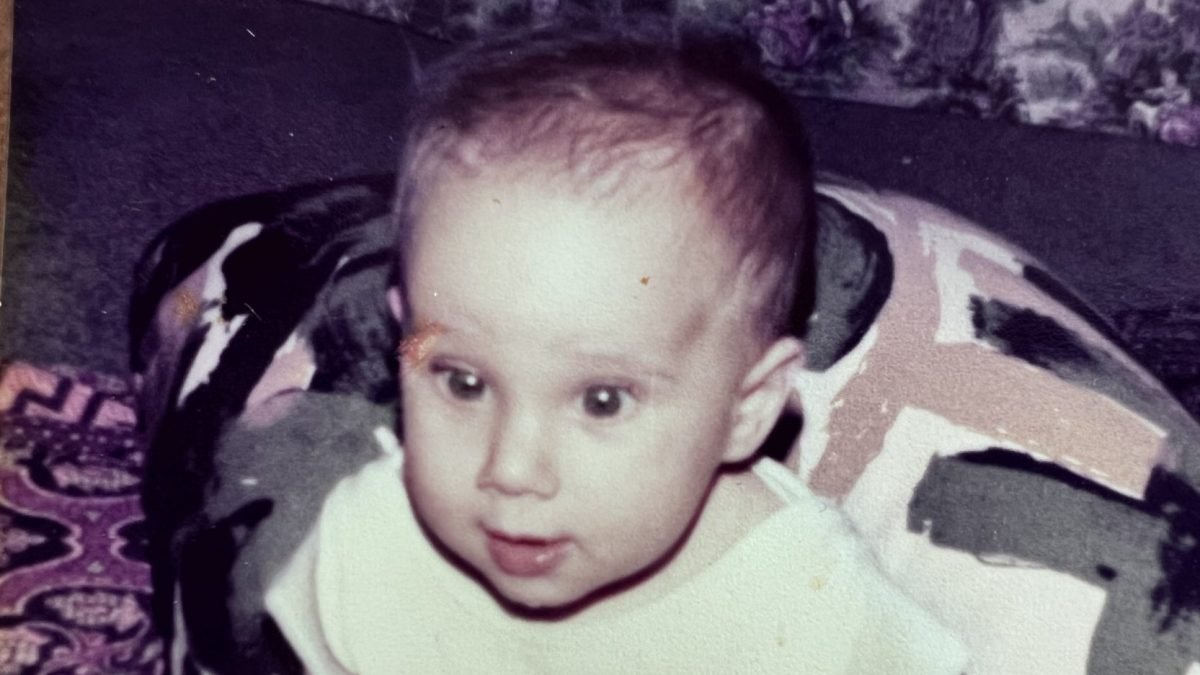
I’m told I was an ugly baby. My mum cried in hospital because my head was so misshapen with my eyes off at a strange angle; the midwife who comforted her by saying I didn’t look “that bad” didn’t reassure her at all. I don’t think any photos were taken of newborn-me so I can’t vouch for my lack of looks but I do know the reason for my asymmetric face: forceps.

During my birth, my heartbeat dropped dangerously low and my dad had to be ushered away as a medic yanked my head with what is essentially a giant, terrifying-looking pair of scissors, first introduced to help with childbirth in the 16th century. I’m hugely grateful to those metal forceps: they doubtless saved my life, and the tale of my heart stopping before I’d seen the world has always added to my sense that life is an incredible gift to be appreciated.

But there’s no doubt that in enduring that procedure to get me safely into the world, my mum experienced significant trauma. She told me that within about six months my features had settled, though to this day I still have a very slight indentation on my skull.

Genevieve as a baby, with her father. Forceps were first introduced in the 16th century to assist with childbirth

My mum’s birth experience sounded so scary that it informed my own. When I was pregnant with my eldest, Astrid, now nine, I planned a hippy water birth. My due date came and went and despite my encouragement – the standard walking up stairs sideways, existing on a diet of pineapple, curry and raspberry leaf tea and going for reflexology sessions to bring on contractions – Astrid remained comfortably inside.

Eventually, a week overdue, I agreed to the hospital attempting to induce my daughter by putting prostaglandins – hormone-like lipids that soften the cervix and encourage contractions – in my vagina. But I only agreed on the condition that it was written on my notes that before I was moved onto an oxytocin drip, which brings on strong contractions, I’d be offered a C-section.

‘I’m hugely grateful to those metal forceps: they doubtless saved my life’ says Genevieve

Obstetricians and midwives agree that induction involving an oxytocin drip induction is far more likely to end up in an assisted birth, in the form of forceps or a ventouse, a vacuum-suction cup which looks similar to those used by plumbers to unblock drains, than spontaneous births. I didn’t want my daughter’s arrival in this world to be as traumatic as my own.

When I learnt this week that eight NHS trusts are now offering a new way to help women with assisted delivery, I was delighted. The OdonAssist, invented by an Argentinian mechanic who had a dream about it after seeing a cork being removed from inside a bottle by blowing up a plastic bag and using reverse pressure to encourage it out, was given funding by the Gates Foundation. It’s a soft air cuff that surrounds a baby’s head and helps doctors assist birth during contractions. It has now been used in more than 300 births and was officially launched in the UK this week. In time, it might replace rigid birth instruments.

The OdonAssist, which uses reverse pressure on the babies head to deliver them without bruising (Photo: Julian Benjamin/MNHI)

Gary Cohen, co-founder of Maternal Newborn Health Inventions (MNHI), which brought the product to market, says that the OdonAssist contrasts from forceps and ventouse deliveries, which are currently used in one in eight births in the UK. “It is gentle,” he explains. “Newborn pain scores [measured by a baby’s facial expression] indicate no pain or very low pain and we see [baby] behaviour very similar to a spontaneous vaginal birth. Pain scores with other devices are considerably higher and can affect newborn behaviour. When I hear how the joy of childbirth is enhanced by having a baby with no or low pain, without marks or bruises, that’s a big reward. We’re all working to try to enhance the joy and reduce the trauma.”

At £250 in the UK, it is also not an expensive device. For comparison, the average caesarean section birth costs the NHS between £1,700 and £3,000. “We don’t want price to be a factor that inhibits use,” Cohen says.

Immaculate Figueiredo, a 38-year-old head of human resources for an IT consulting firm, gave birth seven months ago in east London at the Royal London Hospital to her son Kai Figueiredo-Shaikh, with the help of the new device. “On the morning of delivery, my son’s heart rate was fast and I had a temperature. My husband Kashif and I were told clearly that we would have to rush the delivery. Our doctor explained this new device and its benefits compared with forceps, with less birth trauma to both me and the baby. We were very reassured.

Women's perspectives: Innovation launch
Immaculate Figueiredo (left) and her husband with their son Kai, who was delivered with the new device (Photo: Julian Benjamin/MNHI)

“My son arrived quickly and was put on my chest. I could feel tension in the room and felt very nervous as it took two or three seconds before he started breathing. There was absolutely no bruising on him, no one would have known he was born with assisted delivery. And there was no physical trauma or tearing to me, so my recovery was good. I wish this device was available to mothers at all hospitals.”

Georgina Kelly, midwife and MNHI employee, says that on the postnatal ward, midwives hear babies in pain from the way they cry. “Some of those babies [born with forceps or ventouse] do require pain relief in the postnatal period,” she says. “The OdonAssist reduces tissue trauma and bruising to babies.” A forceps or ventouse birth also changes the midwife’s role. “You change the tone of your voice because you know a doctor is about to produce some forceps, and move them down the edge of the bed, and it’s a very scary time for a woman,” she explains.

Emily Hotton, obstetrician and investigator of the clinical trial at Southmead Hospital, at the University of Bristol, agrees the experience is “completely different” to forceps or ventouse deliveries. “It offers a gentler, more controlled approach, rather than applying traction with rigid instruments,” she explains. “In trials, there were no device-related bruises or marks on the baby’s face or head; a key difference compared with traditional instruments.”

Hotton doesn’t believe that the OdonAssist will immediately make other instruments obsolete, but that it will have an effect over time. “As clinicians gain more experience, its use will increase and it is likely then that the number of births assisted with ventouse and forceps will decrease,” she says. She believes this is such an exciting innovation because “women’s health research has historically been underfunded and underrepresented.”

The history of inventions in assisting with childbirth

1500 – First successful c-section performed by Swiss pig gelder Jacob Nufer on his wife

1590s – Forceps invented by Peter Chamberlen the Elder, a member of a French Huguenot family that migrated to England

1840s – Ventouse invented 

1920s – Spinal epidurals first administered

2026 – OdonAssist now being used by eight UK healthcare trusts following successful trials 

Cohen believes that it has huge life-saving potential in developing countries, particularly in rural settings, where childbirth risks are high. He hopes that in time profits from the OdonAssist will subsidise the device in countries where affordability is a huge issue.

Kelly also believes it will play a part in reducing the rising maternal mortality rate in the UK, which is currently at its highest in two decades. In the two years until 2023, 257 women died in pregnancy, birth or the first six weeks post-partum. “The thing we can look at reducing is women’s need to ask for a maternal choice-caesarean section. Cesarean sections have higher risks [than vaginal births]. If there’s an option for women who come into labour thinking, ‘I don’t want forceps’ and they can have a more gentle assisted vaginal birth and that reduces the need for maternal request-caesarean sections, then we are playing our part to try to reduce that mortality rate,” she says.

Dr Jenny Barber, vice president of the Royal College of Obstetricians and Gynaecologists, said: “Most babies born through an assisted delivery are well at birth and do not experience any long-term problems, but forceps and ventouse do increase the chance of bruising to the baby and vaginal tearing. We welcome innovations in maternity care where these have robust data on safety, effectiveness and appropriate training for NHS maternity teams.”

My daughter Astrid ended up arriving by a very calm c-section, after the prostaglandin pessaries didn’t push me into active labour. I was overwhelmed with relief, joy and love when she was placed in my arms. The midwife later told me that at over four kilograms, she wouldn’t have arrived naturally. In the absence, almost a decade ago, of a gentle way to assist births, I am very glad that I pushed to be offered a c-section before forceps or emergency surgery was involved.

‘I’m not interested in fame’

Andy Nyman has started an impromptu Ouija session on the cafe table between us. “A ouija board works on a thing called ideomotor syndrome,” he explains while skimming his hands like metal detectors scanning for buried treasure. “You and I would put our hands on the glass – or the planchet, as it’s called – and that would move around, spelling out a word or whatever… We’re both pushing it, but you’re unaware of the fact that you’re pushing it. And you feel that the other person is doing all the work. But more importantly, this thing ends up going on a journey that neither of you could have planned.”

I could say the same about that answer to my question about his creative process. But then, this is a man who’s made a 40-year career out of, among other things, mystifying audiences with supernatural thrills and mind-bending mentalism. One of the peak examples is Ghost Stories, the fright-filled theatre show he created with best friend Jeremy Dyson in 2010, which explored the fear of being a bad parent. The show has had numerous UK and international productions, as well as a film adaptation in 2017.

Despite loving magic and horror since he was a teenager, Nyman turned down a multi-year deal from Channel 4 to perform mentalism. The job was eventually taken by Derren Brown, with whom Nyman has worked on all but two of his shows – he co-created and co-wrote Derren Brown – Mind Control and Trick of the Mind, among others – and who he says gave him the confidence to write Ghost Stories. “We sort of pioneered a new way of doing mind-reading stuff,” the 60-year-old says of their alchemy. “My skill base really was taking very old-fashioned effects, and revolutionising them, giving them a sort of modern version. Derren had this brilliant, cutting-edge way of thinking. And it was like this marriage of these two tastes.”

LONDON, ENGLAND - DECEMBER 09: Andy Nyman (L) and Derren Brown attend the press night performance of "The Producers" at the Menier Chocolate Factory on December 09, 2024 in London, England. (Photo by Dave Benett/Getty Images)
Nyman (left) is well known for his work with illusionist Derren Brown (Photo: Dave Benett/Getty)

Nyman’s “first love”, though, is acting, having starred in glossy West End musicals, including Fiddler on the Roof and, more recently, The Producers. His eyes twinkle when I ask if he considers himself – to borrow the title of one of Brown’s shows – a showman. “If someone asks me what I do, I say I’m in showbusiness,” he says, letting out an appropriately flamboyant guffaw. “Showbusiness is such an old-fashioned, glamorous, drive a Rolls-Royce, smoke a cigar, big coat sort of answer that I love.”

But he’s not disheartened that a solo vehicle for his talents is yet to come back his way. “Life’s too short,” he says. “There are too many painful bumps in the road. If I can craft a life whereby I’m doing what I love and it makes me happy, that’s all I care about. I’m not interested in fame, I’m not interested in being rich for the sake of selling my soul… But could I do a one-man show? Oh, yeah – and probably will at some point.”

TX DATE:28-03-2026,TX WEEK:13,EMBARGOED UNTIL:22-03-2026 00:01,PEOPLE:Leo Bloom (MARC ANTOLIN) and Max Bialystock (ANDY NYMAN),DESCRIPTION:With the cast of The Producers,COPYRIGHT:TBI Media,CREDIT LINE:BBC/TBI Media/Scott Garfitt? TV Still BBC TV
Nyman (front right) in the West End musical ‘The Producers’ (Photo: BBC)

For now, he’s reuniting with Dyson on their latest collaboration, The Psychic, opening this week at York Theatre Royal, where we meet after rehearsals. The thriller follows a TV psychic as she tries to restore her reputation after being dragged through the courts and the papers as a fraud, losing a fortune in the process. Coming in the slipstream of shows like Paranormal Activity and 2:22 A GhostStory, the play arrives at a time when supernatural horror is enjoying a sunny spell in theatre. He believes the genre fell out of fashion due to a snobbery around horror, tending not to elicit a “cerebral” response. But “when you see a good one, Oh my god, there’s nothing like it. And that’s what our intention with The Psychic is… I’d love to think that we could rebirth that genre.”

He’s infectiously nerdish about the “delicious” analogue and the practical effects they hope will achieve that. “If we get it right, the reactions are going to be unbelievable,” he says. “It is mischievous, it is puckish, and it is naughty, but it also really delivers incredible plot twists, surprises, shocks, and big laughs. It’s all the things that make Jeremy and myself thrive.”

Andy Nyman and Jeremy Dyson - credit Manuel Harlan Andy in rehearsals for The Psychic: credit Manuel Harlan. Image supplied by Cameron Currie
Nyman created ‘Ghost Stories’, the fright-filled theatre show with his best friend Jeremy Dyson (right) in 2010 (Photo: Manuel Harlan)

With theatre tickets costing “a sh**load of money” today, the duo feel a greater pressure to deliver. But what bothers Nyman most is the perception these prices create. “It’s such a misnomer to think the arts are just for the elite,” he says. “What the arts generate financially in this country is gigantic… It needs to be nurtured so that everybody has access to it. And I know that sounds like another boring actor banging the lefty drum about theatre, but it isn’t about that. You’ve got it at the same time as you’ve got what looks like rises in street crime and disenfranchised people. People need to feel fulfilled… It’s an absolute saviour for people – I really profoundly believe that.”

Nyman talks with the gentleness of a father reading a bedtime story and seems innately optimistic, so what draws someone like that to the darkness of horror? “[People] often think it’s really subversive and demented and can’t understand why you’d swim in those waters,” he says. “I think ultimately there is something very life-affirming about horror.” That’s why he thinks supernatural thrillers endure, quoting a line from the play: “‘Look, we are all the same: we’re sh**-scared of dying, sh**-scared of being broke, sh**-scared of being ill.’ And it’s the truth. And the need for answers is massive… So of course we’re fu**ing obsessed with trying to make sense of the biggest thing in the world, which is: we’re gonna die, and the people we love are gonna die – and how do you deal with that? How on earth do you square that circle?”

They’re particularly resonant questions for Nyman, following the death of his wife of 35 years last June after a 16-year illness. “Grief and suffering are not something that’s adjacent to my life; that’s a part of my life,” he says. “There are themes and ideas in [the play] that are touching on that world, and are interesting and potentially helpful and healing – and maybe painful as well.”

Cameron Currie Andy in production stills for The Psychic: credit Manuel Harlan. Image supplied by
‘The Psychic’ at the York Theatre Royal (Photo: Manuel Harlan)

It’s still visibly raw for him, so I ask whether making the show has helped. “If you put it out there fearlessly, just put it out there, that is the only way you can truly touch people and heal potentially with your work,” he says. “And that isn’t something to be embarrassed or guilty about or shameful about. I think it’s an essential part of trying to create work that is truthful and honest and impactful.”

I wonder whether, looking at other figures in the public eye today, truthfulness is becoming as old-fashioned as his magic tricks. “What’s changed is, back in the day, if someone’s revealed to have done something sh**ty, there seemed to be repercussions,” he says. “We seem to live in a world where that doesn’t seem to happen anymore… It fascinates and terrifies me that we live in a world where the notion of truth is just in flux. It’s extraordinary to me to watch that happen. So I love holding it up and shining a really bright light on it… The strapline of the play is: Is any of it real? And it’s sort of the question at the heart of everything.”

‘The Psychic’ is at the York Theatre Royal until 23 May (yorktheatreroyal.co.uk)

I’m 47 and only have £24,000 in my pension

Dean Burnell, 47, says when he was younger, pensions were not talked about much, and as a result he has not saved as much into his retirement pot as he would like.

He has only been able to add small amounts to his pension when working in a number of part time jobs, so far saving a total of £24,000.

Dean is aware that for a comfortable lifestyle, he would need much more and says “everything about retirement worries me”.

He started working in recruitment in 2001 when he was 23 and although a few of his friends encouraged Dean to open a pension, at the time the thought of retirement was “a long way off”.

“Back then, workplace contributions were not in place, and it was not compulsory for employers to contribute and it was not compulsory for employees to have a part of their wage set aside for it.

“Thank goodness that’s changed now as future generations will benefit from this policy. However, I do believe that those of us born between 1975 and 1990 especially, who are going to retire between 2045 and 2050 are potentially going to be in trouble,” Dean, from London, said.

He spent 16 years in the recruitment industry and in 2007, opened a private pension and deposited £8,000 into it.

“The thought of that being off limit until I was 65 [when you can generally access pensions] was very daunting but at the same time made me feel good that I’d put something aside.

“What I didn’t realise then was that in total I would really need around £500,000 by the time I retire to say I had enough in the pot to keep me going and that would be a supplement to the state pension,” Dean said.

According to Pension UK’s Retirement Living Standards, a single person would need £31,700 a year to have a ‘moderate’ standard of living and £43,900 a year to have a ‘comfortable’ retirement.

This doesn’t include rental or mortgage costs so for those still paying these bills, they would need much more.

After leaving recruitment in 2016, Dean has worked in various part-time roles since then, adding small amounts into his pension pot.

He said: “I have no other savings expect £200 in premium bonds and been holding onto that for dear life just with the hope of winning something in the monthly prize draws.

“My circumstances changed and by the time the compulsory saving for pensions started, my potential career high had passed.”

Dean is in receipt of housing benefits as well as £76.60 a week in personal independence payments (PIP) and says he will have to rely on his state pension when he comes to retire.

“Everything about retirement worries me. What will the retirement age be in 2048? Will there be a state pension in the way we know it now?

“Pension credit exists now but would it in the future? The cost of rent in London is very high and the thought of even higher rents in the future causes me apprehension already.”

Dean pays around £800 a month in rent and is worried he will struggle to find rentals that will accept him as an older renter.

He said: “I am wondering if I need to seriously consider moving outside of London, but then would I have a better chance of increasing my retirement pot by leaving London?”

There are also many things Dean cannot afford and says his only luxury he allows himself is his Netflix subscription.

“I have on occasion asked the council for discretionary food vouchers. I have to factor in emergencies, so I am not having any luxuries. I haven’t had any kind of holiday since 2008 and I used to like trips to the theatre but not anymore, they are too expensive,” he added.

Dean says looking back when he was in this twenties, he didn’t think about illness or becoming unemployed and how that may affect his retirement.

“It’s great that the government made it compulsory for part of your salary to go towards your pension and that employers pay a contribution.

“However, I think there will be many people with low private pension pots who are going face very difficult times when they retire. People in benefits with long-term disabilities might never secure a job that pays enough to give them decent pension contributions,” he added.

The lesser-known delights of Staffordshire from Italian gardens to elegant dining

Staffordshire isn’t generally a place of big-name attractions. In fact, many people might be able to name only one: Alton Towers, which recently reopened for the season and will have received a good chunk of the 37 million visits to the county last year.

But as someone who’s lived in Staffordshire for more than 15 years, I’ve come to love the county’s lower-key charms. It’s the creative crafts and stunning landscapes – including the southwest corner of the Peak District – that set this place apart.

So if you come for the rollercoasters, be sure to stay for the pottery, heritage and brilliant hikes. Here are some of my favourite places to visit in Staffordshire.

Shorts – Quick stories

World of Wedgwood 

Perhaps the best introduction to Staffordshire is to discover its ceramic heritage – and World of Wedgwood in Barlaston is the place to do just that. The V&A Wedgwood Collection tells the story of Josiah Wedgwood, the 18th-century potter who was integral to the mass production of ceramics, and whose impact helped shape the industrial revolution.

Join a factory tour to see modern Wedgwood ceramics being created, or – perhaps the best part – pre-book an hour-long taster session where you can throw your own pot, overseen by expert instructors.

Have lunch at Lunar, an elegant and relaxed fine-dining restaurant just across from the factory, named after the Enlightenment group the Lunar Society, of which Josiah Wedgwood was a member.

Rudyard Lake

On the Staffordshire fringes of the Peak District, Rudyard Lake is an ideal place for an active day out. You can ramble around the lake, which was built as a reservoir in 1797; ride the Rudyard Lake Steam Railway along its shores; or head onto the water itself in a rowing boat, available to hire on the day. There’s also a cafe and picnic benches for enjoying your own food on a sunny day.

Cannock Chase

Stretching between Stafford, Cannock and Rugeley, Cannock Chase is 26sq miles of beautiful countryside, crisscrossed by walking and cycling trails that will take you through its heaths and woodland. Cannock Chase Forest car park is a good starting point for various routes, plus there is a cafe, play area, bike hire and Go Ape. It’s also close to Rugeley if you’re travelling by train.

Bluebells can be spotted in Cannock Chase in spring (Photo: GuruJosh/Getty/iStockphoto)

Lichfield Cathedral

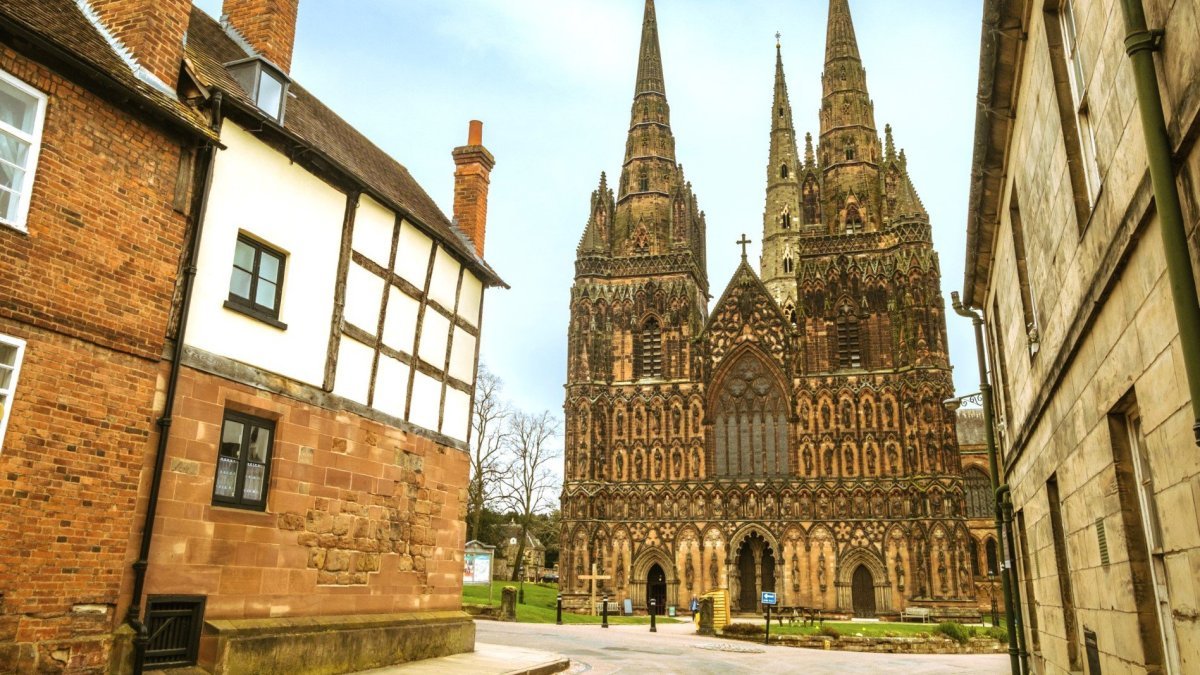
A compact city in the south of Staffordshire, close to Birmingham, Lichfield is home to the imposing Lichfield Cathedral. It’s best experienced on a Highlights Tour, which lasts about 45 minutes, during which a knowledgeable guide will show you around the cathedral – including the 8th century St Chad Gospels book – and share some of its 1,300-year history. Alternatively, the Tower Tour takes you along hidden passages and up spiral staircases, culminating with stunning views of Lichfield from the Central Tower. The Highlights Tour isn’t bookable in advance.

Emma Bridgewater Factory

Another highlight is to be found in Stoke-on-Trent, part of an area known as “the Potteries”, which was at the centre of Britain’s ceramic industry in the 18th century, and is still a production hub today.

The Emma Bridgewater Factory is one of my go-to places. In the Decorating Studio, you can try your hand at painting pottery (advance booking required), which is then fired, and either posted to you or available to collect.

There are also tours of the factory, and you may well find yourself leaving with a new mug or two from the outlet shop. The onsite cafe is one of the best places to try Staffordshire oatcakes – a local speciality similar to crepes but made with oats, served with savoury fillings like cheese and beans. They also do very good cake – all served on beautiful crockery, of course.

Visitors can learn from the pros how to hand-paint mugs at the Emma Bridgewater Factory (Photo: Nathan Stirk/Getty)

Erasmus Darwin House

Once home to doctor, inventor and poet Erasmus Darwin (grandfather of Charles), this Georgian house in Lichfield offers a fascinating insight into his life. The museum showcases Erasmus Darwin’s work, with displays including beguiling models of his inventions and his personal journal.

Like Wedgwood, he was a member of the Lunar Society, and you’ll be left with a real sense of his impact. Make time to wander the garden amid herbs, spices and other plants that were used in Darwin’s day for both cooking or health.

The Trentham Estate

On Stoke’s southern edge lies the sprawling Trentham Estate, which has many attractions, including Trentham Gardens, with its mile-long lake and beautifully designed Italian garden – perfect for a long stroll. It’s stunning all year round, but spring and summer are when it really dazzles with colour.

Also part of the estate, the Shopping Village is a collection of wooden huts housing places to eat and shops such as One More Bear, which is one of my favourites for gifts. Anasma Greek Eatery is particularly good (booking advised).

Froghall Wharf and the Churnet Valley Railway

The canal-side Froghall Wharf is a starting point for the Churnet Valley Railway, a heritage railway that takes scenic journeys through the Staffordshire Moorlands, with stunning views of the woods and water.

Have breakfast or lunch at Hetty’s Tea Shop (the scones are some of the best) in Froghall Wharf. You can also walk from here along the Caldon Canal – perhaps all the way to The Black Lion at Consall. After the roughly hour-long stroll, you’ll be rewarded with a cosy country pub with outdoor seating overlooking the water.

We spent £1m on our home

When Sophie Marple bought a holiday home in a tranquil Suffolk village, the thing that attracted her most was the stunning view overlooking the sea.

But it is this very sea that will now be the demise of her home, as rapid coastal erosion means it may be just weeks or months before it falls into the water. When things get worse, they will be forced to demolish it.

Insurers don’t cover coastal erosion as they deem it a foreseeable incident, which means the home that Sophie and her family bought for £550,000 – and spent another £450,000 re-building – will be completely lost.

“It is horrendous to see this happening to a house you absolutely love and put so much time and effort into,” said Sophie, 55, who is married to Nick and has two daughters aged 16 and 13.

“We know we are very lucky because it is our second home and there are people who are losing the home they live in and being made homeless through what is happening to our eroding coast.

“But we love this home and the location. It is really beautiful and has an incredible view over the sea. It is in a quaint little village with a lot of history and heritage. Once our house has gone, so will our connection to the village. It is devastating.”

Sophie, a climate change and nature loss campaigner who lives in London, told The i Paper she bought the house in the Suffolk village of Thorpeness 20 years ago. They have never rented it out, but go there for holidays and let family and friends use it.

Thorpeness has been a holiday hotspot for more than a century, but is now being lost to coastal erosion, leading to the demolition of several homes.

Sophie explained that when she bought the home, she knew there could be a future risk of erosion affecting it. They had an environmental survey done, which showed they were in an area of deposition, with shingle being deposited on the beach and then back again, but at that time, everything was stable and secure.

“It was what we wanted to hear. But we knew we were on a sandy cliff and that if we lost the beach, we would be subject to erosion.

“All the surveyor could do was look at what had happened in the past and what the situation was at that present moment – they could not predict the future.

“One thing the surveyor said to me was: ‘If you don’t want to fall in the sea, don’t buy by the sea.’ It was a risk, I know that.”

Sophie Marple is devastated that her beautiful holiday home in the village of Thorpeness in Suffolk may be weeks or months away from being swallowed by the sea.
Sophie and her family outside the home. When they bought the property, she knew there could be a future risk of it being affected by erosion

When Sophie bought the detached four-bedroom home 20 years ago, it had a plastic-clad structure, was old and rotting inside and had no central heating. An architect told them it needed more than renovation and they would have to rebuild it.

In 2010, there was a major erosion event affecting the beach, shingle and undergrowth in front of them and Sophie realised their home did not have any defences.

“At the time, we had been thinking about rebuilding the house, so we stopped all our plans,” recalled Sophie. “But then an ambitious scheme was put in with the council, a public-private partnership where we contributed, but the council took responsibility for building defences in front of us.

“This collaboration gave us a lot of confidence and made us feel safe.

“So a few years later, we rebuilt the house with a kit build, spending around £450,000. It is beautiful.”
A year ago, the defences suddenly became eroded and had a sharp ridge.

Over Christmas, the area experienced severe weather, which battered the defences. Then, in early January this year, a couple of powerful storms hit the village. It culminated in 11 houses being demolished.

Now, Sophie’s home and another nearby house are at risk and she says they have no idea how long they have left.

“We are right on the edge of a cliff now,” explained Sophie. “There used to be about 18 to 20 metres to the beach to walk down. That has all gone and we are now on the edge of a steep and sandy bank with just a cut-off in front of us.”

Sophie Marple is devastated that her beautiful holiday home in the village of Thorpeness in Suffolk may be weeks or months away from being swallowed by the sea.
Erosion damage to the cliff outside Sophie’s home

Sophie says the problem is that East Suffolk Council has not got enough money and has decided not to allow planning permission for any defences in front of them, leaving the two affected houses unprotected.

“We are now in limbo and waiting for the inevitable to happen,” said Sophie. “We are still using the home, but every time we go there, we don’t know if we will be able to go again the following weekend.

“The council gives you a trigger point and tells you at what point the bank has to get to before you have to demolish. Until it gets to that point, we won’t demolish the house.

“Insurance does not cover it at all, so if the house does fall into the sea, not only will we lose a house we love, we will lose all that money.”

Sophie says that while their personal situation is horrible, it is a national problem happening all the way around the coastline. “This is the massive impact of climate change and it is being silenced and avoided.”

Sophie Marple is devastated that her beautiful holiday home in the village of Thorpeness in Suffolk may be weeks or months away from being swallowed by the sea.
Sophie says the house is in a beautiful location overlooking the sea

A spokesperson for East Suffolk Council told The i Paper that a joint private and council-funded rock bag scheme had been installed in Thorpeness, which is expected to offer protection for between two and five years.

They said: “The rock bags aim to slow erosion and reduce the risk of flooding. As we have made clear throughout, there are no permanent solutions which will stop the erosion completely.

“We have been engaging with all affected residents, including Sophie Marple, since last spring about their erosion risk following publication of the Environment Agency’s national erosion risk maps.

“This included the need to have a plan in place for the safe removal of property when critical safety levels are reached due to erosion.”

Under the Coastal Protection Act 1949, a local authority can take short-term interventions to slow erosion if the situation is urgent. Under the Act, the criteria for urgency include the exploration of a new or emerging risk.

The spokesperson added: “Whilst we are sympathetic to Sophie’s situation, we have a duty to use taxpayers’ funds responsibly and seek the best outcome possible for the maximum number of properties.

“Extending the rock bags northwards would not be strategically, technically, environmentally or financially feasible, as an extension would cost a minimum of £300,000 in an attempt to slow erosion to only two properties, for a short period of time, where the risk is already known and plans are already in place for safe removal of properties when necessary.

“We understand this is a distressing time for all affected residents, and we are continuing to support homeowners to whom we have also offered support and direct financial assistance, to help safely remove their property should it become necessary.”

Trump takes aim at CNN after founder’s death

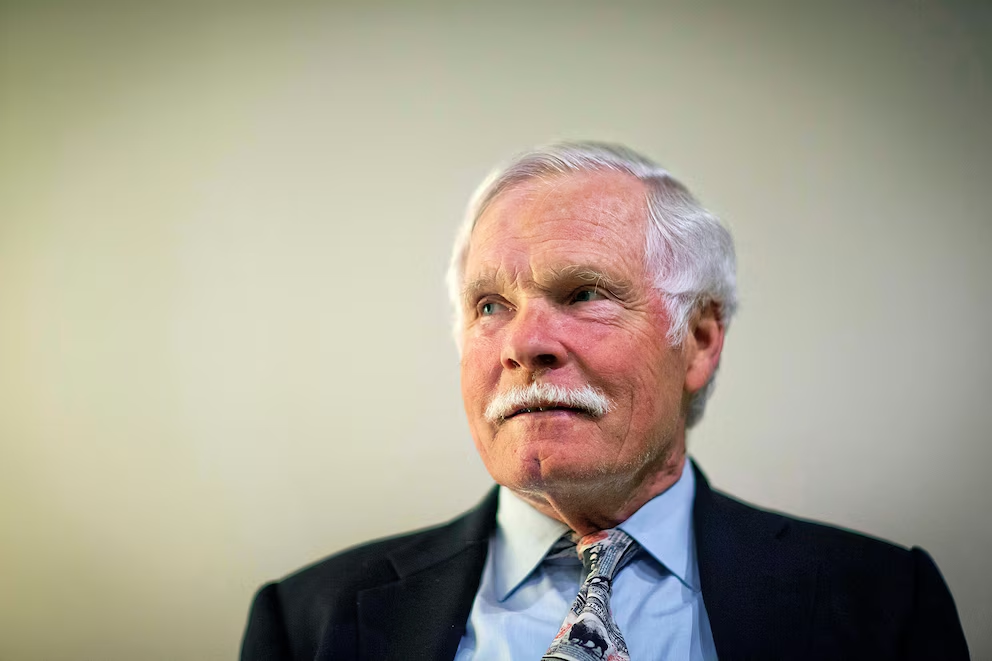
Ted Turner, the brash entrepreneur who led a media and philanthropy empire that included founding groundbreaking news network CNN, has died, the network reported on Wednesday. He was 87.

No cause of death was given. In 2018, Turner revealed that he had Lewy body dementia, a degenerative nerve disease.

Who was Ted Turner?

Turner bought his first television station in 1970 and over time became one of the most powerful figures in US media, at one time even owning the MGM/United Artists movie studio.

He also was one of the world’s leading environmentalists, one of the largest land owners in the United States, and a major philanthropist, giving $1 billion to the United Nations.

US President Donald Trump has paid tribute to Turner on his TruthSocial platform, but couldn’t resist taking a swipe at CNN, a station the president has long perceived as hostile to him.

“The new ownership took CNN, his “baby”, and destroyed it,” Trump wrote.

“It became woke, and everything he is not all about. Maybe the new buyers, wonderful people, will be able to bring it back to its former credibility and glory.”

What made him famous?

CNN was founded by Turner in 1980 but it wasn’t until about a decade later, during the first Gulf War in Iraq in 1991, that the network came to international prominence.

While most other networks left after a few days, CNN stayed, and captured extraordinary warzone footage.

Before that, in the 1970s, Turner owned the Atlanta Braves baseball team and the Atlanta Hawks of the National Basketball Association and skippered his yacht the Courageous to win sailing’s America’s Cup.

He was married three times, most famously to Oscar-winning actress Jane Fonda.

Actress Jane Fonda and CNN founder Ted Turner at the United Nations Foundation Global Leadership Dinner in 2013. (Picture: Jason DeCrow/AP)

In 1996 Time Warner bought his Turner Broadcasting System for $7.5 billion, creating the world’s largest communications company, and then in 2001, Time Warner merged with online giant AOL.

But corporate moves after that merger eventually forced Turner out of his position, and he lost control of his empire, something he later said was one of his great regrets.

Forbes estimates Turner’s fortune at $2.8 billion.

“If I only had a little humility, I’d be perfect,” he once said.

With Reuters

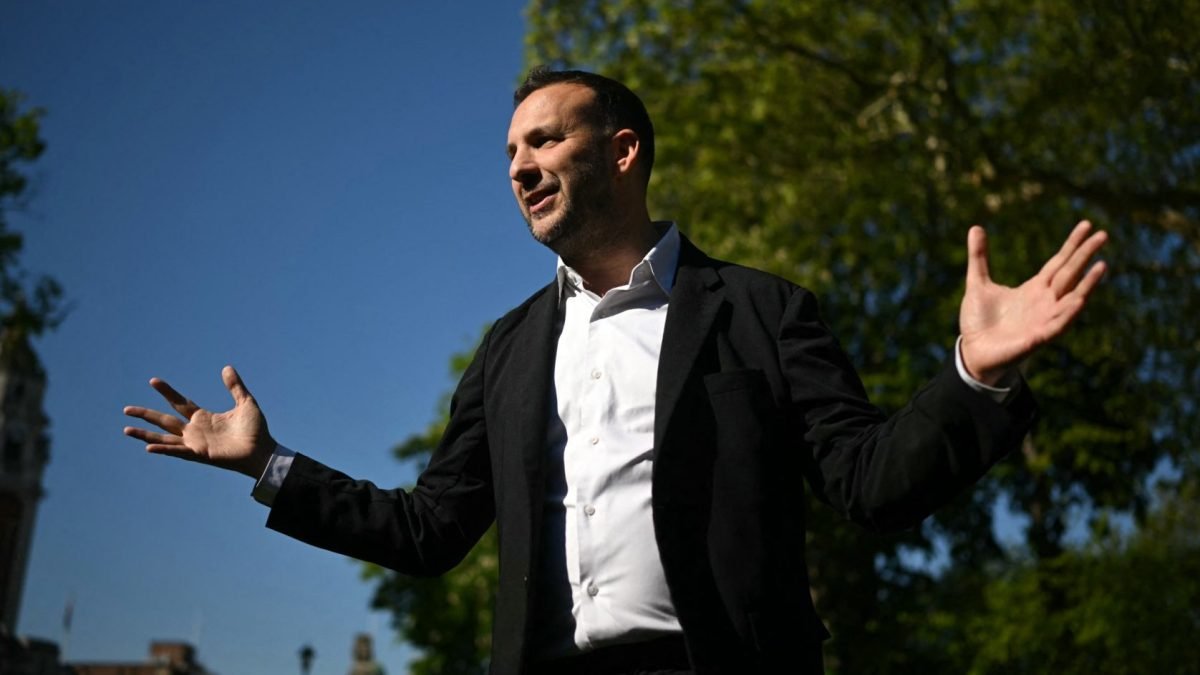
Green Party leaflet blames antisemitism claims on ‘Labour smear’

The Green Party has claimed allegations of antisemitism are “Labour smears” despite the arrests of two of its local election candidates in south London.

Sabine Mairey and Saiqa Ali, both Green candidates in Lambeth, were arrested by the Metropolitan Police last week over alleged antisemitic social media posts.

Despite leader Zack Polanski claiming he would disown candidates who made antisemitic comments, a leaflet distributed in Lambeth following the two arrests claimed that the party had been a victim of “Labour’s cynical misrepresentation” over allegations of antisemitism.

Shorts – Quick stories

A leaflet by the Lambeth Green Party sent after the arrests, seen by The i Paper, tells voters Labour is “engaging in relentless negative campaigning”.

It continues: “We are proudly Jewish Green Party candidates. We reject Lambeth Labour’s cynical misrepresentation of our party.

“We will never allow antisemitism or any form of racism to gain a foothold in Lambeth.”

The leaflet – signed by candidates Martin Abrams, Jeremy Isaacs and Lisa Schulkind – did not mention the arrests and tells voters the party will work to keep the Jewish community safe.

Mairey and Ali were both arrested under Section 19 of the Public Order Act on 30 April and released on bail, pending further inquiries.

Although Green Party rules state candidates under suspension or investigation should not campaign, Mairey was pictured over the weekend canvassing with party activists. Ali is believed to have been suspended.

The candidates no longer appear on the Green Party’s websites, although they remain listed on the Electoral Commission website. Under electoral rules, nominations cannot be withdrawn after a certain point in the process.

The leaflet sent to voters by the Lambeth Green Party tells voters Labour is ‘engaging in relentless negative campaigning’

Steve Reed, the Housing Secretary, who was leader of Lambeth Council before entering parliament, said: “Instead of disowning them, the Greens are pretending it’s all just ‘misrepresentation’.

“While they lecture the country about hope, Polanski’s Greens are covering up for hate.”

Mairey is alleged to have shared an Instagram post which included the text: “Ramming a synagogue isn’t antisemitism. It’s revenge.”

Sabine Mairey was arrested by the Metropolitan Police last week over alleged antisemitic social media posts

She also allegedly suggested that Israel was worse than Nazi Germany, with a photo of Auschwitz that said the Nazis “had to hide what they were doing”.

Ali’s Instagram account is set to private but screenshots published by The Telegraph suggest she had posted an image of an armed man wearing a headband of Hamas, a proscribed terrorist group, along with the slogan: “Resistance is freedom”.

In a now-deleted Facebook post, she allegedly said 9/11 was a “false-flag attack” created by Israel.

Another post reportedly showed an AI-generated image of a stereotypical Jewish person with the words: “Don’t you know the rules? We went through the Holocaust, and now we get to kill everyone, forever!!”

In a now-deleted Facebook post, Saiqa Ali is alleged to have said that 9/11 was a ‘false-flag attack’ created by Israel

Last month, Ali apologised “for any offence or distress caused to anyone by my social media posts”, which allegedly included claims that US President Donald Trump is “owned by Jews”.

Zack Polanski, the Green Party leader, told the BBC on Sunday that messages by candidates accused of antisemitism were “unacceptable” and that the party would be implementing a “standardised vetting process” in the future as well as mandatory training for candidates “to make it clear that antisemitism is completely unwelcome” in the party.

He said: “It is also important to say one case of antisemitism is one too many.

“This is a handful of cases and actually we have over 4,500 candidates, the vast, vast majority of which are doing amazing work in their communities right now.”

Asked about the arrests and other incidents of alleged antisemitism by Green candidates, Polanski added he disowned candidates who had made antisemitic comments. When asked if he would “tell people here today: don’t vote for them, they don’t stand for you”, he replied: “That’s right.”

The Green Party was approached for comment.

A spokesman previously said: “This is now a police matter. We are unable to comment at this stage.”

Questionário diário sobre Joseph Vijay

fonte

Patel critica as autoridades locais no tratamento do caso Nancy Guthrie, mas o xerife contesta as afirmações


Patel critica autoridades locais no tratamento do caso Nancy Guthrie, mas o xerife contesta as afirmações – CBS Information

Watch CBS News

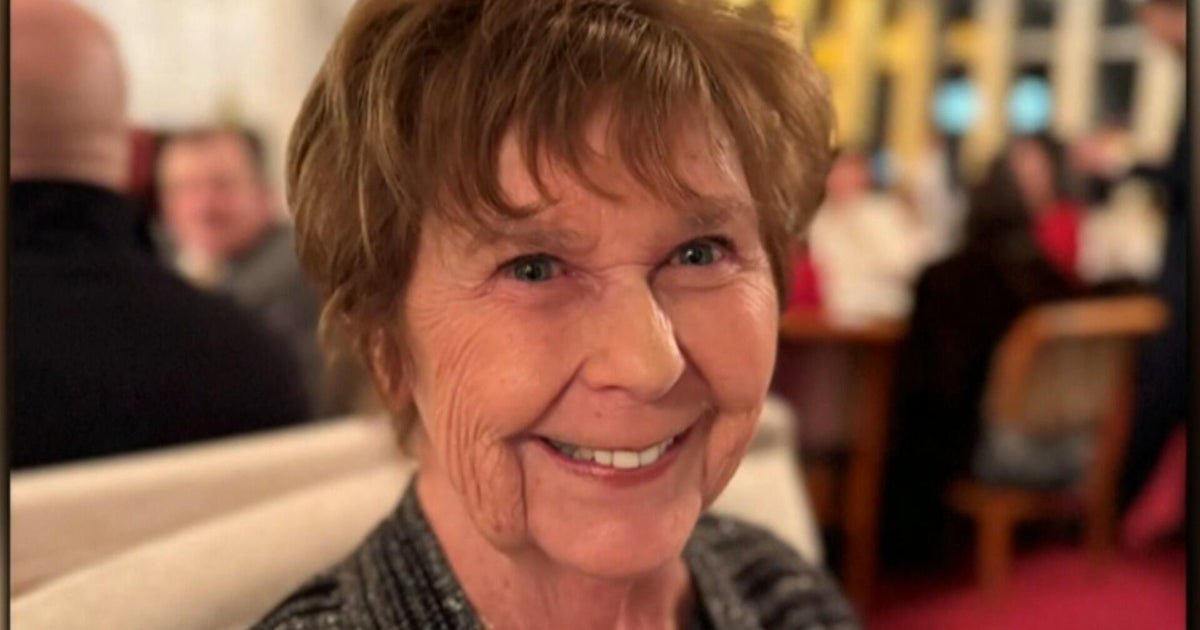
FBI Director Kash Patel is attempting to shift blame to local authorities in the handling of the disappearance of Nancy Guthrie. But the Pima County Sheriff’s Office says some of Patel’s comments are not accurate. Jericka Duncan reports.

fonte