
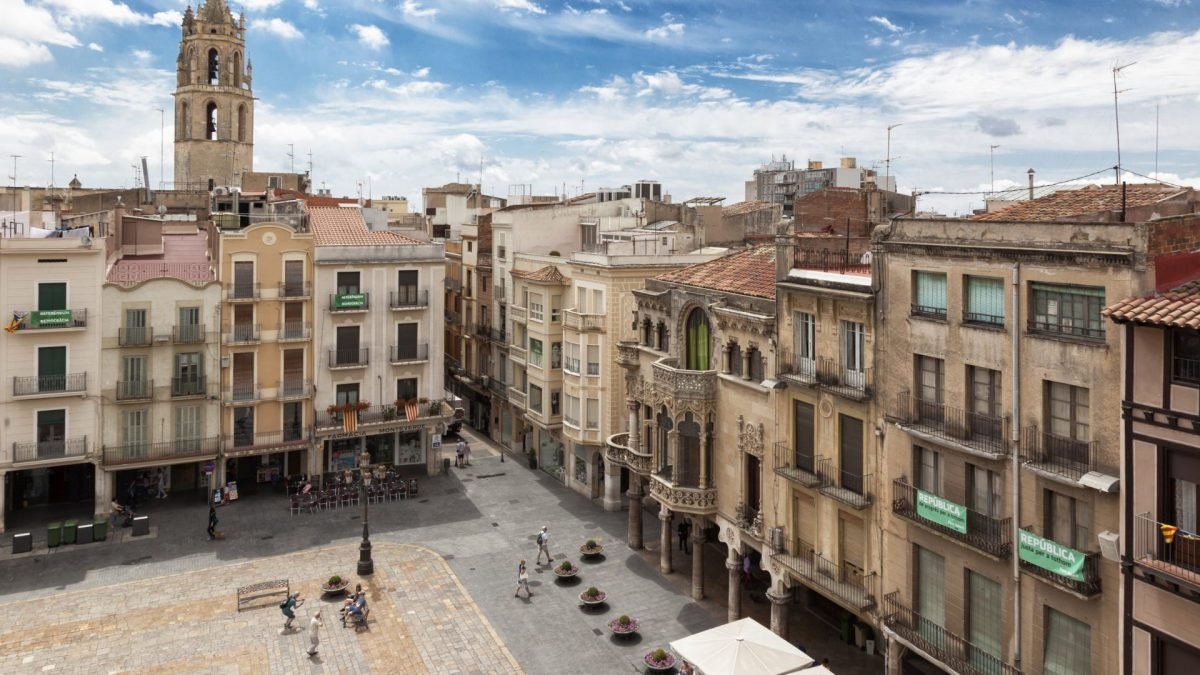
I live in Barcelona, a city synonymous with the architect Antoni Gaudí. Earlier this year – in time for the centenary of his death on 10 June – the final tower was added to his masterpiece mega project, the Sagrada Familia.
As well as the inauguration of the final tower of Jesus on 10 June, when the scaffolding is finally expected to come down, there are commemorative events planned in the regional capital all year. Around five million visitors are expected at the Sagrada Familia in 2026.
However, I’ll be heading 90 minutes south of Barcelona to the birthplace of the architect, the small city of Reus in southern Catalonia. While Gaudí might not have left any work in his childhood home, Reus is a hub for Modernisme, the architecture movement he became part of, and the city is filled with buildings in this Catalan Art Nouveau style.
Where crowds swarm in front of Gaudí’s most loved buildings in Barcelona, in Reus, the Modernisme buildings are simply a part of the city and can be admired in peace.
Architecture aside, Reus is the Spanish home of vermouth, with watering holes across the city serving up this aromatic fortified wine and a dedicated museum to its heritage. Pair it with some excellent dining, thanks to an influx of chefs opening restaurants here, and you have the makings of a great weekend away.

Quick guide
Nearest station: You can fly direct to Reus with Ryanair, Jet2 and easyJet from airports across the UK. From the airport, the L50 bus runs hourly and drops you directly into the city centre in under 15 minutes (€3/£2.60 one-way). A taxi takes a similar time and costs around €20/£17. Alternatively, you can reach Reus overland by train from the UK, taking the Eurostar to Paris, then taking a TGV InOui high-speed train to Barcelona Sants and changing trains for a second time in Barcelona (journey time from about 12-and-a-half hours, depending on connections).
Transport: Once in Reus, the city is very walkable and small enough not to need public transport.
Stay: Hotel Centre Reus has views of the pretty La Prioral de Sant Pere.
Eat: Vítric, A Cullerades.
Drink: Vermuts Rofes,
Shop: Carrer de Llovera, Bimba y Lola, Jofré, Simorra
Visit: Casa Navàs, Ruta del Modernisme, Campanar de la Prioral de Reus, La Prioral de Sant Pere
More: catalunya.com, spain.info

The best place to stay
In the heart of the old town overlooking La Prioral de Sant Pere, a number of rooms at 20-bed Hotel Centre Reus have views of the pretty Gothic church. The style is contemporary and comfortable and there is a good breakfast spread and accessible rooms. Doubles from €72 (£62).
The best places to shop
The elegant central street, Carrer de Llovera, is home to a number of stylish addresses including notable names such as fashion brand Bimba y Lola and smaller, independent boutiques – check out Jofré and Simorra for curated edits of Spanish styles.
The lunch break
At Vítric, young chef Xavier De Juan’s creative Catalan-inspired cuisine has caught the attention of Michelin inspectors, earning it a recommendation in the guide. At lunchtime, the €35 (£30) menu del día (daily-changing menu) is an affordable way to get in on the action with three courses, wine and coffee. Expect plates such as oxtail gyoza with pickled vegetables, or cod brandade cannelloni.

The best things to see and do
The jewel in Reus’s Modernisme crown is no doubt Casa Navàs. This spectacular former private home, built in 1901, is a feast for the eyes, with stone pillars carved into towers of flowers, intricate walls of mosaic tiles that make up large frescos and light pouring through vast expanses of colourful stained glass. Designed by the father of Modernisme and teacher of Gaudí, Lluís Domènech i Montaner, the house maintains all the rooms and the original furniture. It is available to visit daily via regular guided tours in English (entry €16/£13.90).
The best place for an drink
Making vermouth since 1890, Vermuts Rofes was a pioneer of the aperitivo and played an important part in making Reus such a hot spot for the drink. Crafted from fortified white wine with a secret blend of aromatics, a glass of the good stuff can be enjoyed very close to the source, thanks to the restaurant-bar and charming outdoor terrace attached to the Vermuts Rofes distillery.
The best place for dinner
For some traditional grandma-style Catalan cooking, book a table at A Cullerades. Here you can feast on classic tapas such as patatas bravas and pan con tomate as well as local delicacies such as botifarra, a traditional pork sausage. Don’t miss the quintessential Catalan desert of fresh mató cheese, honey and walnuts.
The best spring walks
Explore the city’s architecture on foot by following the self-guided Ruta del Modernisme. Pick up a map at the tourist office in Plaça del Mercadal and follow the heritage trail throughout the city, taking in 30 different Modernisme buildings en route. The paths are flat and smooth, making it accessible to all.
Three things you might not know about… Reus
1) Reus was such a powerful trade hub for wine and spirits in the late 18th century that people would commonly say the phrase: “Reus-Paris-London”.
2) The city is home to one of Catalonia’s most prestigious castells teams, where adults and children compete at festivals to build human towers up to eight people high.
3) It takes 230 steps to reach the top of the hexagonal Gothic bell tower of the church Campanar de la Prioral de Reus.