
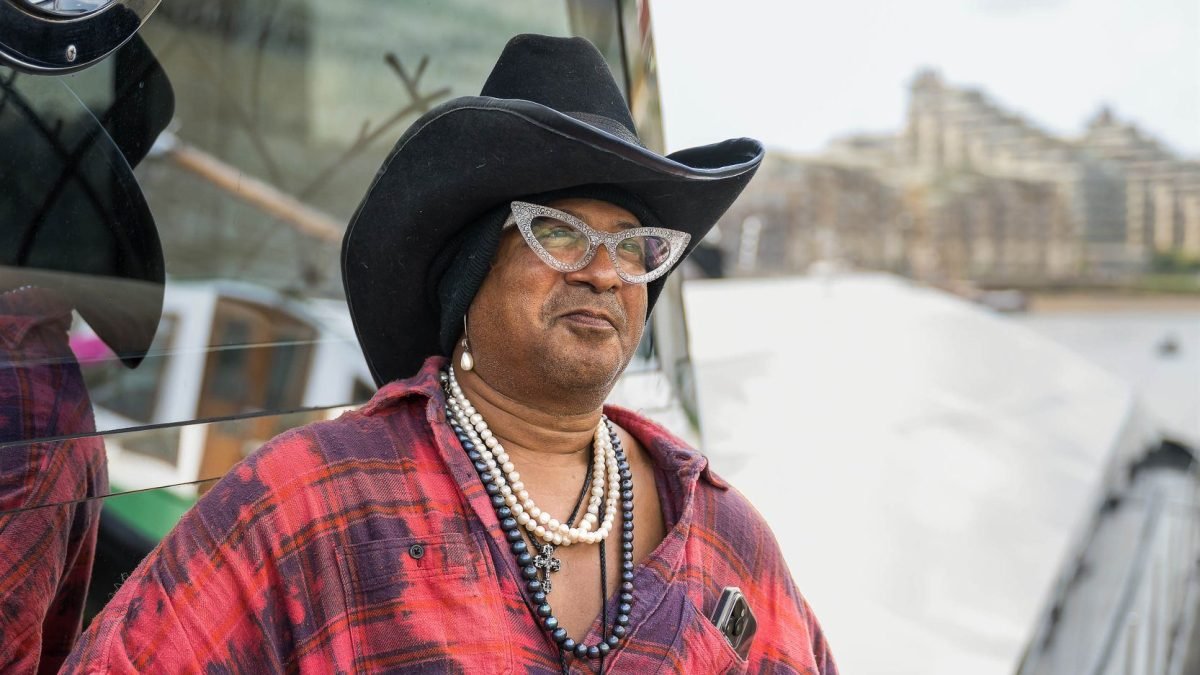
Russell Amerasekera, a life coach and stylist, is “reluctantly” selling his 1950s Dutch barge, currently moored at Imperial Wharf in London after years of living on the Thames.
“It’s been a big decision to put it on the market, and I did look at the possibility of bringing it to LA in a ship container as there’s where I mostly work now,” he says. “My clients are in finance, fashion and entertainment. [But] it didn’t make sense for me to keep the boat anymore.”
Russell bought the two-bedroom, two-bathroom barge for just shy of £1million in 2017 and is selling it, via The London Broker/LeadingRE, for £950,000 – hoping, at best, to break about even.
“I think that pretty much anyone who buys a boat, if they are honest, will never think of it as an asset that will appreciate in value. I absolutely bought it as a lifestyle choice, but it gives me so much joy and pleasure, it’s completely worth it.”
He bought the boat in cash. “I spent a bit of time seeing if financing was an option but, those that are available, are expensive,” he says.

The stylist was previously living in Hampstead and came across the barge, which he named ‘Wanderland’, after searching on Google for an artist studio in London.
“I had no idea how to live on a boat – I’m a very impractical person and I went into it incredibly naïve,” he says. “[But] within five minutes of walking on board, I knew I had to buy it. The boat itself is extraordinary; there are constant light plays, shadows of light and tones, which are extraordinary.”
Originally named ‘Fluxland’, Russell bought the barge from artist Cyril de Commargue, who created it as piece of artwork, along with using it as an exhibition space. He reconstructed the interior so that the height is three times the normal height of a boat, making it extremely light and airy compared to traditional Dutch barges.
“It’s built of glass and fibreglass and supported by steel panels. It’s a really unusual design and looks like a spaceship on the water,” says Russell. “It was a blank canvas which is what I wanted.”
He estimates he spent between £150,000 and £170,000 refurbishing the interiors. “Because it was built as a gallery, I had to build things like the bedrooms,” he says.

“I refurbished the interior of the boat as an Alice In Wonderland whimsical environment so there are drop chandeliers, art everywhere and a swing. I put a lot of work into it.” Other features include a silver roll-top bath, a meditation deck and the cargo room where one of the bedrooms is.
In terms of running costs, the mooring fees are approximately £20,000 a year; the heating is run on diesel, which fluctuates in price, but on average is about £3,000 to £4,000 annually; the electricity is £2,500 to £3,000 a year and water comes with the mooring.
“There are no economic advantages to living on a boat; it’s very consistent with the running of a house,” admits Russell. He also says that, unlike a house where you can put off jobs, you need to address problems early on with a boat.
“When things go wrong you have to fix them. If there is a leak, you can’t leave it to be fixed in the summer.”
While it hasn’t proven a very fruitful investment, Russell has absolutely no regrets. “Living on the water has arguably been the experience of my life,” he says.

“[It] gives you a strong spiritual existence: you’re surrounded by nature and integrated into your environment. You’re right in the middle of the city but there is a sense of peace that you get in the country.”
Aside from its previous owner sailing the boat from the Netherlands to London, as part of an art installation, the houseboat has only travelled short distances.
“It’s so beautiful when it sails and attracts quite a bit of attention. I docked it at St Katharine’s Docks, and it bought it to a standstill,” says Russell.
“The artist built it so that the outside ‘reflected off’ the London landscape, while the inside is designed to be more reflective and peaceful. You feel very connected to nature here.”
One of the things Russell says he will miss about living on his houseboat is the sense of community.
“There are 18 boats at Imperial Wharf and it’s unusual as it’s set right in the middle of the river and behind private gates,” he says. “There’s a strong sense of community and everyone looks out for each other and helps each other.”
Although his barge has a very good heating system so never feels cold, Russell says boat living isn’t necessarily for everyone: “It takes a bit of getting used to as you are in the middle of a river and there are weather conditions.
“You need to be comfortable being out on the river when it’s stormy and in the middle of winter.”
That said, he believes the boat would make a great, little pied à terre. “When you live in an environment where there is an adventure every day, it’s revitalising and very nurturing. It’s a joyful way of living and would suit someone, like me, with a strong visual orientation.”